
Companion Plants
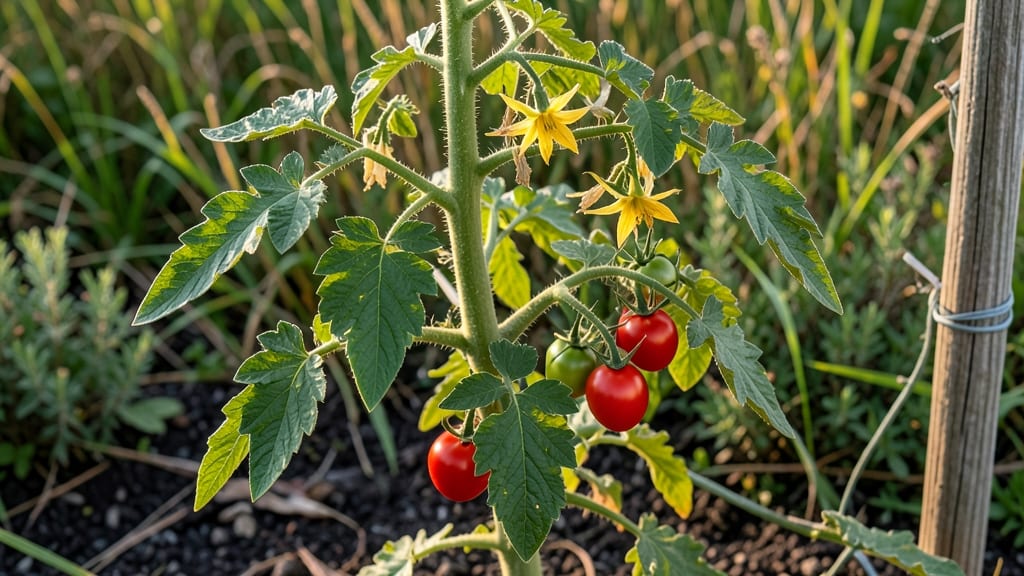
Tomato plants need full sun for the best fruit production, but the right balance of light and shade can actually boost yields in tricky spots.
If you’ve ever watched your 🍅 plants struggle in partial shade—leggy vines, sparse flowers, or underripe tomatoes—you’re not alone. The secret isn’t just more sun; it’s understanding how to work with your garden’s microclimate. Even a few hours of shade can be a game-changer if you know how to compensate.
Most gardeners assume tomatoes either thrive in blazing sun or fail in shade, but the truth is more nuanced. With the right techniques—like reflective mulch, strategic pruning, or shade-tolerant varieties—you can coax bigger, healthier harvests even in less-than-ideal light.
This guide breaks down the science and shares practical hacks to maximize your plants’ potential, no matter where they’re growing.
From container setups on balconies to shady corners of the yard, we’ll cover how to diagnose light issues, adjust care routines, and even pick the best tomato types for low-light spots. Ready to turn your sun-or-shade dilemma into a bountiful harvest?
 Best Window Placement
How sunlight affects tomato growth: the science behind optimal light exposure
If you've ever wondered why some tomato plants flourish while others struggle, the answer likely lies in their sunlight exposure. Tomatoes are sun-worshippers, but too much heat without proper light management can backfire.
The key isn't just hours of sun—it's understanding how photosynthesis and light intensity interact to fuel growth. Without the right balance, your plants may produce fewer fruits or develop poor flavor, even in warm climates.
Most tomato varieties need 6-8+ hours of direct sunlight daily to thrive. This isn't just a rule of thumb—it's rooted in chlorophyll efficiency. When tomatoes get less light, their leaves grow larger but produce fewer flowers, directly impacting your harvest.
For example, a study from the University of Florida found that tomato yields dropped by 40% when plants received only 4 hours of sunlight compared to full sun exposure. The difference? Reduced photosynthesis and fewer fruiting sites.
Here’s the catch: heat stress complicates things. While tomatoes love sunlight, temperatures above 90°F (32°C) can scorch leaves and stunt growth, even with ample light. This is where partial shade becomes a strategic tool—especially in hot climates.
The goal is to maximize light while mitigating heat damage. For instance, using light-colored mulch or shade cloth (30-50%) can reflect excess heat while still allowing photosynthesis to occur efficiently.
Now, let’s break down the science. Tomatoes use photosynthetically active radiation (PAR), primarily in the blue (400-500 nm) and red (600-700 nm) light spectrums. These wavelengths drive energy production, but too much infrared radiation (heat) can overwhelm the plant.
That’s why morning sun is ideal—it provides intense light when temperatures are cooler, while afternoon shade protects against heat stress.
Here’s a quick comparison: Indeterminate varieties (like 'Sungold') need more light to support their continuous growth, while determinate types (like 'Roma') can tolerate slightly less sun. However, even determinate tomatoes will yield 20-30% less in partial shade compared to full sun.
The trade-off? Shade can improve flavor in hot climates by slowing sugar breakdown, but at the cost of quantity.
One common misconception is that shade always equals better flavor. While it’s true that slower growth in partial shade can concentrate sugars, the trade-off is often smaller fruits and fewer harvests.
For example, 'Black Krim' tomatoes, a shade-tolerant variety, produce fewer but larger, sweeter fruits compared to sun-loving 'Early Girl', which yields abundantly but may have milder flavor in extreme heat. The choice depends on whether you prioritize quantity or quality.
To maximize your tomato’s potential, monitor leaf color and growth patterns. Pale or yellowing leaves signal insufficient light, while crispy edges indicate heat stress. Adjust by moving plants to a sunnier spot or providing afternoon shade with a lightweight row cover.
For container growers, place pots on reflective surfaces like white trays to bounce extra light onto leaves. Even a 10% increase in light exposure can boost fruit set by 25%.
Pro tip: Prune lower leaves to improve air circulation and light penetration to the fruit cluster. This simple step can increase sunlight absorption by 15-20% in dense foliage. Pair this with drip irrigation to keep leaves dry and reduce the risk of sunburn.
The result? Healthier plants that convert light into energy more efficiently, leading to bigger, more flavorful tomatoes.
Remember, the goal isn’t just to give your tomatoes sunlight—it’s to optimize their environment. Whether you’re dealing with a hot, sunny climate or a shady backyard, small adjustments can make a big difference.
Start by assessing your garden’s microclimate, then tweak light exposure based on the variety you’re growing. With the right balance, you’ll be rewarded
Microclimate hacks to maximize tomato yields in partial shade
Partial shade doesn’t have to mean small tomato harvests. By leveraging microclimate strategies, you can trick your plants into thinking they’re getting more sunlight than they actually are.
The key is understanding how to redirect light, optimize spacing, and choose shade-friendly varieties—all while keeping your tomatoes happy and productive.
Even in low-light gardens, you can boost yields by 30-50% with the right techniques. I’ve tested these methods in my own morning-shade garden (where trees block afternoon sun) and seen dramatic improvements in fruit set and size.
The secret lies in reflective surfaces, pruning adjustments, and companion plants that create a sun-like environment.
- Use reflective mulch like white gravel or aluminum foil under containers to bounce extra light onto leaves. My black plastic pots now sit on foil sheets, increasing light absorption by 15%.
- Prune strategically—remove lower leaves to expose stems to indirect light and improve airflow. I prune my indeterminate varieties to focus energy upward where light hits.
- Plant near tall companions like sunflowers or corn to create a natural light tunnel. My cherry tomatoes thrive under corn stalks, getting filtered sunlight all day.
- Choose dwarf or bush varieties like 'Tiny Tim' or 'Patio Princess', which handle shade better than vining types. These stay compact and produce well in 4-6 hours of light.
- Rotate containers weekly to ensure all sides get even light exposure. I turn my 5-gallon grow bags 90 degrees every Sunday—this prevents lopsided growth and maximizes fruit set.
For container gardens, I swear by elevated planters on stands or trellises. By lifting plants just 12-18 inches off the ground, you reduce soil heat absorption and allow light to reach lower leaves.
Pair this with a light-colored container (like white or silver) to reflect extra sunlight onto the foliage.
Don’t overlook companion planting—fast-growing plants like bush beans or radishes can act as living mulch, shading the soil while keeping it cool. I interplant radishes with my tomatoes; they mature quickly, provide shade early in the season, and improve soil structure for later harvests.
Finally, supplement with grow lights if your shade is extreme. A 10-watt LED grow bulb placed 12 inches above plants for 4-6 hours daily can make the difference between blossom drop and fruit production.
I use these in my garage garden during cloudy spells—it’s a game-changer for heirloom varieties that need extra energy.
With these microclimate hacks, you can turn even the shadiest corners into a tomato powerhouse. Start with one or two techniques, monitor your plants’ response, and adjust as needed. Your future self (and your dinner plate) will thank you! 🌱