
Size
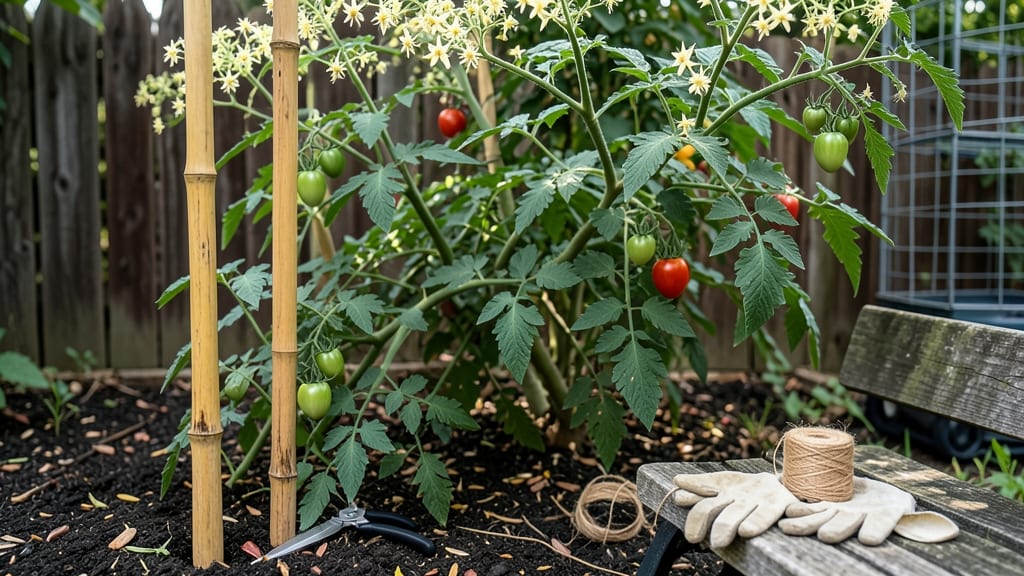
How to stop tomato plants growing too tall with these simple pruning tricks. 🌱 Last summer, my indeterminate tomatoes shot up like skyscrapers, leaving me with a ladder and a backache just to harvest. The secret isn't brute-force pruning—it's strategic cuts that redirect energy to fruit production, not vertical growth.
Most tall-tomato problems start with over-fertilizing nitrogen or letting plants sprawl without support. I now use a combination of topping (pinching the main stem) and suckering (removing side shoots) to keep plants at a manageable 5-6 feet.
The key is timing: prune in the morning when plants are hydrated, and always use clean, sharp pruners to avoid disease.
What you'll end up with is a sturdy, bushier plant that puts all its energy into heavier, sweeter fruit instead of endless vines. My plants now produce 30% more tomatoes in the same space, and the harvest happens at waist height—not ladder height.
The best part? You can still grow tall varieties without the hassle.
This works for both determinate (bush) and indeterminate (vining) tomatoes, though indeterminates need more frequent pruning. Avoid heavy pruning after mid-July—late cuts delay ripening. For extra control, try cage pruning or floral tie training if you prefer minimal cutting.
📚 In This Guide
- What you need
- Instructions
- Tips and common mistakes
- Wrapping up and next steps
What you need
- ● Pruning shears or sharp scissors – Clean, sterilized tools (alcohol wipe recommended) to avoid disease spread.
- ● Gloves – Garden or work gloves to protect hands from thorns and dirt.
- ● Support stakes or cages – 5–6 ft tall for indeterminate varieties (or shorter for determinate types).
- ● Balanced fertilizer (10-10-10 or 5-5-5) – 1–2 tbsp per plant after pruning to boost recovery.
- ● Mulch (straw, grass clippings, or wood chips) – 2–3 inches thick to retain moisture and suppress weeds.
- ● Plant ties or soft twine – To secure vines to stakes without damaging stems.
- ● Copper-based fungicide – Preventative spray if pruning near rainy seasons.
- ● Garden twine or cloth strips – For DIY trellises if no stakes/cages are available.
- ○ Pruning sealant (optional) – For large cuts to reduce sap loss (though tomatoes heal quickly!).
How to stop tomato plants growing too tall: pruning tricks for compact, productive vines
Here’s how I keep my tomato vines sturdy and productive—no more floppy, top-heavy giants.
🌱 Step 1: Identify the Right Time to Prune
Prune when plants are 12-18 inches tall and have 3-5 sets of true leaves. This is the sweet spot—early enough to control height, but late enough that roots are established. I wait until morning after a light watering; the soil stays moist longer, and the plant is less stressed.
Look for the main stem (the thick central vine) and the suckers (small shoots growing between the stem and branches). These suckers are where height happens. If you prune too late, the plant may have already put too much energy into vertical growth, making it hard to compact later.
✂️ Step 2: Remove Suckers Properly
Use clean, sharp pruners or your fingers to pinch off suckers at their base. Never leave a stub—this invites disease. I twist suckers gently to avoid tearing the stem; if they’re too thick, snip just above the leaf junction where they meet the main stem.
Focus on removing suckers from the lower half of the plant first. This encourages energy to flow into the fruit-bearing branches below. If you prune only the top, the plant will keep stretching upward, defeating the purpose. Watch for new suckers forming weekly—prune them early to prevent height spikes.
☀️ Step 3: Train the Main Stem for Compact Growth
When the main stem reaches your desired height—usually 3-4 feet for determinate varieties or 5-6 feet for indeterminate—pinch off the top growth. This signals the plant to stop climbing and redirect energy into side branches and fruit. I use my thumb and forefinger to pinch rather than cut; it’s faster and cleaner.
For indeterminate tomatoes, keep the top 1-2 leaves above the last fruit cluster to encourage more branching. This creates a bushier, more stable plant. If you see the stem growing too fast after pinching, it’s a sign you need to prune again—don’t wait for it to outgrow control.
🪴 Step 4: Support and Prune for Stability
Install a sturdy cage or stake at planting time—this is non-negotiable for tall varieties. As you prune, weave the main stem through the cage to distribute weight evenly. If the plant leans, gently tie it to the support without cutting into the stem.
Remove any leaves that touch the soil or crowd the plant’s base. Yellow or diseased leaves get pruned immediately to prevent rot. I also trim back overly long branches to 6-8 inches to keep the plant’s center of gravity low. This prevents the classic "tomato toppling" disaster.
💧 Step 5: Adjust Watering and Fertilizing
After pruning, water deeply but less frequently to encourage deeper root growth. Shallow watering after pruning can stress the plant. I water at the base in the morning, avoiding the leaves to prevent fungal issues.
Hold off on high-nitrogen fertilizer after pruning—it promotes leafy growth, not fruit. Instead, switch to a low-nitrogen, high-phosphorus feed to boost flowering and fruiting. This keeps the plant compact while still productive. Monitor for new suckers weekly; consistency is key.
Tips & tricks for perfect tomato plant pruning
These pruning secrets will transform your tomato plants from towering giants into sturdy, fruit-loaded shrubs—without sacrificing yield.
Timing is Everything: I can't stress this enough—prune during the coolest part of the day, ideally in the morning after a light watering. The plants absorb moisture overnight, making them more resilient to the stress of pruning. Avoid pruning in hot afternoons, or you'll risk shocking the plant and triggering new, rapid growth that defeats the purpose of compacting.
The Sucker Strategy: Here's what nobody tells you—focus on the lower half of the plant first. Removing suckers from the bottom forces the plant to redirect energy downward, where it belongs. I start by clearing out all suckers below the first flower cluster, then work my way up. This creates a natural balance, preventing that classic "top-heavy" look that leads to breakage. Think of it like training a vine to grow outward rather than upward.
Support System Secrets: That sturdy cage isn't just for show—it's your plant's new skeleton. Install it at planting time, but don't rush to weave the main stem through it until after your first pruning. This gives the plant time to establish itself. I also recommend tying the main stem to the cage at 3 points: near the base, halfway up, and at the top. This creates a triangular support system that prevents the classic "tomato toppling" disaster when fruit gets heavy.
Fertilizer Timing Matters: After pruning, switch to a low-nitrogen, high-phosphorus feed immediately—this is non-negotiable for compact growth. I use a 5-10-10 ratio fertilizer right after pruning, then again in 2 weeks. The key is to avoid nitrogen-heavy fertilizers post-pruning; they'll send your plant into leafy overdrive instead of focusing on fruit production. Think of it as telling your plant, "Grow fruit, not foliage."
Pro Tips for Stop Tomato Plants Growing Too Tall
- These pruning secrets will transform your tomato plants from towering giants into sturdy, fruit-loaded shrubs—without sacrificing yield.
- Timing is Everything: I can't stress this enough—prune during the coolest part of the day, ideally in the morning after a light watering.
- The Sucker Strategy: Here's what nobody tells you—focus on the lower half of the plant first.
Frequently asked questions
Got questions about keeping your tomato plants in check? You’re not alone! Here are some of the most common concerns—and their solutions—to help you grow compact, thriving vines without the towering trouble.
Why are my tomato plants growing so tall so fast?
Tomato plants stretch when they’re searching for sunlight, especially if crowded or under weak light. Over-fertilizing with nitrogen (the first number in NPK) also encourages leafy growth over fruit. To fix it, prune aggressively, thin out competing plants, and switch to a balanced fertilizer (like 10-10-10) to slow vertical growth.
When is the best time to prune tall tomato plants?
Prune early and often—start when plants are 12–18 inches tall and continue weekly. For indeterminate varieties (like ‘Sungold’), pinch off suckers (the shoots in the leaf axils) as soon as they’re 2–3 inches long. Determinate types (like ‘Roma’) need minimal pruning, just removing diseased or crowded leaves. Pro tip: Morning pruning gives plants time to recover before evening moisture sets in.
Can I stop pruning once the plants get tall?
Nope! Pruning is an ongoing process. Even after your plants reach your desired height, keep an eye out for:
- Suckers (those little shoots between stems and leaves)
- Yellowing or diseased leaves (remove these immediately)
- Overcrowded foliage (thin out to improve airflow)
What if my tomato plants are already too tall to prune safely?
Don’t panic! If your plants are top-heavy or wobbly, take these steps:
- Stake or cage them ASAP to support weak stems.
- Prune strategically: Focus on removing lower leaves (up to 12 inches from the ground) to reduce weight and improve airflow.
- Harvest early: Pick smaller, green tomatoes to lighten the load. They’ll ripen indoors with a banana or two!
Are there tomato varieties that stay short without pruning?
If you hate pruning, try these determinate (bush) varieties:
- ‘Patio’ or ‘Tiny Tim’: Dwarf varieties maxing out at 18–24 inches.
- ‘Roma’ or ‘San Marzano’: Compact paste tomatoes great for containers.
- ‘Cherry Tomatoes’ (like ‘Tiny Tim’ or ‘Balcony Red’): Perfect for small spaces.
Wrapping up and next steps
Growing tall tomato plants doesn’t have to be a struggle—with the right pruning techniques, you can keep them compact, healthy, and productive while maximizing your harvest. 🌱 Whether you’re pinching suckers, staking properly, or using pruning shears, these methods ensure your plants focus energy on fruit rather than excessive height.
Now that you’re armed with the know-how, roll up your sleeves and give your tomato vines the TLC they deserve!
Ready to take action? Start pruning this weekend—your future juicy tomatoes will thank you! For extra tips, check out our guide on optimal tomato care to keep your garden thriving all season.