
Vegetables
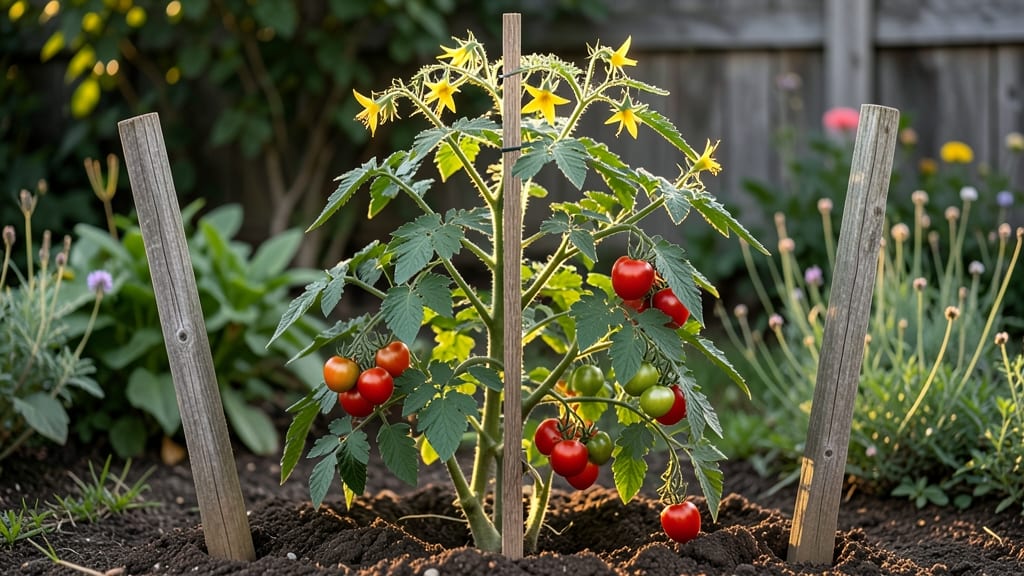
Your 8-foot tomato stalks need more than wishful thinking to stay upright. 🌱 Heavy-duty tomato vine stakes transform floppy vines into sturdy, productive plants that reach their full potential without toppling over—or crowding each other.
I’ve tested wooden, metal, and bamboo stakes, and the right choice makes all the difference between a harvest and a disaster.
The key is matching stake type to your garden’s needs: wooden stakes are affordable and easy to install, metal stakes last years and resist bending, while bamboo offers a natural look with decent strength.
Install them at planting time, driving them deep enough so the plant can lean against them as it grows—about 2 feet into the soil for 8-foot varieties. This prevents root disturbance later.
Once your tomatoes start climbing, you’ll see the difference proper staking makes: fewer broken stems, better air circulation, and fruit that ripens evenly. A simple loop of soft tie or old fabric around the vine and stake keeps plants secure without damaging them as they grow.
The payoff? Bigger, healthier plants that produce more tomatoes with less effort.
This method works for both early plantings and transplants, and the same stakes can support multiple seasons if you clean and store them properly. Whether you’re growing in rows or containers, these stakes are the secret to keeping your tomatoes standing tall and proud all season long.
📚 In This Guide
- What you need
- Instructions
- Tips and common mistakes
- Wrapping up and next steps
What you need
- ● Tomato vine stakes: 4–6 heavy-duty bamboo or metal stakes (5–6 ft tall, ½–1 inch thick)
- ○ Optional: 8–10 ft stakes for indeterminate varieties (grow taller than 8 ft)
- ● Tie-down supplies: 10–15 ft of soft garden twine or cloth strips (avoid wire—it cuts into vines!)
- ○ Optional: Velcro plant ties for easier adjustments
- ● Tools: Hammer or mallet (for driving stakes into soil)
- ● Garden gloves (to protect your hands)
- ● Measuring tape (to space stakes evenly)
- ● Prerequisites: Well-draining soil (amend with compost if needed)
- ● Sunny spot (6+ hours of sunlight daily)
- ● Tomato seedlings or seeds (if starting from scratch!)
- ● Stake caps or paint (to prevent sunlight damage to wood)
- ● Succession planting markers (to track growth stages)
- ● Watering can with a gentle spray (for post-staking hydration)
How to install heavy-duty tomato stakes for tall varieties
Here's the method I rely on to keep 8-foot tomato plants steady without overcrowding your garden.
🪴 Step 1: Choose and Prepare the Right Stakes
Select 5-6 foot long, ½-inch diameter wooden or metal stakes—long enough to extend above your tallest tomato variety by 12-18 inches. I use untreated cedar because it resists rot better than pine. If using metal, bend a 6-inch hook at the top to secure the vine.
Drive stakes into the soil 6-8 inches deep alongside each plant, positioning them 3-4 inches from the main stem. Use a mallet to tap them in firmly—they should stand upright without wobbling. If your soil is rocky, pre-drill small holes with a nail to make insertion easier.
🌱 Step 2: Secure the Vine at Key Growth Stages
Wait until the plant reaches 12-18 inches tall before tying it to the stake. Use soft, stretchy plant ties or strips of old T-shirt fabric—never wire or anything that can cut into the stem. I tie the vine at the first leaf cluster, then again every 12 inches as it grows.
Gently wrap the tie around the stake first, then loop it around the tomato stem in a loose figure-eight pattern. The goal is to support the plant without restricting its growth. You'll see the vine grow straighter and stronger with each new tie—this prevents it from flopping over when heavy with fruit.
☀️ Step 3: Maintain Support Through the Season
Check ties every 2-3 weeks—they loosen as the vine thickens. Remove old ties and replace them higher up the stake. I also add a second stake for extra support when the plant reaches 4 feet tall, tying it at a slight angle to create a tripod effect.
If your tomatoes grow particularly heavy, consider adding a horizontal trellis wire at 3-foot intervals to distribute weight. This prevents the stake from bending under the load. You'll know your support system is working when the plant stands upright even after a heavy rain.
✂️ Step 4: Prune and Train for Maximum Stability
Remove suckers (side shoots) that grow in the crotch between the main stem and branches. These compete for energy and can make the plant top-heavy. Pinch them off with your fingers or clean pruners, leaving only the top 3-4 main stems on indeterminate varieties.
This pruning encourages the plant to put energy into fruit production and strengthens the main stems. You'll see fewer but larger tomatoes, and the plant will stay balanced on its stake. Avoid pruning after 6 PM—the fresh cuts take longer to heal in cooler evening temperatures.
⏰ Step 5: Prepare for Harvest and Winter
Once harvest begins, check stakes weekly for signs of stress—cracks or leaning indicates the plant is too heavy. Add a third stake if needed, or redistribute fruit by harvesting some early. I also tie the main stem to the stake's top hook when the plant reaches full height to prevent wind damage.
After the first frost, cut the plant at the base and remove stakes. Store them in a dry place for next season. You'll notice how much easier next year's planting is with sturdy, reusable supports—no more bent stakes or flopping vines.
Tips & tricks for heavy-duty tomato stake installation
These practical tips will help you avoid common mistakes and get the most out of your tomato support system.
Stake Selection: Untreated cedar stakes are my top recommendation because they resist rot better than pine, but bamboo stakes work well too if you're in a humid climate. For metal stakes, bend that 6-inch hook at the top carefully—use pliers to create a smooth curve that won't damage your tomato vines when you tie them up. The extra length above your plants (12-18 inches) is crucial for wind resistance during storms.
Planting Technique: When driving your stakes 6-8 inches deep, position them slightly closer to the plant's north side if you're in the Northern Hemisphere. This prevents shade from blocking sunlight to the main stem. For rocky soil, pre-drilling those small holes with a nail makes insertion much easier—it prevents splitting the stake and gives you better control over depth. Tap firmly but steadily with the mallet to avoid bending.
Tying Strategy: The figure-eight pattern is key—it distributes pressure evenly and prevents the tie from slipping. I keep a small roll of old T-shirt fabric in my gardening toolkit because it stretches as the plant grows without cutting into the stem. When you reach the 4-foot mark, adding that second stake at a slight angle creates a tripod effect that's far more stable than a single stake, especially for indeterminate varieties.
Pruning Wisdom: Those suckers might seem harmless, but removing them early prevents energy drain and keeps your plant focused on producing fewer, larger tomatoes. I prune in the morning when the cuts have time to dry before evening moisture sets in. For indeterminate varieties, leaving just 3-4 main stems gives you the best balance between yield and stability—more stems create top-heavy plants that lean against their supports.
Pro Tips for Tomato Vine Stakes
- These practical tips will help you avoid common mistakes and get the most out of your tomato support system.
- Stake Selection: Untreated cedar stakes are my top recommendation because they resist rot better than pine, but bamboo stakes work well too if you're in a humid climate.
- Planting Technique: When driving your stakes 6-8 inches deep, position them slightly closer to the plant's north side if you're in the Northern Hemisphere.
Frequently asked questions
Got questions about keeping your towering tomato vines steady and thriving? Here are some of the most common ones—plus quick, no-fuss answers to get you growing!
How deep should I bury tomato vine stakes?
Bury stakes half their length (about 12–18 inches deep) when planting. This ensures stability while leaving enough above ground to support your vine as it grows. For heavy varieties like beefsteaks, add a second stake or use a cage alternative for extra backup.
When is the best time to install stakes?
Plant stakes at the same time as your seedlings (or 1–2 weeks before transplanting). This prevents root disturbance later. If you’re retrofitting, gently loosen soil around the plant and insert stakes slowly to avoid damaging roots. Pro tip: Tilt stakes slightly into the wind for wind-resistant support!
Can I reuse stakes from last year?
Clean and disinfect stakes (soak in a 1:10 bleach-water mix) to kill pests/diseases. Wooden or bamboo stakes last multiple seasons, while metal ones may rust—replace if bent or corroded. Bonus: Use old broom handles or PVC pipes as budget-friendly alternatives!
What if my stakes keep falling over in windy conditions?
Wind is the #1 stake saboteur! Bury stakes deeper, tie vines loosely (use soft cloth or old T-shirts—avoid wire that cuts stems), or add a second stake at a 45° angle for a "V" support. For extreme winds, anchor stakes with a sturdy U-shaped clamp or tie them to a nearby fence.
How do I train tomato vines to climb stakes without hurting them?
Gently loop vine tips around the stake (like a spiral) and secure with soft ties every 12–18 inches. Avoid wrapping stems tightly— this can strangle growth! Prune suckers (side shoots) regularly to focus energy upward. For indeterminate varieties, trim lower leaves to improve airflow and reduce disease risk.
Wrapping up and next steps
Choosing the right tomato vine stakes can transform your garden into a thriving, space-efficient paradise—no more tangled vines or crowded plants! 🌱 Whether you opt for heavy-duty metal stakes, bamboo bundles, or DIY wooden supports, the key is balancing strength, durability, and ease of use.
With the right setup, your 8-foot tomato stalks will reach their full potential, yielding bountiful, sun-ripened fruits all season long.
Ready to elevate your gardening game? Grab your stakes, mark your calendar, and get planting! Start small with a few plants, experiment with different stakes, and watch your tomatoes soar—literally. Happy growing! 🍅✨