
Watering
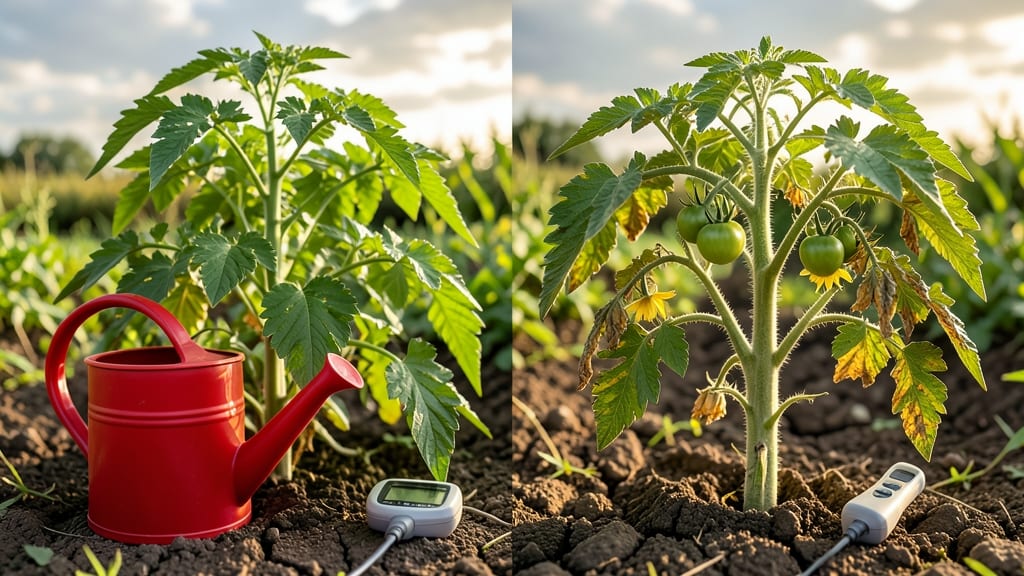
Your tomato plant’s drooping leaves and crispy edges scream one thing: underwatered tomato plant pictures reveal the exact signs you need to catch before it’s too late.
I’ve seen gardeners lose entire harvests because they missed these early warnings—yellowing leaves, dry soil, and brittle stems are the first red flags, and they’re easier to fix than you think.
Most people water on a schedule, but tomatoes need deep, infrequent drinks—not daily sips. Check the soil 2 inches down: if it’s dry, it’s time to water until moisture reaches 6 inches deep.
Mulch helps too, keeping roots cool and soil moist longer. The key is consistency: underwatering stresses plants, while overwatering drowns them.
Within 24 hours of proper watering, you’ll see leaves perk up and new growth emerge. I’ve revived plants that looked dead with just a good soak and shade for a few days. The before-and-after? Shocking—what looked like a lost cause becomes lush and productive again.
Prevention is easier than fixing: water in the morning, use drip irrigation, and group tomatoes with other thirsty plants like peppers. A moisture meter helps too—no more guessing. Your next harvest starts with recognizing these signs early.
Root Causes Of Thirsty Tomatoes
Underwatered tomato plants don’t just happen by accident—they’re usually the result of specific environmental or human factors. Understanding these causes is the first step to preventing them.
Below, we break down the most common reasons your tomato plants might be struggling to get enough water, along with the science behind each one.
Tomatoes thrive on consistency—their roots rely on a steady moisture supply to absorb nutrients and maintain turgor pressure (the internal water pressure that keeps leaves firm). When watering is erratic—whether from forgetfulness, travel, or inconsistent routines—roots struggle to adapt.
- Why it happens: Tomato roots, especially in container-grown plants, have limited access to water. If you water deeply one day and skip the next, the roots may not reach far enough to find moisture, leading to wilting or leaf scorch.
In the ground, uneven soil moisture can cause roots to grow unevenly, making them less efficient at absorbing water. - Actionable fix: Stick to a schedule (e.g., every 2–3 days in hot weather, every 4–5 days in cooler conditions) and water deeply—aim for 1–1.5 inches of water per week, including rainfall.
Use a moisture meter or the "finger test" (stick your finger 1–2 inches into the soil; if it’s dry, water).
Tomatoes hate "wet feet"—too much moisture around roots can suffocate them, while compacted or clay-heavy soil prevents water from penetrating deeply. If water pools on the surface or drains too quickly, roots can’t access what they need.
- Why it happens:
- Clay or dense soil repels water, causing it to bead up instead of soaking in.
- Overwatering (followed by drying out) can create crusty soil, blocking water flow.
- Container plants with no drainage holes trap excess water, leading to root rot and dehydration at the same time.
- Actionable fix:
- Amend soil with compost or perlite to improve drainage.
- Aerate compacted ground with a garden fork before planting.
- Use raised beds or pots with drainage holes to prevent waterlogging.
Tomatoes lose water passively through transpiration (water vapor escaping from leaves). When high temperatures, low humidity, or strong winds increase evaporation rates, plants dry out faster than you can replenish moisture.
- Why it happens: - Direct sunlight + low humidity = leaves lose water rapidly.
In extreme heat (above 90°F/32°C), tomatoes can wilt within hours of missed watering. - Wind strips moisture from leaves, forcing the plant to work harder to stay hydrated. - Shallow root systems (common in young plants) can’t reach deep water sources during droughts. - Actionable fix: - Water in the early morning (before evaporation peaks) or late evening to reduce loss. - Mulch heavily (2–3 inches of straw or wood chips) to retain soil moisture and cool roots. - Provide shade cloth during heatwaves to lower stress.
When tomato plants are too close together or planted too shallow, their roots compete for water and nutrients instead of spreading out to access deeper moisture reserves.
- Why it happens:
- Competition: Overcrowded plants share a limited water supply, leading to stunted growth and wilting during dry spells.
- Shallow roots: If stems are buried too deeply or roots aren’t encouraged to grow downward, they stay near the surface where water evaporates quickly.
- Actionable fix:
- Space plants 18–24 inches apart (or 24–36 inches for indeterminate varieties).
- Plant deeply: Bury the stem up to the first few leaves to encourage adventitious roots (extra roots that form along the stem).
- Prune lower leaves to reduce transpiration and redirect energy to root growth.
Sometimes, underwatering symptoms mask bigger problems—like root rot, fungal infections, or physical root damage—that prevent proper water absorption.
- Why it happens:
- Overwatering followed by drought can cause root rot (from Phytophthora or Pythium), killing roots and reducing water uptake.
- Pests like nematodes or mechanical damage (e.g., from digging) can sever roots, limiting the plant’s ability to hydrate.
- Salt buildup (from tap water or fertilizers) can create a hypertonic soil environment, making it harder for roots to absorb water.
- Actionable fix:
- Inspect roots if wilting persists—healthy roots should be white or tan; mushy or black roots indicate rot.
- Flush soil with water to reduce salt buildup (let water run through containers for 10+ minutes).
- Use fungicides (like copper-based sprays) if fungal diseases are suspected.
Tomato plants have different water needs depending on their life stage. Seedlings, flowering plants, and fruiting tomatoes all demand varying levels of hydration—and missing the mark at any stage can lead to stress.
- Why it happens:
- Seedlings: Need even moisture to prevent damping-off (a fungal disease from uneven watering).
- Flowering stage: Requires more water to support pollination and fruit set (wilting here can drop blossoms).
- Fruiting stage: Heavy fruit loads deplete soil moisture faster, increasing the risk of splitting or shriveling if water is inconsistent.
- Actionable fix:
- Increase water gradually as plants mature, especially when fruits appear.
- Monitor soil moisture daily during flowering/fruiting—this is the most critical period for hydration.
- Use drip irrigation or soaker hoses to deliver water directly to the root zone without wasting it on leaves.
Revive Your Tomato Plant Now
Underwatered tomato plants can look like a lost cause, but with the right care, they often bounce back stronger than ever! The key is identifying the root cause—literally—and addressing it quickly.
Below are practical, step-by-step solutions tailored to the most common signs of underwatering, plus prevention tips to keep your plants thriving.
If your tomato plant’s leaves are limp or curled, it’s a clear SOS for water. Here’s how to bring it back:
1️⃣ Deep Watering: The Golden Rule
- 🔥 Step 1: Water slowly and deeply at the base of the plant, not just a quick sprinkle on the soil surface.
Aim for 1–2 inches of water per week (adjust for climate). - 🍳 Step 2: Use your finger to check soil moisture 1–2 inches down.
If it’s dry, keep watering until moisture reaches 6–8 inches deep. - 👨🍳 Pro Tip: Early morning (6–9 AM) is the best time to water—reduces evaporation and fungal risks.
2️⃣ Mulch to Retain Moisture
- 🌡️ Spread 2–3 inches of organic mulch (straw, grass clippings, or shredded leaves) around the base (but not touching the stem).
- ✨ Why? Mulch acts like a blanket, locking in moisture and cooling roots.
3️⃣ Adjust Your Watering Schedule
- 📊 Underwatering is often a schedule issue. If you’re inconsistent, try:
- Drip irrigation (automated and precise).
- Self-watering pots (great for containers).
- Group plants together to create a microclimate that retains humidity.
Brown, crispy leaf edges or yellowing between veins? This means root stress from chronic dryness.
1️⃣ Flush the Soil
- 🔪 Over time, salts and minerals build up in dry soil, burning roots.
- Solution: Give your plant a deep soak with rainwater or distilled water (if possible) to flush out buildup.
2️⃣ Boost Humidity (For Container Plants)
- 🌧️ Place a tray of water near potted tomatoes or use a pebble tray with water underneath.
- 💡 For greenhouse/grow room setups: Use a humidifier or mist leaves lightly (avoid overhead watering at night to prevent disease).
3️⃣ Fertilize Gently
- 🥗 Underwatered plants often lack nutrients. Use a balanced, water-soluble fertilizer (like 10-10-10) diluted to half strength and water deeply after applying.
If your tomato plant has stopped growing or flowers/fruit aren’t developing, it’s likely stressed from inconsistent watering.
1️⃣ Check Root Health
- 🔍 Gently loosen the top 2–3 inches of soil and inspect roots.
Healthy roots are white or light tan; brown/mushy roots mean rot (too much water), while dry, brittle roots mean underwatering. - 💪 If roots are dry: Soak the plant for 20–30 minutes until water drains from the bottom.
2️⃣ Prune Damaged Foliage
- ✂️ Trim any severely wilted or yellow leaves to redirect energy to new growth.
- ⏰ Do this in the morning so the plant has the day to recover.
3️⃣ Adjust Watering for Growth Stages
- 🌱 Seedlings: Keep soil evenly moist (not soggy).
- 🍅 Flowering/Fruiting: Increase water slightly—1.5–2 inches per week—but avoid wetting leaves to prevent blight.
Once your plant recovers, keep it thriving with these habits:
- 💡 Use a moisture meter ($10–$20) to track soil moisture in real time.
- 🌡️ Group tomatoes with other plants (like basil or borage) to share moisture.
- 🌧️ Collect rainwater in barrels for natural, chemical-free hydration.
- 📅 Mark your watering schedule on a calendar—consistency is key!
- 🌿 Rotate plants annually to prevent soil depletion and disease buildup.
Remember: Tomatoes are 95% water—when they’re thirsty, they’ll show you fast. Act quickly, and your plant will reward you with juicy, vibrant fruit in no time! 🍅💦
Frequently asked questions
What do tomato leaves look like when they're underwatered?
Underwatered tomato leaves typically show crispy edges, yellowing between veins, or drooping that doesn't recover when touched. You might also see curled leaves or small, dry spots—these are classic dehydration signs. The soil will pull away from the pot edges in containers or feel bone-dry 2+ inches deep.
Can an underwatered tomato plant recover if I water it immediately?
Yes! Most tomato plants bounce back within 24–48 hours if you give them a deep soak (until water runs out the bottom) and shade from direct sun. For severe cases, trim any crispy leaves and monitor soil moisture daily. The key is consistency—tomatoes need 1–2 inches of water weekly, not just occasional drinks.
Why does my tomato plant wilt even after watering?
This could mean root damage (from overwatering or pests) or poor drainage. Check for mushy roots—if they're brown/black, you've got rot. If roots are dry and brittle, you're underwatering. Try flushing the soil with water to remove salts, then water deeply every other day while keeping the plant in partial shade until it stabilizes.
How often should I water tomato plants in pots vs. garden beds?
Container tomatoes need water daily in hot weather (pots dry out faster), while garden tomatoes can go 2–3 days between waterings. Always check soil 2 inches down—if dry, water until it's moist 6+ inches deep. Mulch heavily in both cases to retain moisture, but containers benefit most from self-watering systems or drip irrigation.
Will underwatering affect my tomato harvest?
Underwatered plants produce smaller, misshapen fruit that splits easily. Flowers may drop before setting fruit, and existing tomatoes can turn mealy or bland-tasting. Worse, chronic dehydration weakens the plant's immune system, making it vulnerable to pests and disease. Prioritize deep watering during flowering and fruiting stages—this is when tomatoes need the most hydration.