
Watering
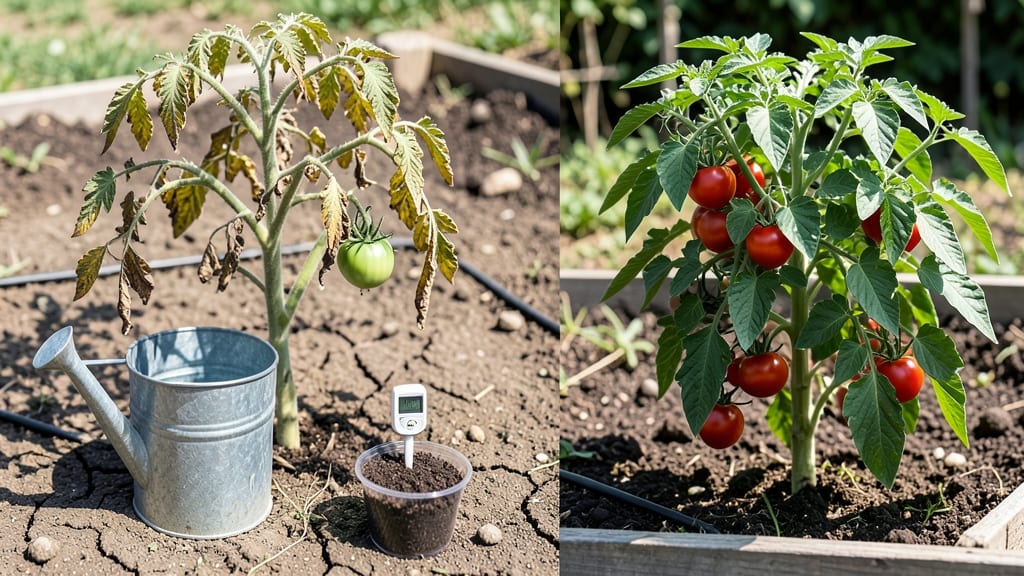
Your tomato plant’s drooping leaves aren’t a death sentence—underwatered tomato plants can bounce back in 24 hours with the right fix. I’ve nursed back more than my fair share of thirsty vines, and the key is acting fast before the roots give up.
The first sign? Leaves that look like they’ve been left in the sun too long—crispy edges, yellowing, and a sad, wilted droop that makes you want to give up. But don’t.
The good news? Tomato roots are resilient, and a deep watering can revive them faster than you’d think. Start by sticking your finger 2 inches into the soil—if it’s dry, it’s time to water.
Use a slow, deep soak (not a quick splash) to encourage roots to reach down for moisture. Think of it like giving your plant a long drink instead of a sip.
Within 12-24 hours, you’ll see those leaves perk up again, especially if you water in the early morning when plants can soak up the most.
Long-term, the fix is even simpler: consistent moisture. Tomato plants need 1-2 inches of water per week, but they hate soggy soil just as much as dry. Amend your soil with compost to help it hold moisture better, and consider mulching to keep the roots cool and hydrated.
Once you’ve got the watering routine down, your plants will reward you with juicy, red tomatoes instead of sad, wilted leaves.
Pro tip: Check the soil every 2-3 days during hot spells—tomatoes in containers dry out faster than in-ground plants. And if you’re still seeing wilting after 48 hours, it might be time to trim the most damaged leaves to help the plant focus its energy on recovery.
Trust me, your tomatoes will thank you.
Root Causes of Tomato Thirst
Underwatered tomato plants don’t just happen by accident—they’re often the result of overlooked environmental or human factors. Understanding these causes is the first step to preventing future wilting and saving your harvest. Let’s dive into the science behind why your tomato plant might be crying out for hydration.
Tomatoes thrive on consistency, not sporadic soaking.
Their deep root systems demand 1–2 inches of water per week, but many gardeners either: - Underestimate their needs (assuming light sprinkles are enough). - Rely on rain alone (which can be unpredictable). - Water too infrequently (leading to shallow, ineffective moisture penetration).
Why it matters: When soil dries out, roots struggle to absorb nutrients, causing wilting, yellowing leaves, and stunted growth. Tomatoes are particularly sensitive because they’re 95% water—like sponges, they need steady hydration to stay plump and productive.
Not all soil holds water the same way.
Tomatoes prefer well-draining, loamy soil (a mix of sand, silt, and organic matter), but if your garden has: - Clay-heavy soil (traps water but suffocates roots when soggy). - Sandy soil (drains too fast, leaving roots parched). - Compacted or rocky soil (blocks water absorption).
The science: Roots need oxygen and moisture balance. Clay soil can lead to root rot if overwatered, while sandy soil forces plants to drink constantly, draining reserves quickly. A simple soil test (or the "squeeze test"—if it forms a tight ball when wet, it’s too clay-heavy) can reveal the issue.
Tomatoes with restricted root zones (like those in small pots or crowded beds) can’t access enough water or nutrients. Common pitfalls:
- Planting too deep (buries stems, causing rot).
- Spacing too closely (roots compete for water).
- Using containers without drainage holes (roots drown or dry out).
Root behavior: Tomatoes develop secondary roots that spread 18–24 inches wide. If confined, they can’t explore for moisture, leading to sudden wilting even if the soil looks damp at the surface.
Tomatoes transpire (lose water through leaves) at alarming rates in:
- Direct sunlight (up to 0.25 gallons per plant per day in peak heat).
- Dry, windy conditions (accelerates evaporation from soil and foliage).
The physics: Heat increases vapor pressure deficit (VPD), making plants "sweat" faster. Without enough water, leaves curl inward (a survival tactic to reduce water loss) and may appear crispy or leathery.
Using tap water with high chlorine, fluoride, or salt content can:
- Disrupt root cell function (osmotic stress).
- Build up mineral deposits in soil, making it harder for roots to absorb water.
Test for this: If your water leaves white residue on pots or your tomatoes develop brown leaf edges, flush the soil with rainwater or distilled water to dilute salts.
Hidden threats like:
- Root-knot nematodes (microscopic worms that block water uptake).
- Fungal infections (e.g., Phytophthora, which rots roots).
- Gophers or grubs (physically severing roots).
Signs to watch for: Wilting that doesn’t improve after watering, or roots that look mushy, discolored, or gnawed when inspected.
Young tomato plants (especially transplants) have fragile root networks that can’t handle:
- Sudden temperature swings (e.g., moving from a greenhouse to outdoor heat).
- Poor acclimation (shock from direct sun or wind post-transplant).
Solution: Harden off seedlings gradually and water deeply for the first 2 weeks to encourage root spread.
Potted tomatoes dry out 3x faster than in-ground plants because:
- Limited soil volume (roots hit "dry zones" quicker).
- Evaporation from pot edges (especially in terracotta).
- No natural moisture reserves (like underground aquifers).
Pro tip: Use self-watering containers or mulch heavily to retain moisture. Check soil moisture daily in summer—if the top inch is dry, it’s time to water.
Key Takeaway: Most underwatering issues stem from either too little water or the wrong conditions for roots to access it. The good news? Once you identify the root cause (pun intended), you can adjust watering, soil, or environment to revive your plant—often in as little as 24 hours.
Stay tuned for our next section on quick fixes! 🚿🌱
Quick revival steps for drought-stressed tomatoes
If your tomato plants are drooping like a sad salad 🥗, don’t panic—your garden isn’t a lost cause! With the right care, you can nurse them back to health in just 24 hours (or less).
Below are targeted fixes for common underwatering issues, plus tips to keep your plants thriving long-term. Let’s get those leaves perky again!
Cause: Shallow watering or infrequent hydration leaves roots parched and unable to absorb nutrients.
How to Fix It:
- 🔥 Soak the Soil Thoroughly – Use a hose or watering can to deliver 1–1.5 inches of water directly to the base of the plant. Let it seep in slowly (about 10–15 minutes) until water pools at the surface.
- 👨🍳 Check Soil Depth – Stick your finger 2–3 inches into the soil. If it’s dry, water again. Repeat until moisture reaches 6 inches deep (for mature plants).
- 🥘 Mulch to Lock in Moisture – Spread 2–3 inches of organic mulch (straw, wood chips, or grass clippings) around the plant (but not touching the stem). This slows evaporation and keeps roots cool.
Prevention Tip: 💡 Water deeply 2–3 times per week (adjust for climate) instead of daily shallow sprinkles. Drip irrigation or soaker hoses are your best friends!
Cause: Intense heat or wind accelerates moisture loss, making underwatering worse.
How to Fix It:
- 🌡️ Provide Temporary Shade – If temps hit 90°F+ (32°C+), drape a lightweight shade cloth (30–50%) over the plants for a few hours. Avoid plastic sheets—they trap heat!
- 🎯 Windbreak Hack – Use a bamboo fence, straw bales, or even cardboard to block harsh winds. Position it on the windward side of the plant.
- ⏰ Water Early or Late – If you can’t shade the plants, water before 10 AM or after 6 PM to reduce evaporation.
Prevention Tip: 🌿 Plant tomatoes near tall crops (like corn or sunflowers) or use black plastic mulch to absorb heat and retain soil moisture.
Cause: Droopy leaves signal severe dehydration, but they can bounce back fast with the right treatment.
How to Fix It:
- 🍳 Foliar Spray Boost – Mix 1 tsp baking soda + 1 quart water and lightly mist the leaves (avoid over-saturating). This helps reopen stomata (leaf pores) and improves hydration.
- 🥘 Humidity Trick – Place a tray of water near the plant or mist the air around it (not the leaves) to increase humidity. Use a fan on low speed to circulate moist air gently.
- ✨ Overnight Recovery – If leaves are crispy but not black, submerge the entire plant (pot or root ball) in water for 10–15 minutes. This forces roots to reabsorb moisture quickly.
Prevention Tip: 🔥 For container tomatoes, use self-watering pots or add hydration crystals to the soil to extend moisture retention.
Cause: Sandy soil drains too fast; clay soil holds too much water—both can stress plants.
How to Fix It:
Soil Type
Problem
Solution
Sandy
Water runs through too quickly
Add compost or coconut coir to improve water retention. Water more frequently but deeply.
Clay
Water pools, roots suffocate
Amend with perlite or peat moss to aerate soil. Water only when top 1–2 inches are dry.
Potting Mix
Dries out faster in containers
Use a moisture-retentive mix (add peat moss or vermiculite). Check soil moisture daily in extreme heat.
Prevention Tip: 💡 Test your soil’s drainage! Dig a hole, fill it with water, and time how long it takes to drain. Ideal time: 4–6 hours. Faster? Add organic matter. Slower? Mix in sand or grit.
If your tomato plant is completely limp, yellow, or has blackened leaves, it may be too late for full recovery—but you can still try: 1. 🔪 Prune Damaged Foliage – Use clean scissors to trim wilted or black leaves. This redirects energy to healthy growth.
- 🌱 Repot or Transplant – If roots are mushy or the plant won’t perk up, gently remove it, trim dead roots, and replant in fresh, moist soil.
- 💪 Fertilize Lightly – Add a balanced liquid fertilizer (5-5-5) to help recovery, but avoid high-nitrogen—it stresses weak plants.
Prevention Tip: ✨ Never let tomatoes go completely dry. Even a brief drought can set them back for weeks!
With these steps, your tomato plants should start perking up within hours and return to vigorous growth in days. Keep an eye on them, adjust your watering routine, and soon you’ll be harvesting juicy, sun-ripened tomatoes instead of sad, wilted leaves! 🍅🌿
Frequently asked questions
How can I tell if my tomato plant is thirsty or has another problem?
Check the soil first—stick your finger 2 inches deep. If it's bone-dry, that's your answer. Look for crispy leaf edges (underwatering) vs. yellowing lower leaves (often overwatering or nutrient issues). If leaves feel limp but soil is moist, it might be heat stress or root-bound. Always rule out pests first!
Will my tomato plant recover if it's been underwatered for a week?
It depends! If only the leaves are wilted but stems are still firm, you have a good chance with deep watering + mulch. For more than 5 days of drought, some roots may be permanently damaged. Trim severely wilted leaves and give it 24 hours of recovery time—if no improvement, consider repotting or transplanting.
Can I use coffee grounds to help my underwatered tomato plant?
Yes, but focus on the roots first! Coffee grounds improve soil structure and moisture retention when composted first—never use fresh grounds directly. Mix 1 cup composted coffee grounds per plant into the top 6 inches of soil to help water retention. Pair this with deep watering for best results.
Why do my container tomatoes dry out so much faster than in-ground plants?
Containers have limited soil volume (roots dry out in 24 hours in hot weather) plus no underground moisture reserves. Use self-watering pots or add hydration crystals to the soil. Check moisture daily in summer—if the top inch is dry, water immediately. Mulch with 3 inches of straw to slow evaporation.
Is it better to water tomato plants in the morning or evening?
Morning wins for most climates! Watering before 10 AM gives plants all day to absorb moisture before evening evaporation. In extreme heat (95°F+), split watering—half in morning, half in late afternoon. Avoid evening watering in humid areas to prevent fungal diseases like blight.