Plants
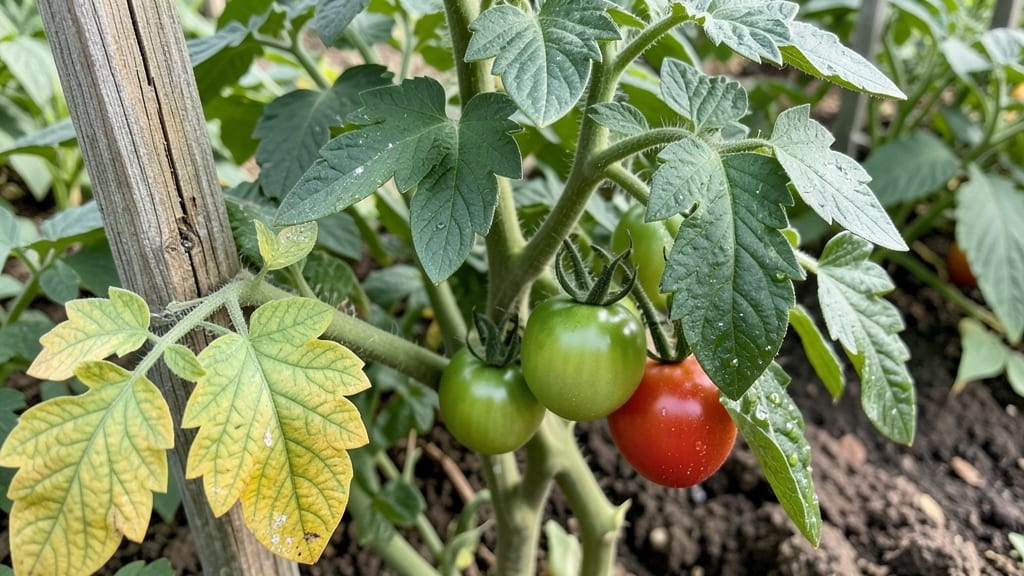
Yellow leaves on your tomato plants aren’t just unsightly—they’re a cry for help. 🌱 Whether it’s soggy roots from overwatering or parched soil from underwatering, the fix starts with understanding the difference between the two.
I’ve seen both ruin a season’s worth of work, but the good news? Each has a clear solution.
Overwatered plants wilt with yellowing lower leaves that feel mushy to the touch, while underwatered ones show crispy edges and droop by midday.
The first step is checking the soil: stick your finger 1-2 inches deep—if it’s damp, you’re overdoing it; if dry, it’s time to water deeply but less often. Tomato roots need air almost as much as water.
Once you’ve corrected the watering, feed your plants with a balanced fertilizer (10-10-10) to restore nutrients lost from stress. Prune any severely yellowed leaves to redirect energy to healthy growth. Within a week, you’ll see new green leaves pushing out, and your plants will bounce back stronger than before.
Prevention is simpler than you think: mulch to retain moisture, water in the morning to reduce evaporation, and avoid letting soil sit soggy for more than a day. With these tweaks, your tomato plants will stay vibrant—and you’ll avoid the heartbreak of yellow leaves again.
Why it happens
H2: The Hidden Triggers Behind Yellowing Tomato Leaves
Yellow leaves on tomato plants aren’t just a cosmetic issue—they’re a cry for help from your plant. 🌱 Understanding the root causes (literally!) is the first step to reviving your garden.
Below, we break down the most common reasons your tomato leaves are turning yellow, along with the science behind each one.
💧 Overwatering: Drowning in Too Much Love
Tomatoes need water, but too much can suffocate their roots. When soil stays soggy for days, oxygen can’t reach the roots, leading to anaerobic conditions—a fancy term for "roots starving." This triggers yellowing, especially on lower leaves, as the plant prioritizes survival over fruit production.
- Signs: Wilting despite wet soil, mushy stems, or a foul smell (fungus alert!).
- Why it happens: Excess water displaces oxygen, disrupting nutrient uptake (like nitrogen and potassium).
- Actionable fix: Let the top 1–2 inches of soil dry out between waterings. Use pots with drainage holes or raised beds.
🌞 Underwatering: The Slow, Silent Struggle
While overwatering is dramatic, underwatering is sneaky. Tomato plants wilt when they can’t pull enough water from dry soil, causing leaves to curl and yellow from the edges inward. This is often confused with nutrient deficiencies, but the real issue is hydration stress.
- Signs: Dry, crispy leaf edges, drooping (especially in heat), or soil pulling away from pot sides.
- Why it happens: Water stress triggers ethylene gas production, accelerating leaf senescence (aging).
- Actionable fix: Water deeply early in the morning (1–1.5 inches per week, more in heat). Use mulch to retain moisture.
🌡️ Temperature Extremes: Heat or Cold Shock
Tomatoes thrive in warmth (70–85°F), but sudden temperature swings—like frost or scorching heat—can shock them into dropping leaves or turning them yellow. Cold snaps damage cell membranes, while heat stress denatures enzymes needed for photosynthesis.
- Signs: Yellowing all over (not just edges), stunted growth, or leaves curling like a taco.
- Why it happens: Cold slows metabolic processes; heat causes oxidative stress from excess UV.
- Actionable fix:
- Use row covers for frost or shade cloth in peak sun (30–50% coverage).
- Move potted tomatoes to partial shade during heatwaves.
🌿 Nutrient Deficiencies: Starving for Essential Vitamins
Yellow leaves often signal a lack of key nutrients, but the pattern tells the story. For example:
| Deficiency | Yellowing Pattern | Why It Happens |
|---|---|---|
| Nitrogen (N) | Older leaves turn pale yellow first. | Nitrogen is vital for chlorophyll (the green pigment). Without it, leaves can’t photosynthesize. |
| Potassium (K) | Edges of older leaves brown/yellow. | Potassium regulates water and enzyme function. A deficiency weakens cell structure. |
| Magnesium (Mg) | Interveinal yellowing (veins stay green). | Magnesium is the center of chlorophyll molecules. Lack of it disrupts energy production. |
Actionable fix: Test your soil (DIY kits work!) and amend with:
- Compost or balanced fertilizer (10-10-10) for general needs.
- Epsom salt (magnesium sulfate) for yellowing between veins (1 tbsp/gallon of water, foliar spray).
- Banana peel tea (rich in potassium) for browned edges.
🦠 Pests and Diseases: The Silent Saboteurs
Not all yellowing is environmental—pests and pathogens can hijack your tomato’s health. Here’s how:
- Spider mites or aphids: Sap-sucking pests cause stippling (tiny yellow dots) as they drain chlorophyll. Look for webbing on undersides.
- Fungal infections (early blight, septoria): Yellow spots with target-like rings or brown edges signal fungal spores. Humid conditions fuel spread.
- Root rot (from overwatering + fungus): Leaves yellow top-down as roots decay. Check for black, mushy roots.
Actionable fix:
- Pests: Spray with neem oil or introduce ladybugs.
- Fungus: Remove infected leaves, space plants for airflow, and apply copper fungicide.
- Root rot: Repot in fresh, sterile soil and reduce watering.
🌱 Transplant Shock or Poor Soil
If your tomato’s leaves yellowed within days of planting, it’s likely transplant shock or compaction. Roots damaged during moving struggle to adapt, while heavy clay soil restricts oxygen, causing stress.
- Signs: Uniform yellowing, slow growth, or wilting despite water.
- Why it happens: Disturbed roots can’t absorb water/nutrients, triggering ethylene production (the same hormone that ripens fruit—bad for leaves!).
- Actionable fix:
- Water deeply before transplanting to reduce root stress.
- Amend soil with perlite or compost to improve drainage.
- Use mycorrhizal fungi (natural root helpers) at planting.
How to Fix Yellow Tomato Leaves
Yellow leaves on your tomato plants can be frustrating, but the good news is that most causes have simple fixes—if you act quickly! Below, we’ll break down the best solutions for each common cause, from quick adjustments to long-term prevention.
Grab your gloves and let’s turn those sad yellow leaves into lush, green growth again.
---
Signs: Yellowing lower leaves, soggy soil, wilting despite water, fungal smells.
#### 🔥 Step 1: Stop Watering Immediately - Why? Overwatering suffocates roots and invites rot or disease. - How? Pause watering for 2–3 days to let the soil dry out. Stick your finger 1–2 inches into the soil—if it’s damp, wait longer.
#### 🍳 Step 2: Improve Drainage - For pots: Add a layer of perlite or coarse sand to the bottom before repotting.
Ensure pots have drainage holes. - For garden beds: Amend clay-heavy soil with compost or sand to help water flow. - Pro tip: 💡 Raise containers slightly off the ground to prevent water pooling.
#### 👨🍳 Step 3: Check for Root Rot - Gently tug the plant—if it pulls out easily with black, mushy roots, root rot has set in. - Fix: Trim affected roots with sterilized scissors, repot in fresh soil, and reduce watering.
#### ⏰ Step 4: Adjust Your Watering Routine - Water deeply but less often: Aim for 1–1.5 inches of water per week (including rain). - Water at the base: Avoid wetting leaves to prevent fungal diseases. - Morning watering: Lets foliage dry before evening, reducing mildew risk.
#### 🌡️ Prevention Tips - Use a moisture meter to track soil dampness. - Mulch around plants to retain moisture without over-saturating soil. - Choose fast-draining potting mixes for containers.
---
Signs: Yellowing edges or entire leaves, dry soil, crispy leaf tips, wilting.
#### 🔥 Step 1: Water Thoroughly - Deep watering: Soak the soil until water runs out the drainage holes (for pots) or seeps 6–8 inches down (for garden plants). - Frequency: Water every 2–3 days in hot weather; adjust based on soil dryness.
#### 🍳 Step 2: Mulch to Retain Moisture - Spread 2–3 inches of organic mulch (straw, wood chips) around the base (keep it 2 inches away from the stem). - Why? Mulch acts like a sponge, slowing evaporation and keeping roots cool.
#### 👨🍳 Step 3: Adjust for Heat Stress - Shade cloth: Use 30–50% shade cloth during peak sun (10 AM–4 PM) if temps exceed 90°F (32°C). - Drip irrigation: Delivers water directly to roots, reducing leaf burn.
#### ⏰ Step 4: Monitor Soil Type - Sandy soil? Drains fast but holds little water—water more frequently. - Clay soil? Retains moisture longer—water less but deeper. - Pro tip: 💡 Test your soil—if it’s cracking or pulling away from the pot, it’s time to water.
#### 🎯 Prevention Tips - Group tomato plants together to create a microclimate with higher humidity. - Use self-watering containers or drip systems for consistency. - Avoid watering late in the day to prevent fungal growth.
---
Signs: Yellowing between leaf veins (chlorosis), stunted growth, weak stems.
#### 🔥 Step 1: Test Your Soil - Grab a soil test kit (or send a sample to a local extension office) to check pH and nutrient levels. - Ideal pH for tomatoes: 6.0–6.8.
#### 🍳 Step 2: Apply Balanced Fertilizer - Quick fix: Use a water-soluble fertilizer (like 10-10-10 or 5-5-5) diluted to half-strength. Feed every 2 weeks. - Organic option: Compost tea or fish emulsion (high in nitrogen). - Avoid overdoing it: Too much fertilizer burns roots—follow package instructions.
#### 👨🍳 Step 3: Target-Specific Deficiencies | Nutrient Missing | Symptoms | Fix | |----------------------|---------------------------|-----------------------------------------| | Nitrogen (N) | Pale yellow leaves | Add blood meal or fish emulsion | | Magnesium (Mg) | Yellow patches between veins | Sprinkle Epsom salt (1 tbsp/gallon) | | Iron (Fe) | Yellowing new leaves | Chelated iron spray or compost | | Potassium (K) | Weak stems, brown edges | Banana peel tea or wood ash |
#### ⏰ Step 4: Improve Soil Health - Add compost: Mix 2–3 inches into the top 6 inches of soil before planting. - Use worm castings: Boosts nutrients naturally without burning plants. - Pro tip: 🌱 Rotate crops—don’t plant tomatoes in the same spot yearly to prevent nutrient depletion.
#### 🎯 Prevention Tips - Side-dress with compost mid-season for a nutrient boost. - Use slow-release granules (like Osmocote) for steady feeding. - Avoid synthetic fertilizers high in salt—they can harm roots over time.
---
Signs: Yellowing with spots, sticky residue, holes, or webbing.
#### 🔥 Step 1: Identify the Culprit - Fungal diseases (early blight, septoria): Yellow spots with concentric rings. - Pests (aphids, spider mites): Sticky leaves (honeydew), tiny webs, or chewed edges. - Viral infections: Mosaic patterns, stunted growth (often untreatable—remove the plant).
#### 🍳 Step 2: Treat Fungal Issues - Remove infected leaves with sterilized pruners (don’t compost them!). - Spray with neem oil (1 tsp per quart of water) or copper fungicide. - Improve airflow: Prune crowded branches and space plants 18–24 inches apart.
#### 👨🍳 Step 3: Combat Pests - Aphids/spider mites: Blast off with water, then spray with insecticidal soap. - Whiteflies: Use yellow sticky traps or kaolin clay. - Pro tip: 🔥 Introduce beneficial insects—ladybugs eat aphids, and predatory mites tackle spider mites.
#### ⏰ Step 4: Prevent Future Outbreaks - Rotate crops to break disease cycles. - Sterilize tools with rubbing alcohol between uses. - Avoid overhead watering to keep leaves dry.
---
- Prune regularly: Remove suckers (side shoots) to improve airflow. - Harvest frequently: Overripe tomatoes stress the plant—pick them as they ripen. - Watch the weather: Protect plants from late-season frost or extreme heat.
--- 🎯 Final Pro Tip: ✨ When in doubt, observe! Check the soil, leaves, and growth patterns before treating. Often, a simple adjustment—like watering or fertilizing—can save your plants before diseases take hold. Happy gardening!
Frequently asked questions about tomato leaf yellowing
Why do my tomato leaves turn yellow first at the bottom?
This is usually a sign of overwatering or root stress. When roots can't get enough oxygen (from soggy soil), they struggle to absorb nutrients, causing older leaves to yellow first as the plant prioritizes survival. Check if the soil feels damp 2 inches down—if it is, cut back on watering immediately.
Can yellow leaves spread to healthy parts of my tomato plant?
Yes, if the cause is fungal disease or nutrient deficiency, yellowing can spread. However, if it's from overwatering or underwatering, pruning the yellowed leaves (especially the bottom ones) helps redirect energy to healthy growth. Always remove severely affected leaves to prevent fungal spread.
How do I tell if my tomato plant is overwatered vs. underwatered?
Overwatered plants have yellowing lower leaves, soggy soil, and may smell musty. Underwatered plants show crispy edges, dry soil, and often wilt by midday. Stick your finger 1-2 inches deep—if it's damp, you're overwatering; if dry, it's time to water deeply (1-1.5 inches) at the base.
Will Epsom salt fix yellow tomato leaves?
Only if the yellowing is caused by a magnesium deficiency (yellowing between leaf veins). Mix 1 tablespoon of Epsom salt per gallon of water and spray it on leaves every 2 weeks. For other nutrient issues, use a balanced fertilizer (10-10-10) instead. Test your soil first to confirm the deficiency!
Can I save my tomato plant if most leaves are yellow?
It depends! If the yellowing is from watering issues or nutrient deficiency, you can often revive the plant by adjusting care. However, if it's from severe disease (like early blight) or root rot, the plant may not recover. Prune all yellowed leaves, improve growing conditions, and monitor closely—new growth should appear within 1-2 weeks if the cause is fixed.