
Companion Plants
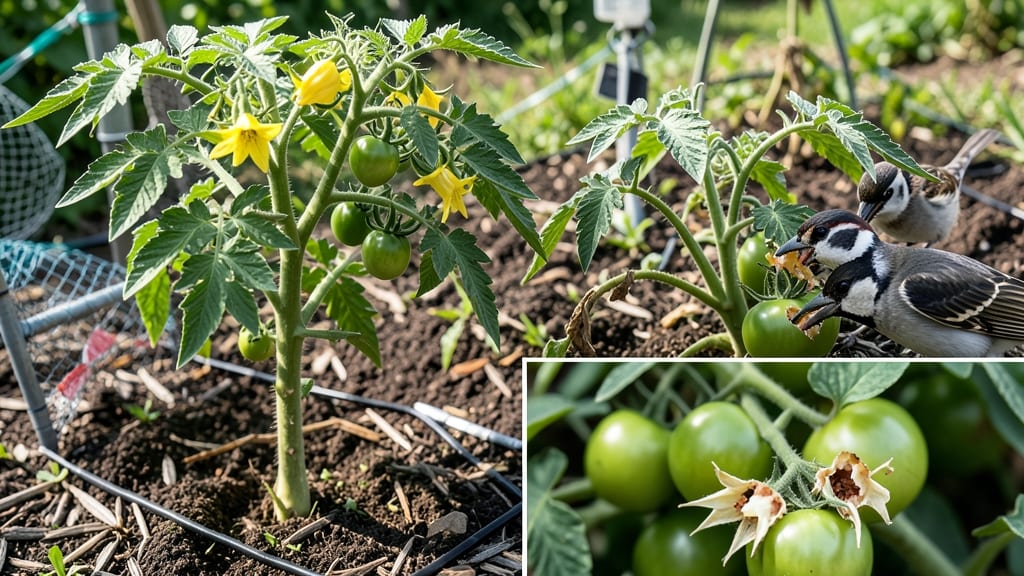
Birds will eat tomato plants, especially ripe fruit and young shoots, as they seek seeds, insects, or soft vegetation. Small birds like sparrows and finches are common culprits, while larger birds may damage foliage or ripen fruit prematurely. Natural deterrents and physical barriers can help protect your garden.
Tomato plants are a bird buffet because they offer easy access to protein-rich insects, juicy fruit, and tender leaves. 🌱 The problem worsens as tomatoes ripen—their bright colors and sweet scent attract birds like sparrows, starlings, and even crows, which can strip your harvest in hours.
I've seen firsthand how a single flock can turn a thriving tomato plant into a skeleton in a single afternoon, especially during the late summer when fruit is abundant.
While chemical repellents exist, many gardeners prefer non-toxic solutions like netting or reflective tape. The key is combining multiple strategies—physical barriers to block access and habitat tweaks to make your garden less appealing.
For example, removing nearby bird feeders or planting bird-repellent herbs like basil nearby can make a surprising difference.
💡 In This Article
- Why Birds Target Tomato Plants in Gardens
- Natural and Effective Bird Deterrents for Tomato Gardens
Why birds target tomato plants in gardens
Birds are drawn to tomato plants primarily because they offer a concentrated source of food and nutrients. 🌱 The plants attract insects like aphids, hornworms, and beetles, which birds consider an all-you-can-eat buffet.
A single tomato plant can host hundreds of these pests, making it a magnet for insectivorous birds such as sparrows, finches, and chickadees. These birds rely on high-protein insects to feed their young, and tomato plants provide an irresistible smorgasbord during the growing season.
The ripening fruit itself is another major attraction. As tomatoes turn red, their sweet aroma and vibrant color signal to birds that they're ripe and ready to eat. 🍅 The sugar content increases dramatically during ripening, making the fruit a calorie-rich snack.
Larger birds like starlings and grackles may also peck at the fruit to ripen it prematurely, creating soft spots that make it easier for them to consume. This behavior can lead to uneven ripening and even rot if the fruit isn't harvested promptly.
Young tomato shoots and leaves are also vulnerable. Birds like robins and doves may nibble on tender foliage, especially if other food sources are scarce.
The soft texture of young leaves makes them easy to consume, and birds often target these areas when searching for insects hiding beneath. 🐦 This can stunt plant growth and reduce overall yield, particularly in seedlings or recently transplanted plants.
Seasonal patterns play a significant role in bird behavior.
During spring and early summer, birds focus on insects to feed their nestlings, while late summer and fall see increased interest in ripe fruit. 🍂 This is why tomato plants often face the most damage in late August through October, when fruit is abundant and insects are less plentiful.
Understanding these patterns helps gardeners anticipate when their plants will be most at risk.
Birds also exhibit territorial behaviors that can lead to concentrated damage. A single bird that discovers a productive tomato plant will often return repeatedly and may even alert other birds to the food source. 🐦 This flocking behavior can turn a minor issue into a full-blown infestation within days.
The key to protecting your plants lies in disrupting this cycle early, before birds establish a routine of visiting your garden.
Interestingly, the way tomato plants are grown can influence their appeal to birds. Plants grown in open, sunny areas with minimal ground cover are more visible to birds and thus more susceptible to attacks. 🌿 In contrast, plants partially shaded or surrounded by dense foliage may receive less attention.
This is why many gardeners use companion planting—surrounding tomato plants with herbs like basil or marigolds—to create a less inviting environment for birds.