
Companion Plants
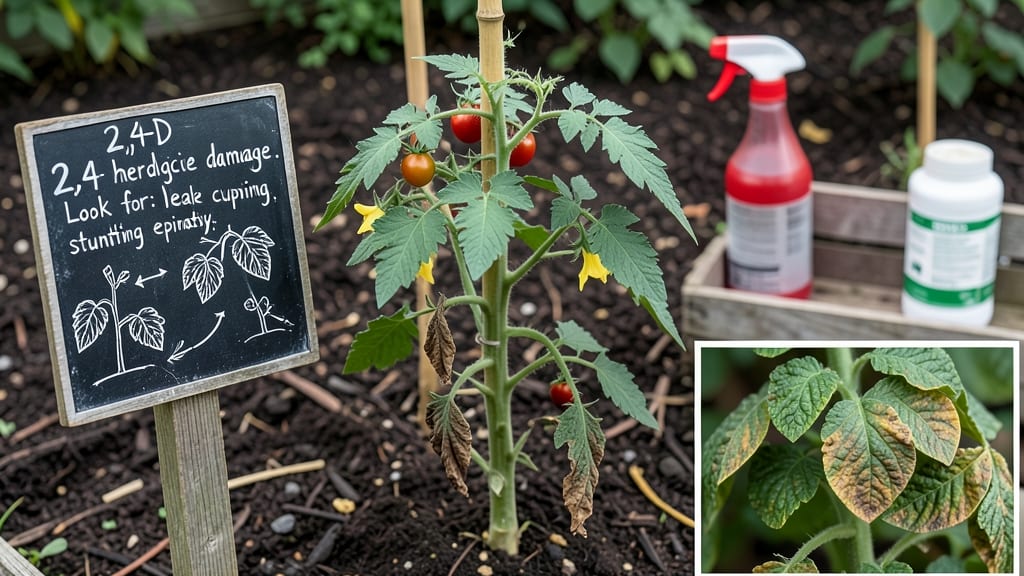
Your tomato plants just got hit with 2,4-D, and those curled leaves and stunted growth are your wake-up call. ✨ I’ve nursed plants back from this exact damage, and the key is acting fast—before the roots start refusing to cooperate.
The first 48 hours make all the difference, so let’s get to the steps that actually work.
2,4-D damage shows up as twisted leaves, weak stems, and a sudden halt in growth—like someone hit the pause button on your plants’ life. The herbicide mimics natural plant hormones, tricking your tomatoes into thinking they’re under attack.
My first mistake was panicking and overwatering; now I focus on gentle hydration and strategic pruning to help them recover.
You’ll see new growth within 2-3 weeks if you follow the right care routine: trim the worst-affected leaves, boost soil moisture without drowning roots, and shield future plants with physical barriers like cardboard or landscape fabric. The goal isn’t perfection—it’s giving your tomatoes a fighting chance.
Prevention is where the real win happens. Switch to vinegar-based herbicides or boiling water for weeds, and keep a 5-foot buffer between your tomato patch and treated lawns. This isn’t just about saving this season’s crop—it’s about protecting next year’s harvest from the start.
Root Causes of Tomato Damage
Understanding why 2,4-D (2,4-dichlorophenoxyacetic acid) harms tomato plants starts with recognizing its role as a selective herbicide—a synthetic plant hormone designed to mimic natural growth regulators (auxins) in broadleaf weeds.
While effective for controlling unwanted vegetation, its unintended impact on tomatoes stems from biochemical miscommunication in susceptible plants. Let’s break down the key triggers:
2,4-D is systemic, meaning it moves through plant tissues after absorption. When applied too heavily or sprayed near tomato plants (even as drift from neighboring areas), it overwhelms the plant’s natural auxin regulation.
Tomatoes, being sensitive to synthetic auxins, experience: - Uncontrolled cell elongation → Stems grow weak, leaves curl, and new growth becomes distorted. - Disrupted root development → Roots may swell abnormally (a condition called hypertrophy), reducing nutrient uptake. - Chlorosis → Yellowing between leaf veins occurs as chlorophyll production falters due to hormonal imbalance.
Why it happens: Tomatoes lack the detoxification enzymes (like cytochrome P450 monooxygenases) that some weeds use to break down 2,4-D. Instead, the herbicide binds to auxin receptors (AUX/IAAs), flooding the plant with signals to grow—leading to chaotic, stunted development.
Applying 2,4-D during active tomato growth (flowering/fruiting stages) amplifies damage because:
- Young tissues are more permeable, absorbing higher concentrations.
- Translocation (movement through the plant’s vascular system) is faster in warm, moist conditions—ideal for drift or runoff reaching tomatoes.
Key red flags:
- Wind or rain shortly after spraying increases drift or soil absorption.
- Foliar contact (even residual droplets) triggers symptoms within 24–48 hours.
2,4-D persists in soil for weeks to months, depending on organic matter and moisture.
Tomatoes can absorb residual herbicide through: - Root uptake → Weakened roots struggle to anchor the plant, leading to wilting or death. - Secondary contamination → Reusing sprayers, gloves, or tools previously exposed to 2,4-D without thorough cleaning.
Soil factors that worsen uptake:
- Low pH (acidic soil) → Slows 2,4-D breakdown, prolonging exposure.
- High organic matter → Binds 2,4-D but may release it slowly over time.
Not all tomatoes react equally. Heirloom and cherry varieties are often more vulnerable due to:
- Thinner cuticles → Easier herbicide penetration.
- Higher auxin sensitivity → Some cultivars overreact to synthetic hormones, causing epinasty (downward leaf curling) or blistering.
Resistant traits to watch for:
- Hybrid tomatoes (e.g., 'Celebrity' or 'Better Boy') may tolerate low doses better due to modified auxin pathways.
- Wild relatives (like Solanum pennellii) have natural resistance mechanisms, but garden varieties rarely do.
To grasp why tomatoes suffer, visualize the auxin signaling pathway: 1. Normal growth: Auxin (a natural hormone) regulates cell division and expansion in a balanced way.
- 2,4-D interference: The herbicide mimics auxin but locks receptors in an "on" state, causing: - Excessive ethylene production → Leads to leaf epinasty and fruit deformities. - Oxidative stress → Damaged cells release toxic compounds, accelerating decline.
Fun fact: 💡 Tomatoes produce their own auxin (IAA), but 2,4-D outcompetes it, creating a hormonal "traffic jam."
Even small doses of 2,4-D become catastrophic when combined with:
- Drought stress → Plants absorb more herbicide through roots to compensate for water loss.
- Nutrient deficiencies (especially potassium or calcium) → Weakens cell walls, making them more susceptible to hormonal disruption.
- High temperatures → Accelerates 2,4-D uptake and breakdown of protective enzymes.
Pro Tip: 🌡️ Test your soil for residual 2,4-D if symptoms persist. Kits like the AquaChek 2,4-D Test Strips can detect levels as low as 0.05 ppm—a threshold that may still harm tomatoes.
How to Revive and Protect Tomato Plants
Now that you’ve identified the signs of 2,4-D damage on your tomato plants, it’s time to act! Whether the issue stems from accidental herbicide drift, misapplication, or residual soil contamination, these practical solutions will help your plants recover—and keep future damage at bay.
Below, we break down cause-specific fixes, from immediate first aid to long-term prevention.
If your tomatoes were hit by 2,4-D drift from nearby lawn treatments, act fast to minimize harm:
- 🔥 Flush the Soil Immediately Water the affected plants deeply and thoroughly (at least 1–2 inches of water) to dilute and wash away residual herbicide. Repeat every 2–3 days for a week to help leach out chemicals.
- 🍳 Prune Damaged Foliage Use sterilized pruning shears to trim yellowed, curled, or deformed leaves—this prevents the plant from wasting energy on unsalvageable growth. Focus on new, healthy shoots to encourage recovery.
- 👨🍳 Apply a Growth Booster Mix 1 tbsp of liquid seaweed extract or fish emulsion in a gallon of water and spray it on the undamaged leaves (avoid stems). This stimulates root growth and helps the plant bounce back faster.
- ⏰ Monitor for Recovery If the main stem and roots are healthy, new growth should emerge in 1–2 weeks. If the plant remains stunted, consider replacing it—some damage is irreversible.
If the soil itself is contaminated (e.g., from old herbicide granules or improper disposal), take these steps:
- 💡 Test Your Soil Before replanting, conduct a soil test for herbicide residues. Many university extension services offer affordable testing. If 2,4-D is detected, do not plant tomatoes or other sensitive crops in that spot for at least 6 months.
- 🔥 Amend the Soil Mix in compost, aged manure, or coconut coir to bind and neutralize lingering chemicals. This also improves microbial activity, helping the soil break down toxins faster.
- 🎯 Plant a Cover Crop Sow fast-growing cover crops like buckwheat, mustard, or clover for 3–4 months before replanting tomatoes. These absorb and detoxify soil contaminants while adding organic matter.
- ✨ Use Mulch as a Barrier Apply a thick layer (3–4 inches) of straw or wood chips to prevent rain from reactivating buried herbicide. This also suppresses weeds naturally.
An ounce of prevention is worth a pound of cure! Here’s how to keep your tomato patch safe:
- 📊 Choose the Right Herbicides If treating your lawn, opt for tomato-safe alternatives like:
- Vinegar-based sprays (for weeds, but spot-treat away from tomatoes)
- Manual weeding (best long-term solution!)
Unfortunately, severe 2,4-D damage can be fatal. Replace the plant if:
- The main stem is girdled or blackened (no recovery possible).
- New leaves keep curling or yellowing despite care.
- The plant stops producing flowers entirely.
Pro Tip: 💡 If you must replant, choose heirloom or organic-certified tomato seeds—they’re often hardier against chemical stress.
By following these steps, your tomato plants should recover their vigor—and you’ll guard against future herbicide mishaps like a pro. 🍅🌿
Frequently asked questions
How quickly will I see signs of 2,4-D damage on my tomato plants?
Symptoms typically appear within 24–48 hours after exposure. Look for leaf curling, stunted growth, or yellowing between veins—these are classic signs the herbicide has disrupted your plants' natural hormones. Early detection is key to minimizing long-term harm.
Can I still harvest tomatoes from plants that were exposed to 2,4-D?
Only if the damage is mild and limited to leaves. Fruits already set before exposure are generally safe to eat, as 2,4-D primarily affects new growth. However, avoid consuming tomatoes from severely damaged plants—they may develop bitter or deformed fruit due to hormonal disruption.
What's the best way to clean garden tools after using 2,4-D?
Rinse tools thoroughly with hot, soapy water immediately after use, then soak them in a 1:1 vinegar-water solution for 30 minutes to neutralize any residual herbicide. Never reuse contaminated tools near tomato plants—even tiny amounts can cause damage.
Will composting help remove 2,4-D from contaminated soil?
Composting alone won't fully eliminate 2,4-D, but it can bind and neutralize some residues over time. For better results, mix in sand or peat moss to dilute the herbicide, then plant a cover crop like buckwheat to absorb remaining chemicals before replanting tomatoes.
Are there any tomato varieties that tolerate 2,4-D better than others?
No variety is truly resistant, but hybrid tomatoes like 'Celebrity' or 'Better Boy' may handle low doses slightly better due to their modified growth pathways. Heirloom varieties are generally more sensitive. The best defense is prevention—keep these plants far from treated areas.