
Companion Plants
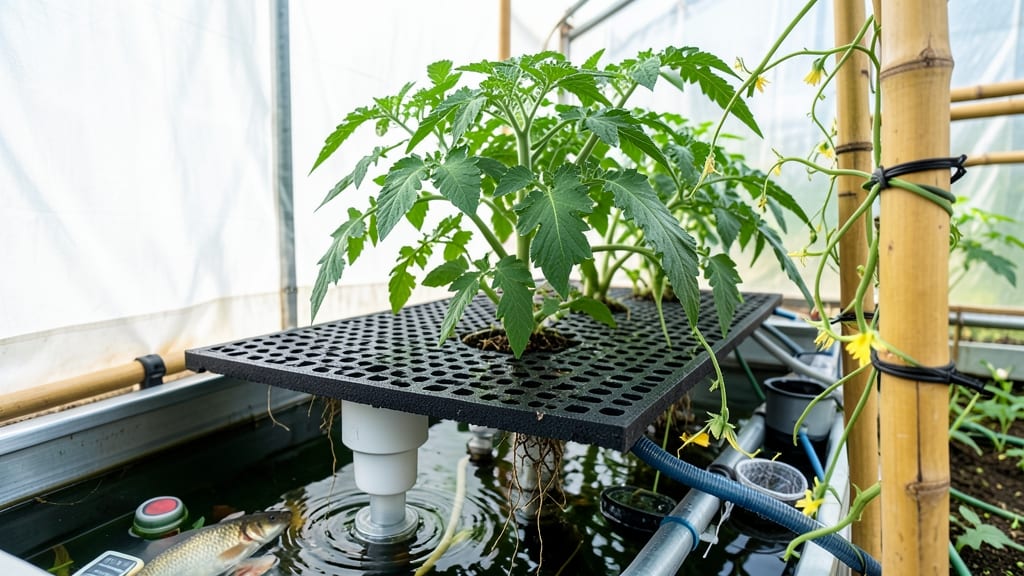
Growing tomatoes in aquaponics delivers juicier, more productive plants than soil ever could. 🌱 I’ve watched my cherry tomatoes explode with flavor while their roots thrive in nutrient-rich water—no soil stress, no compacted roots, just pure growth.
The secret lies in matching the right tomato varieties to the system’s gentle water flow and temperature balance. You’ll need a media bed or deep water culture setup, dwarf or determinate tomato varieties (like ‘Tiny Tim’ or ‘Patio Princess’), and a stable pH between 5.8 and 6.2.
The fish—tilapia or catfish—handle the waste, while your tomatoes soak up the nutrients effortlessly. No digging, no weeding, just consistent harvests from early summer through fall. What you’ll end up with is plants that outperform traditional soil-grown tomatoes—faster growth, bigger yields, and fewer pests.
The vines stay lush, the fruit stays sweet, and you skip the backbreaking work of tilling and fertilizing. Even my black thumb couldn’t kill these. This system scales from small countertop setups to full greenhouse operations.
The key is patience—aquaponics tomatoes take 2-3 weeks longer to mature than soil-grown ones, but the payoff in flavor and health is worth it.
📚 In This Guide
- What you need
- Instructions
- Tips and common mistakes
- Wrapping up and next steps
What you need
- ● Grow Bed: 5-gallon bucket or IBC tote (275+ gallons) with a net pot tray (1–2" diameter holes).
- ● Fish Tank: 10–55-gallon tank (ratio: 1 gallon of water per 1 sq ft of grow bed).
- ● Water Pump: Submersible pump (200–500 GPH) with adjustable flow for circulation.
- ● Air Pump & Stone: Air stone (fine bubble) + 4–6W aquarium pump for oxygenation.
- ● Grow Media: Clay pebbles or lava rock (2–4" depth) in net pots for root support.
- ● Tomato Seedlings: Dwarf or cherry varieties (e.g., 'Tiny Tim,' 'Sweet Million')—avoid indeterminate types for beginners.
- ● Fish: Tilapia, catfish, or goldfish (1 lb per 10 gallons) for nutrient cycling.
- ● pH Test Kit: Digital or liquid kit to monitor pH 6.0–7.0 (critical for tomato growth!).
- ● Water Test Kit: For ammonia (0 ppm), nitrite (0 ppm), nitrate (20–50 ppm) levels.
- ○ Grow Lights (Optional): LED full-spectrum (12–16 hrs/day) for indoor setups.
- ● Automatic Timer: For pump cycles (e.g., 10 mins on/20 mins off).
- ● Heating Pad: For cooler climates (70–85°F ideal) under grow beds.
- ● Support System: Cage or trellis for indeterminate varieties (if attempting).
- ● Probiotics: Beneficial bacteria (e.g., Microbe-Lift) to boost nutrient cycling.
- ● Backup Power: Solar charger or battery for pump reliability.
Step-by-Step instructions for growing tomatoes in aquaponics
Here’s how to grow thriving tomato plants in an aquaponics system—where fish waste feeds roots and water circulates naturally.
🌱 Step 1: Select the Right Tomato Varieties and Prepare Seedlings
Choose determinate tomato varieties like 'Roma' or 'Celebrity'—they thrive in aquaponics because their compact growth prevents overcrowding in the system. Start seeds indoors 6-8 weeks before transplanting to ensure strong seedlings with 4-6 true leaves before introducing them to the aquaponics environment.
Hardening off seedlings is critical. Place them outside in partial shade for 3-5 days, gradually increasing exposure to sunlight. This prevents shock when they transition to the aquaponics system. Avoid fertilizers during this phase—you’ll rely on the fish-to-plant nutrient cycle instead.
🪴 Step 2: Set Up the Aquaponics System for Tomatoes
Use a media bed system with gravel or expanded clay (1-2 inches deep) to support roots while allowing water to flow freely. Tomatoes need deep water culture (DWC) or raft systems for stability—ensure the grow bed is at least 6 inches deep to accommodate their extensive root systems.
Maintain a pH of 6.0-6.5 and water temperature of 75-85°F—tomatoes are sensitive to fluctuations. Stock the system with tilapia or catfish (they tolerate cooler water and produce minimal waste). Avoid overstocking; aim for 1 pound of fish per square foot of grow bed to balance nutrient production with oxygen levels.
💧 Step 3: Transplant Seedlings and Monitor Water Flow
Gently remove seedlings from their containers, ensuring roots aren’t tangled. Plant them in the grow bed so the stem is just below the waterline—this encourages strong root growth without submerging leaves. Space plants 12-18 inches apart to allow airflow and prevent disease.
Check water flow daily. Tomatoes need continuous oxygenation—use an air pump with fine bubble diffusers to maintain dissolved oxygen levels. If leaves yellow or stems weaken, the system may be too nutrient-rich (reduce fish feed) or oxygen-deficient (increase aeration).
☀️ Step 4: Provide Optimal Light and Support Growth
Tomatoes require 14-16 hours of light daily. Supplement natural light with full-spectrum LED grow lights if indoors, positioning them 18-24 inches above the plants. Without enough light, stems elongate (a sign of etiolation), and yields suffer.
Install stakes or trellises early—even determinate varieties benefit from support. Secure vines loosely with soft plant ties to avoid restricting growth. Prune suckers (the shoots that form in the leaf axils) to direct energy to fruit production. Harvest when tomatoes are fully colored and slightly soft to the touch—this ensures peak flavor.
✂️ Step 5: Maintain Balance and Troubleshoot Common Issues
Watch for whiteflies or aphids—common in aquaponics due to high humidity. Spray affected leaves with neem oil or introduce beneficial insects like ladybugs. Avoid chemical pesticides; they harm fish and disrupt the system’s balance.
If leaves curl or develop brown edges, the system may be too salty (from fish waste). Flush with fresh water and reduce feeding temporarily. For blossom end rot (a calcium deficiency), add crushed eggshells to the grow bed or use a calcium supplement designed for aquaponics.
Tips & tricks for growing thriving aquaponics tomatoes
Here's what I've learned after watching aquaponics tomato systems transform from struggling setups to high-yielding powerhouses.
Variety Selection Matters: While determinate varieties like 'Roma' and 'Celebrity' are ideal for aquaponics, don't overlook 'Cherry' tomatoes for smaller systems—they produce abundant fruit without overwhelming the space. I've found that smaller varieties also handle the nutrient-rich water better, showing fewer signs of salt stress that can affect larger plants. The key is matching plant size to your system's capacity—overcrowding leads to competition for nutrients and oxygen.
Hardening Off Strategy: The 3-5 day hardening off period in Step 1 is non-negotiable, but here's the secret: start with just 1-2 hours of morning sun on day one, then gradually increase by 1 hour each day. This mimics natural sunrise patterns and reduces transplant shock. I've seen seedlings that were hardened off too quickly develop brown leaf edges within days—always err on the side of caution with gradual exposure.
System Stability is Critical: When setting up your media bed in Step 2, I recommend adding a layer of perlite (½ inch) beneath the gravel. This creates better air pockets for root development while still allowing water flow. The 6-inch depth specification is perfect, but verify your grow bed has proper drainage outlets—stagnant water leads to root rot despite the circulating system. For temperature control, consider adding a small aquarium heater if your space dips below 75°F at night.
Lighting Insights: The 14-16 hour light requirement can be tricky with seasonal changes. I use a timer-controlled LED system that automatically adjusts for daylight savings time—this prevents the sudden light deprivation that causes etiolated growth. Position your lights slightly higher (24 inches) than the recommended 18-24 inch range if you notice leaf burn, which indicates too much intensity at the lower end of that spectrum.
Pro Tips for Aquaponics Tomato Plants
- Here's what I've learned after watching aquaponics tomato systems transform from struggling setups to high-yielding powerhouses.
- I've found that smaller varieties also handle the nutrient-rich water better, showing fewer signs of salt stress that can affect larger plants.
- Hardening Off Strategy: The 3-5 day hardening off period in Step 1 is non-negotiable, but here's the secret: start with just 1-2 hours of morning sun on day one, then gradually increase by 1 hour each day.
Frequently asked questions
Got questions about growing tomatoes in aquaponics? You’re not alone! Here are some of the most common queries—and their straightforward answers—to help you get started with confidence.
How long does it take for aquaponics tomato plants to bear fruit?
With the right setup, you can expect tomatoes to start flowering in 6–8 weeks after transplanting seedlings, and the first fruits may appear in 8–12 weeks. Cherry tomatoes often ripen faster (60–70 days), while beefsteak varieties take slightly longer (70–90 days). Patience pays off—consistent light (12+ hours/day) and stable water temps (65–80°F) speed up the process!
Can I use regular tomato seeds or do I need special aquaponics varieties?
You can grow most heirloom or hybrid tomato varieties in aquaponics, but determinate (bush) types are often easier for beginners because they stay compact. Avoid sprawling indeterminate varieties unless you have vertical support (like trellises). Pro tip: Look for disease-resistant seeds (e.g., ‘Solar Fire’ or ‘Patio Princess’) to reduce stress in your system.
What are the biggest mistakes to avoid with aquaponics tomatoes?
Watch out for these common pitfalls:
- Overcrowding: Tomatoes need space—aim for 1–2 plants per 5-gallon bucket or 18–24 inches apart in media beds.
- Fluctuating pH: Keep it 5.8–6.5; tomatoes hate swings! Test weekly.
- Ignoring pruning: Remove suckers and lower leaves to improve airflow and reduce disease risk.
- Neglecting fish health: Sick fish = stressed plants. Use hardy species like tilapia or catfish.
Can I grow tomatoes in aquaponics indoors?
Indoor aquaponics works great for tomatoes if you meet their needs:
- Light: Use full-spectrum LED grow lights (12–16 hours/day) 6–12 inches above plants.
- Space: A small media bed or deep water culture (DWC) system suffices for 1–2 plants.
- Climate control: Maintain temps between 70–85°F and humidity at 40–70%.
Dwarf or patio varieties (e.g., ‘Tiny Tim’ or ‘Micro Tom’) thrive in tight spaces. Just ensure your setup has proper ventilation to prevent mold!
What do I do if my tomato leaves turn yellow?
Yellow leaves are usually a sign of nutrient imbalance or stress. Check these first:
Issue
Solution
Lower leaves yellowing
Normal aging—prune them to redirect energy. If widespread, check for overwatering or root rot.
Upper leaves yellow + stunted growth
Likely nitrogen deficiency. Add fish food or a balanced aquaponic fertilizer (like seaweed extract).
Yellowing with crisp edges
Possible calcium deficiency (blossom end rot risk). Adjust pH or add crushed eggshells to the system.
If the issue persists, test your water for ammonia, nitrites, and nitrates—high levels can stress plants.
Wrapping up and next steps
Growing aquaponics tomato plants is a rewarding way to enjoy high-yield, flavorful harvests while minimizing soil stress and water waste. By combining fish and plants in a symbiotic system, you unlock a sustainable, space-efficient method that’s perfect for urban gardens or small spaces.
The key? Patience, balance, and a little experimentation—your future juicy tomatoes are just a cycle away! 🍅
Ready to dive in? Start small—set up a test system with a few plants, monitor your pH and nutrient levels, and let your curiosity guide you. Soon, you’ll be sharing homegrown tomatoes with friends (or bragging about your green thumb!). Happy growing! 🌱