How To
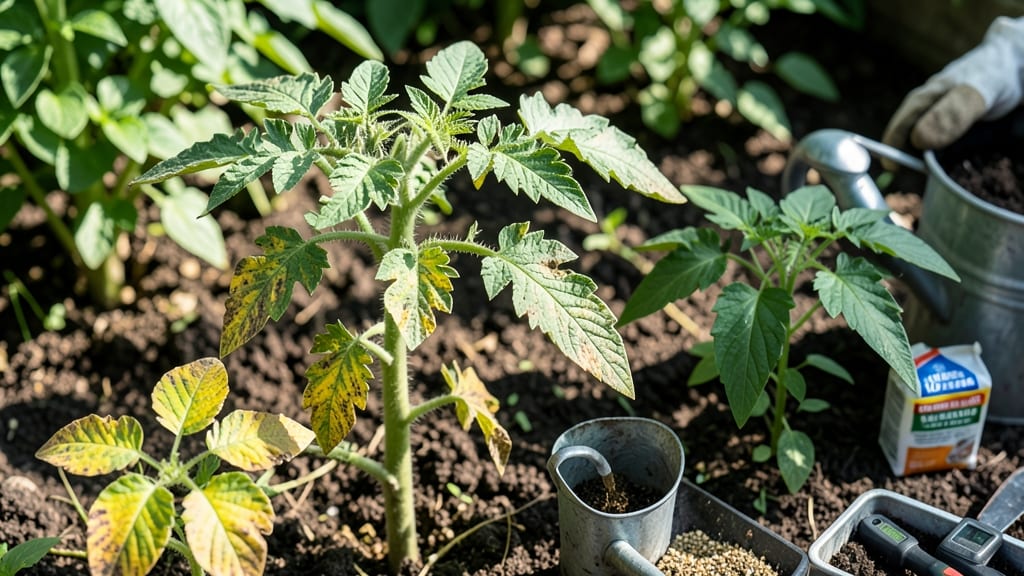
Yellow leaves on your tomato seedlings scream "help me!"—and the fix is faster than you think. 🌱 The good news? This is almost always fixable before you lose the plant, but the exact solution depends on whether your seedlings are drowning in water or starving for nutrients.
Start by checking the soil: if it's soggy and the yellowing starts at the bottom, you're overwatering. If the leaves look pale and yellow all over with no spots, it's likely a nitrogen deficiency.
The key is to act within 24 hours—that's how you save seedlings before the damage spreads.
For overwatering, let the soil dry out completely between waterings and use pots with drainage holes. For nutrient issues, a diluted fish emulsion feed (half-strength) gives seedlings the boost they need without burning tender roots. Most seedlings bounce back in 3-5 days with the right care.
Prevention is simple: water only when the top inch feels dry, and start seedlings in a light, airy mix that won't compact. Once you spot the pattern, you'll catch it early every time—and those seedlings will grow into robust plants instead of sad, yellowed stalks.
Root Causes of Yellowing Seedling Leaves
Yellow leaves on tomato seedlings are often a cry for help—your plants are telling you something’s off, and understanding the root causes is half the battle. Below, we break down the most common culprits, backed by science, so you can diagnose and fix the issue before it’s too late.
When tomato seedlings sit in soggy soil, their roots suffocate from a lack of oxygen. This triggers anaerobic conditions, where harmful bacteria and fungi thrive, leading to root rot. The plant’s natural response? Yellowing leaves—especially the lower ones—as it struggles to transport nutrients and water upward.
Why it happens:
- Excess moisture disrupts cellular respiration in roots, causing them to decay.
- Compacted or clay-heavy soil traps water, worsening the problem.
- Weak root systems (common in young seedlings) can’t handle even slight waterlogging.
Actionable clue: Check the soil—if it’s damp more than an inch below the surface, you’re overwatering. Seedlings should be watered only when the top ½ inch of soil feels dry.
Yellowing leaves can signal a nutritional emergency, particularly when:
- Nitrogen deficiency causes older leaves to turn yellow first (a classic sign of chlorosis).
- Magnesium or iron deficiencies lead to interveinal yellowing (yellowing between leaf veins) because these minerals are crucial for chlorophyll production.
Why it happens:
- Nitrogen is mobile in plants, so when levels drop, the plant “steals” it from older leaves to fuel new growth.
- Magnesium and iron are immobile—when deficient, new leaves can’t produce enough chlorophyll, turning yellow while veins stay green.
- High soil pH (alkaline conditions) locks out iron and manganese, even if they’re present in the soil.
Actionable clue: Test your soil’s pH (ideal for tomatoes: 6.0–6.8). If it’s too high, amend with sulfur or peat moss. For deficiencies, use a balanced fertilizer (10-10-10) or Epsom salt (for magnesium).
While overwatering is the usual suspect, drought stress can also trigger yellowing. When seedlings don’t get enough water, they wiltingly conserve moisture, causing leaves to yellow and crisp at the edges. This is often paired with stunted growth or drooping.
Why it happens:
- Plants close stomata (pores) to retain water, reducing photosynthesis and nutrient transport.
- Root systems shrink when dehydrated, limiting the plant’s ability to absorb water and nutrients.
- Transpiration slows, leading to oxidative stress in leaf cells.
Actionable clue: Stick your finger in the soil—if it’s bone-dry, water deeply (not just a light sprinkle). Use mulch to retain moisture and water early in the morning to minimize evaporation.
Hidden invaders like aphids, spider mites, or fungal pathogens (e.g., early blight) can drain nutrients and disrupt leaf health, causing yellowing. Pests sap plant fluids, while diseases clog vascular systems, blocking nutrient flow.
Why it happens:
- Aphids and mites inject toxins while feeding, causing curling and yellowing.
- Fungal infections (like Fusarium or Verticillium wilt) block xylem vessels, preventing water and nutrient transport.
- Bacterial leaf spot creates yellow halos around infected areas, spreading rapidly in humid conditions.
Actionable clue: Inspect leaves undersides and stems for pests or lesions. Treat with neem oil (for pests) or copper fungicide (for diseases). Remove infected seedlings immediately to prevent spread.
Tomato seedlings are temperamental—too much heat or cold, or inconsistent light, can shock them into yellowing leaves.
Why it happens:
- Cold stress (below 50°F/10°C) slows metabolism, causing chlorophyll breakdown.
- Heat stress (above 90°F/32°C) leads to protein denaturation, disrupting photosynthesis.
- Insufficient light (especially in north-facing windows or shaded areas) weakens seedlings, causing etiolation (stretched, pale, yellowing leaves).
Actionable clue: Keep seedlings in 60–75°F (15–24°C) ranges. Use grow lights (12–16 hours/day) if natural light is weak. Avoid placing them near drafts or heaters.
When you move seedlings—whether to larger pots or outdoors—root disturbance can halt nutrient uptake, causing temporary yellowing.
Why it happens:
- Root pruning during repotting severs fine root hairs, reducing water absorption.
- Sudden environmental changes (e.g., moving from indoors to a garden) stress plants, slowing recovery.
- Overcrowded roots in small pots lead to root-bound stress, limiting nutrient access.
Actionable clue: Hardening off seedlings (gradually exposing them to outdoor conditions) reduces shock. When repotting, trim damaged roots and use well-draining soil to encourage regrowth.
Quick Fixes for Yellowing Tomato Seedlings
Yellow leaves on your tomato seedlings don’t have to mean the end of your harvest—with the right approach, you can revive them fast. Below are practical, step-by-step solutions tailored to the most common causes, plus prevention tips to keep your seedlings thriving.
Let’s turn those sad, yellowing leaves into lush, green growth!
If your seedlings are sitting in soggy soil, their roots suffocate, leading to yellow leaves and stunted growth. Here’s how to fix it:
🔥 Step 1: Let the Soil Dry Out
- Stop watering immediately—let the top 1–2 inches of soil dry completely before watering again.
- Check moisture by sticking your finger in the soil: if it’s damp past your first knuckle, wait another day.
- Pro tip: 🌡️ Use a moisture meter for accuracy, especially if you’re unsure.
🍳 Step 2: Improve Drainage
- Repot if needed: If your seedlings are in compact or waterlogged soil, transfer them to well-draining pots with holes at the bottom.
- Amend the soil: Mix in perlite, vermiculite, or coarse sand (20–30%) to improve aeration.
- Raise containers: Place pots on elevated trays or saucers to prevent water pooling.
⏰ Step 3: Water Wisely
- Water deeply but infrequently: Give seedlings a slow, thorough soak at the base (avoid overhead watering).
- Water in the morning so excess moisture evaporates by night.
- Prevention tip: 🎯 Use a self-watering system or drip irrigation to avoid overwatering.
Yellowing leaves can signal a lack of nitrogen, magnesium, or iron. Here’s how to diagnose and fix it:
🍎 Nitrogen Deficiency (Lower Leaves Yellow First)
- Symptoms: Older leaves turn pale yellow, then brown, while new growth is stunted.
- Fix:
- Add organic nitrogen: Use compost, worm castings, or a balanced fertilizer (like 10-10-10).
- Quick fix: Brew compost tea (1 part compost to 5 parts water, steep for 24 hours) and water seedlings.
- Prevention tip: 💡 Side-dress seedlings with a light layer of compost every 2–3 weeks.
💪 Magnesium Deficiency (Yellow Between Veins)
- Symptoms: Yellow patches appear between leaf veins, starting on older leaves.
- Fix:
- Apply Epsom salt: Mix 1 tablespoon of Epsom salt (magnesium sulfate) per gallon of water and spray on leaves.
- Soil boost: Work 1–2 teaspoons of Epsom salt per plant into the top inch of soil.
- Prevention tip: ✨ Test soil pH (ideal for tomatoes: 6.0–6.8).
Magnesium absorbs better in slightly acidic soil.
🥗 Iron Deficiency (Young Leaves Yellow)
- Symptoms: New leaves turn yellow with green veins (chlorosis).
- Fix:
- Chelated iron spray: Use a liquid iron supplement (like iron EDTA) and spray foliage.
- Soil adjustment: Add iron-rich amendments like blood meal or fish emulsion.
- Prevention tip: 🌱 Avoid over-fertilizing with phosphorus (can lock out iron).
If leaves are yellow with crispy edges or bleached patches, your seedlings may be sunburned or overheated.
👨🍳 Step 1: Provide Shade
- Move seedlings to a spot with partial shade (especially midday sun).
- Use shade cloth: A 30–50% shade cloth can protect delicate seedlings.
- Pro tip: 🔥 Mulch the soil with straw or grass clippings to keep roots cool.
🥘 Step 2: Adjust Watering for Heat
- Water more frequently in hot weather (but still avoid soggy soil).
- Mist leaves lightly in the early morning to reduce heat stress.
- Prevention tip: 🎯 Hardening off seedlings gradually before transplanting prevents shock.
Yellowing leaves can also be a sign of pests (aphids, spider mites) or fungal issues (early blight, damping-off).
🔪 Step 1: Identify the Problem
- Check undersides of leaves for tiny bugs, webbing, or spots.
- Common culprits:
- Aphids (sticky residue, curled leaves)
- Spider mites (fine webbing, speckled leaves)
- Fungal spots (dark spots with yellow halos)
🌿 Step 2: Treat Naturally
- Pests:
- Spray with neem oil (1 tsp neem oil + 1 tsp mild soap per quart of water).
- Introduce beneficial insects (ladybugs or lacewings).
- Fungal issues:
- Remove affected leaves and sterilize pruners with rubbing alcohol.
- Apply copper fungicide or baking soda spray (1 tbsp baking soda + 1 quart water + few drops of soap).
- Prevention tip: 💡 Rotate crops and sterilize tools to prevent reinfection.
If you recently transplanted seedlings, yellow leaves may signal stress from shock or root damage.
✨ Step 1: Keep Them Calm
- Avoid fertilizing for 1–2 weeks post-transplant (roots need time to recover).
- Water gently at the base—don’t disturb the root ball.
- Pro tip: 🌡️ Use a root stimulator (like seaweed extract) to encourage growth.
🏡 Step 2: Optimize Growing Conditions
- Ensure full sun (6–8 hours daily) but protect from wind.
- Mulch heavily to retain moisture and regulate soil temp.
- Prevention tip: 🎯 Transplant on a cloudy day to reduce stress.
To keep your tomato seedlings green and strong, follow these long-term tips: ✅ Water wisely – Deep but infrequent watering (check soil moisture). ✅ Fertilize balanced – Use a low-nitrogen starter fertilizer, then switch to tomato-specific feed. ✅ Monitor pests early – Inspect leaves weekly for signs of trouble. ✅ Adjust light gradually – Avoid sudden exposure to harsh sun. ✅ Maintain healthy soil – Test pH and amend with compost or organic matter seasonally.
With these targeted fixes, your tomato seedlings should bounce back in 7–14 days. Keep an eye on their progress, and soon you’ll be enjoying vibrant green leaves—and juicy tomatoes! 🍅🌿
Frequently asked questions about tomato seedling yellow leaves
Why do my tomato seedlings turn yellow only on the lower leaves?
This is usually a sign of nitrogen deficiency—your seedlings are "borrowing" nutrients from older leaves to fuel new growth. Check if the soil feels dry or lacks organic matter. A quick fix is adding compost tea or a balanced fertilizer (like 10-10-10) to give them a nutrient boost.
Can I save my seedlings if the yellowing is caused by overwatering?
Yes! Stop watering immediately and let the top 1-2 inches of soil dry out completely. Repot if needed into well-draining soil with perlite or sand to prevent future waterlogging. Most seedlings recover within 3-5 days if you catch it early.
What's the difference between yellow leaves from overwatering vs. nutrient deficiency?
Overwatering causes uniform yellowing starting at the bottom with soft, mushy stems. Nutrient deficiency (especially nitrogen) also starts at the bottom but leaves feel crispy or papery and new growth is stunted. Check the soil moisture—if it's damp, it's likely overwatering.
Will yellow leaves come back green after fixing the problem?
Yes, but only if the damage isn't severe! The yellowed leaves themselves won't turn green again, but new growth will emerge healthy within 7-14 days if you address the root cause. Prune severely yellowed leaves to redirect energy to healthier parts of the plant.
How can I prevent yellow leaves in my tomato seedlings?
Start with well-draining seedling mix and pots with drainage holes. Water only when the top ½ inch feels dry, and use grow lights for 12-16 hours/day if natural light is weak. Add a light organic fertilizer every 2-3 weeks to maintain nutrient balance.