
Plants
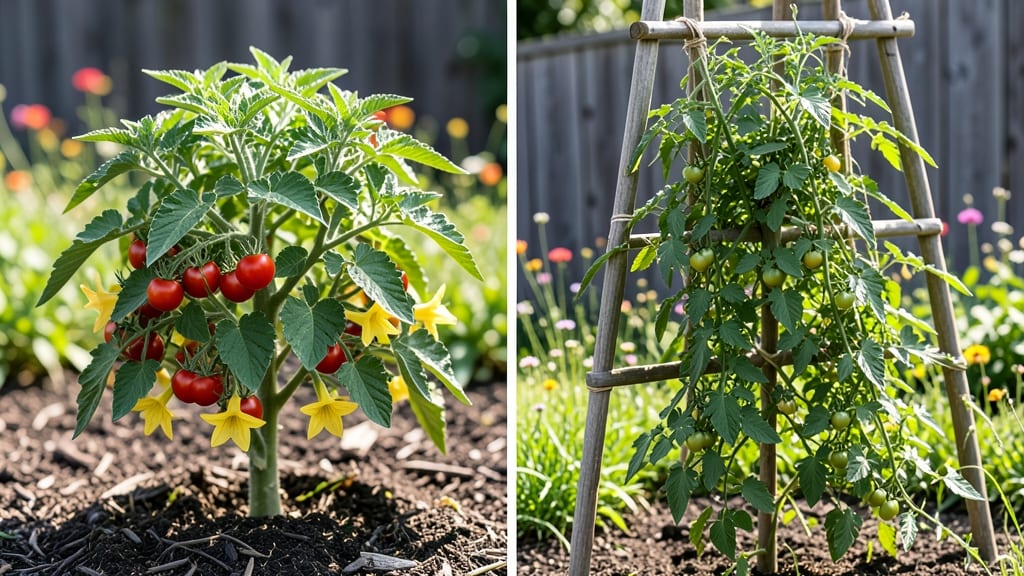
Cherry tomato plants are available as either determinate or indeterminate varieties, with determinate types producing fruit in a single harvest cycle from compact bushes, while indeterminate varieties grow as vines and yield fruit continuously throughout the growing season.
Determinate cherry tomato plants grow as self-contained bushes, typically reaching 3-4 feet tall, and set all their fruit at once, creating a heavy harvest window of just 2-3 weeks.
This makes them ideal for gardeners who want quick, abundant yields and prefer container growing. 🌱 Indeterminate varieties, on the other hand, keep producing new blossoms and fruit all season long, often reaching 6-10 feet tall and requiring trellising.
If you're planning a summer-long tomato feast or have vertical space, indeterminate types are your best bet.
What's interesting is how these growth habits affect your garden planning. Determinate plants are perfect for succession planting—replace them after harvest to keep fresh tomatoes coming. Indeterminate varieties thrive in warmer climates or extended growing seasons, rewarding patience with continuous production until frost.
💡 In This Article
- How Determinate vs Indeterminate Cherry Tomatoes Grow Differently
- Best Cherry Tomato Varieties for Your Garden Space
How determinate vs indeterminate cherry tomatoes grow differently
The fundamental difference between these growth types lies in their stem structure and flowering triggers. Determinate varieties have a built-in genetic "stop signal"—their main stem ends in a flower cluster, and all subsequent growth occurs from lateral branches.
This creates the classic bush shape that tops out around 3-4 feet tall.
The plant's energy focuses on producing fruit simultaneously, which is why you'll see that massive harvest all at once. 🌱 This synchronized flowering is triggered by daylight length, typically kicking into high gear when days start shortening in late summer.
Indeterminate cherry tomatoes, however, lack this growth inhibitor. Their main stems keep elongating indefinitely (often 6-10 feet or more) and produce continuous flower clusters along the vine. Each new set of blossoms appears about 2-3 weeks after the previous one, creating that extended harvest window.
The plant's growth hormone balance favors vertical expansion over bushy branching, which is why they need sturdy trellises. What's fascinating is how their flowering responds to temperature—cool nights below 55°F can delay fruit set, while consistent warmth above 70°F encourages prolific blooming.
This growth difference dramatically affects your harvest timing and yield distribution. Determinate varieties give you that "all or nothing" bounty—typically 2-3 weeks of intense picking followed by plant decline. Indeterminate types, however, provide a more gradual, prolonged harvest that can stretch from early summer until frost.
For example, 'Sweet Million' determinate plants might produce 1 pound of fruit per plant in just 2 weeks, while 'Sun Gold' indeterminate vines could yield 2-3 pounds per plant over 8-10 weeks—though with smaller individual fruits.
The root system also plays a crucial role. Determinate plants develop wider, shallower roots that spread out to support their bushy structure, making them more drought-tolerant once established.
Indeterminate varieties grow deeper taproots to anchor their towering vines, but this makes them slightly more vulnerable to soil moisture fluctuations. 💧 This is why indeterminate types often need more consistent watering—drooping leaves signal stress when their extensive root systems can't keep up with the plant's rapid growth demands.
Here's what most gardeners don't realize: the flowering trigger difference extends to disease resistance. Determinate varieties tend to have more concentrated energy in their fruit production phase, which can make them slightly more susceptible to blossom-end rot during that intense harvest window.
Indeterminate types spread their energy production more evenly, often resulting in more consistent calcium uptake and fewer physiological disorders. This is why 'Sweet 100' indeterminate cherry tomatoes are prized for their reliability in hot climates where determinate varieties might struggle.
Consider your garden's vertical space when choosing. A 3-foot-tall determinate plant fits neatly in a 5-gallon container, while an indeterminate vine needs at least 5 feet of trellis height to thrive.
The space trade-off directly impacts your yield strategy—determinate types maximize ground space for higher plant density, while indeterminate varieties optimize vertical space for prolonged production. 🌿