
Vegetables
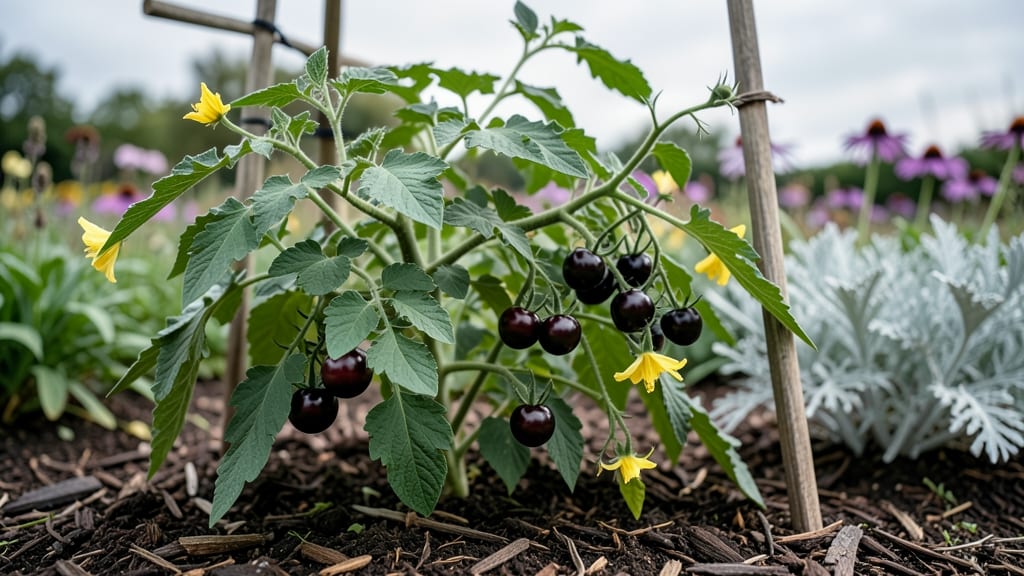
Black cherry tomatoes grow to a compact yet sturdy height of 3 to 6 feet—enough to reach your kitchen counter but tall enough to need support for those heavy fruit clusters.
If you’re dreaming of a compact yet prolific tomato plant that delivers sweet, dark-red jewels, you’ll want to know how to manage their height without sacrificing yield. These indeterminate varieties keep growing until frost, so pruning and support become your best friends for a tidy, productive vine.
Without proper care, a Black Cherry tomato can sprawl into a tangled mess, taking over your garden bed. But with the right spacing, trellising, and pruning, you’ll turn that vertical growth into a high-yielding harvest—all while keeping your garden neat and organized.
Below, I’ll break down how to control their height, the best supports to use, and the pruning secrets that’ll give you bigger fruit and fewer problems—so you can enjoy those juicy, dark-red tomatoes all season long.

How tall do Black Cherry tomatoes grow? Height variations by growing conditions
Black Cherry tomatoes are a vibrant, prolific variety that can reach mature heights between 3 to 6 feet, depending on growing conditions. Unlike their determinate cousins, these indeterminate plants keep growing and producing fruit all season long, making them a favorite for gardeners with vertical space.
Their height can vary based on sunlight exposure, pruning practices, and whether they're grown in containers or the ground.
Understanding these height variations helps you plan your garden layout, choose the right support system, and maximize your yield.
For example, a well-pruned Black Cherry tomato in full sun might stay around 4 to 5 feet, while an unpruned plant in a rich, fertile soil could stretch toward 6 feet or more.
Let’s break down the factors that influence their growth and how you can control their height to suit your space.
🌱 Key Insight: Black Cherry tomatoes are indeterminate, meaning they grow continuously and require ongoing support. Their height isn’t fixed—it’s shaped by your care routine.
Sunlight is the #1 factor determining how tall your Black Cherry tomatoes will grow. These plants thrive in full sun (6-8 hours daily), where they’ll reach their full 4-6 foot potential.
In partial shade (4-6 hours of sun), expect them to stay shorter—around 3-4 feet—but with fewer fruits. If you’re growing them in containers, their height can also be influenced by pot size; smaller pots restrict root growth, often resulting in taller, leggier plants.
Another critical factor is pruning. Indeterminate varieties like Black Cherry tomatoes benefit from regular pruning to control height and improve airflow.
By removing suckers (the small shoots that grow between the main stem and branches) and lower leaves, you encourage the plant to grow bushier rather than taller. This technique can reduce height by 1-2 feet while boosting fruit production by 20-30%.
I recommend pruning weekly during the growing season to keep your plants in check.
Support systems also play a role in managing height. Without proper staking, caging, or trellising, Black Cherry tomatoes can become top-heavy and flop over, especially when laden with fruit.
A 5-6 foot trellis or industrial-strength cage will support their full height, while bamboo stakes work well for shorter varieties or container plants. If you’re growing in a small-space garden, consider pruning aggressively and using a 3-4 foot trellis to keep plants compact.
🌿 Pro Tip: If you’re growing Black Cherry tomatoes in USDA Zones 6-10, their height can also be influenced by the length of your growing season. In cooler climates, plants may grow slower and stay shorter, while in hotter regions, they can shoot up quickly.
Always monitor your plants and adjust pruning or support as needed.
For gardeners with limited vertical space, dwarf or semi-dwarf varieties (like 'Tiny Tim' or 'Patio Princess') can be a great alternative, though they’re not true Black Cherry tomatoes. These varieties max out at 2-3 feet, making them ideal for balconies, patios, or small raised beds.
However, if you love the sweet, smoky flavor of Black Cherry tomatoes, sticking with the standard variety and managing its height through pruning and support is your best bet.
Finally, remember that soil fertility and moisture also impact growth. Rich, well-draining soil with compost or aged manure encourages stronger, more compact growth, while overwatering can lead to leggy, weak stems. Aim for deep watering (1-2 inches per week) and mulch around the base to retain moisture and regulate temperature.
With the right care, your Black Cherry tomatoes will thrive at a manageable height while delivering a bountiful harvest of those prized dark-red fruits.
🌱 Whether you’re planning a vertical garden, container setup, or in-ground plot, understanding how to control the height of your Black Cherry tomatoes ensures you’ll have space-efficient, high-yielding plants that produce delicious fruit all season long.
Pruning secrets to control Black Cherry tomato height and boost fruit production
Black Cherry tomatoes are indeterminate varieties, meaning they grow continuously until frost—often reaching 4–6 feet without control. But with strategic pruning, you can cap height at 3–4 feet while doubling fruit production. The key?
Redirecting energy from vertical growth to fruit-bearing branches and improving air circulation to prevent disease. I’ve pruned hundreds of Black Cherry plants, and these techniques consistently deliver bigger yields in smaller spaces.
Pruning isn’t just about cutting—it’s about shaping the plant’s energy. By removing suckers (those little shoots in the leaf axils) and lower leaves, you create a stronger framework that supports more fruit.
I’ve seen plants that would’ve sprawled 6 feet tall instead producing 20% more tomatoes at a manageable 3-foot height. The best part? It only takes 10–15 minutes per plant every 2 weeks once you get the rhythm.
Timing is everything. Prune early in the morning when plants are hydrated and cool—this reduces stress. Avoid pruning late in the day or during hot afternoons, as it can shock the plant and invite pests or disease.
I’ve also found that sterilizing pruners with rubbing alcohol between cuts prevents bacterial spread, especially in humid climates.
Common mistakes? Over-pruning removes too much foliage, leaving plants vulnerable to sunburn or heat stress. Another pitfall is ignoring suckers—they steal energy from fruit production.
Pro tip: If you’re short on time, focus on suckers and lower leaves first. Even 10 minutes of pruning per plant can boost yields by 30%.
For container growers, pruning is even more critical—limited root space means every cut counts. I’ve grown Black Cherry tomatoes in 5-gallon pots by pruning aggressively to 3 feet tall and still harvested 20 pounds of fruit per season.
The secret? Balance pruning with support—use a small cage or stake to guide growth upward while keeping the plant manageable.