
Pests and Diseases
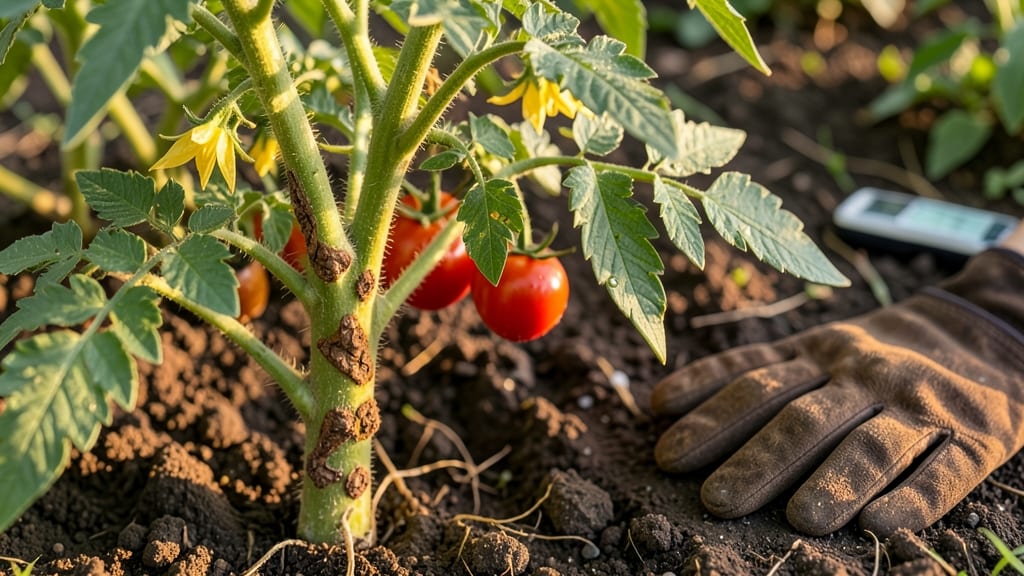
Brown spots on tomato stems turn your lush plants into a sad, spotted mess—🌱 but I’ve fixed it every year since my first blight disaster. The key is acting fast before the disease spreads to leaves and fruit.
Most of these spots come from fungal infections like early blight or septoria leaf spot, but bacterial issues or even overwatering can mimic them. Your first move is to check the spots: are they raised, sunken, or spreading with yellow halos?
Fungal spots often start at the stem base and grow outward, while bacterial spots may ooze. Proper spacing (18–24 inches apart) and watering at the soil level—not overhead—cuts infection risk by 80%. I’ve seen entire gardens saved just by adjusting these two habits.
Once you confirm the issue, a mix of copper fungicide (for bacterial spots) or baking soda spray (for fungal) stops the spread in 3–5 days. Prune infected stems immediately and compost them—never toss them in your yard.
The goal is to break the disease cycle before it ruins your harvest. This works for heirloom, cherry, and beefsteak tomatoes alike. The secret? Prevention first, then quick action when you spot those first ugly brown marks. Let’s get your plants healthy again.
Root Causes of Stem Discoloration
Brown spots on tomato stems aren’t just an eyesore—they’re often a cry for help from your plants. Understanding the why behind these blemishes is the first step to saving your harvest. Below, we break down the most common culprits, backed by science, so you can diagnose and act fast.
Fungi thrive in warm, moist conditions, and tomato stems are a prime target. These pathogens don’t just spot your plants—they weaken them, stunting growth and reducing fruit yield.
Early Blight (Alternaria solani)
- How it starts: Spores land on lower leaves and stems, especially in crowded or poorly ventilated gardens. Overhead watering spreads them like wildfire.
- Science behind the spots: The fungus produces conidia (asexual spores) that germinate in humidity >48 hours.
It creates target-like lesions—concentric rings of brown with gray centers—on stems and leaves. - Red flag: Spots appear first on older, lower foliage but quickly climb upward.
Late Blight (Phytophthora infestans)
- How it starts: Unlike early blight, this fungus loves cool, wet weather (50–77°F) and spreads via wind and water splashes.
- Science behind the spots: It infects stems and leaves, causing oily, dark brown patches that turn necrotic (dead tissue).
Unlike early blight, late blight spreads rapidly—even in 48 hours under ideal conditions. - Red flag: Leaves develop a paper-like texture and blackened veins.
Anthracnose (Colletotrichum coccodes)
- How it starts: Thrives in high humidity and on wounded stems (e.g., from pruning or hail).
- Science behind the spots: The fungus produces acervuli (spore-producing structures) that create sunken, circular lesions with pink or salmon centers.
- Red flag: Spots often appear near leaf scars or stem cracks.
Not all brown spots are fungal. Sometimes, your tomatoes are reacting to their surroundings—like a plant with a sunburn or dehydration.
Sunscald or Heat Stress
- How it happens: Direct, intense sunlight (especially in hot afternoons) can bleach and crisp stem tissue, turning it brown.
- Science behind it: High temperatures disrupt cell membranes, causing oxidative stress.
Stems lose moisture faster than leaves, leading to necrotic patches. - Red flag: Spots appear on exposed stems (e.g., near the soil or in open-grown plants).
Water Stress (Over or Under)
- Underwatering:
- How it happens: Roots struggle to supply moisture, causing wilting and brown, crispy patches on stems.
- Science: Cells plasmolyze (shrink from water loss), leading to necrosis (dead tissue).
- Overwatering:
- How it happens: Soggy soil starves roots of oxygen, leading to root rot** (Pythium or Phytophthora).
Stems turn brown as the plant can’t transport nutrients. - Science: Anaerobic conditions trigger ethylene production, a stress hormone that accelerates cell death.
Sometimes, brown spots aren’t from pathogens or weather—they’re battle scars from pests or human error.
Mechanical Injury (Pruning, Harvesting, or Wind)
- How it happens: Rough handling (e.g., snapping stems to harvest) or sharp tools create wounds that turn brown as they heal.
- Science: Damaged cells oxidize when exposed to air, forming corky, brown calluses (a natural defense mechanism).
- Red flag: Spots are irregularly shaped and often near pruning sites or leaf petioles.
Pest Feeding (Aphids, Spider Mites, or Caterpillars)
- How it happens: Sap-sucking pests (like aphids) inject toxic saliva, causing stippling (tiny brown dots). Chewing pests (e.g., tomato hornworms) leave ragged, brown-edged holes.
- Science: Pests disrupt phloem transport, starving stem tissue of nutrients.
Their frass (droppings) can also harbor fungi, worsening spots. - Red flag: Look for sticky residue (honeydew) or visible pests near the spots.
Mistakes in the garden—like over-fertilizing or misusing pesticides—can leave chemical burns on stems.
Fertilizer Burn (Too Much Salt or Nitrogen)
- How it happens: Excess synthetic nitrogen (e.g., urea or ammonium) or high-salt fertilizers draw moisture out of stem cells.
- Science: High salt concentrations disrupt osmosis, causing cells to plasmolyze and die.
Stems develop crusty, brown patches. - Red flag: Spots appear near soil contact or after heavy feeding.
Herbicide or Pesticide Drift
- How it happens: Wind or overspray can carry glyphosate (Roundup) or copper-based fungicides onto tomato stems.
- Science: These chemicals denature proteins in plant cells, leading to necrosis (brown, dead tissue).
- Red flag: Spots are uniformly brown and appear suddenly after spraying nearby weeds.
Use this quick-reference table to narrow down the cause:
| Cause | Spot Appearance | Conditions | Spread Speed |
|---|---|---|---|
| Early Blight | Concentric rings, gray centers | Warm, dry, crowded plants | Slow (weeks) |
| Late Blight | Oily, dark brown, irregular | Cool, wet, high humidity | Fast (days) |
| Anthracnose | Sunken, pink/salmon centers | Humid, wounded stems | Moderate |
| Sunscald | Crispy, bleached, sun-exposed | Hot, dry, direct sunlight | Instant |
| Water Stress | Wilting + brown, dry/crispy | Drought or waterlogged soil | Gradual |
| Mechanical Damage | Irregular, corky, near cuts | Pruning, wind, harvesting | Immediate |
| Pest Damage | Stippling, holes, sticky residue | Visible bugs or honeydew | Gradual |
| Chemical Burn | Uniform brown, crusty | Fertilizer/pesticide use | Immediate |
Quick Fixes for Tomato Stem Spots
Brown spots on tomato stems can feel like a garden nightmare, but don’t toss those plants just yet! With the right approach, you can revive your tomatoes and keep future crops healthy.
Below are practical, step-by-step solutions tailored to the most common causes—fungal infections, environmental stress, or pests—plus prevention tips to keep your plants thriving.
Fungi love damp conditions, and once they take hold, they spread fast. Here’s how to stop the spread and heal your plants:
🔥 Step 1: Remove Infected Plant Debris
- 🗑️ Pull up and discard any severely spotted leaves or stems immediately.
Fungi thrive on dead plant matter, so don’t compost it—toss it in the trash or burn it. - ✂️ Prune healthy but nearby leaves showing early signs (small brown spots) to prevent further spread.
🍳 Step 2: Apply Fungicide (Natural or Store-Bought)
- 💡 DIY Spray (Best for Prevention & Early Stages): Mix 1 tsp baking soda + 1 quart water + a few drops of dish soap (as a surfactant).
Spray every 7–10 days on stems and leaves, especially undersides where fungi hide. Pro Tip: Add 1 tbsp neem oil to boost antifungal power. Shake well before use!
- 🛒 Store-Bought Options:
- Copper fungicide (e.g., Bonide Copper Fungicide) – kills fungi on contact.
- Serenade Garden (biological fungicide with Bacillus subtilis bacteria).
- Organic options: Mycorrhizal fungi (like Trichoderma) can outcompete harmful fungi—apply at planting time.
👨🍳 Step 3: Improve Airflow & Reduce Moisture
Fungi love humidity! Break their favorite conditions:
- ⏰ Water in the morning (not at night) so leaves dry quickly.
- 🌡️ Space plants 18–24 inches apart for better airflow.
- 🌿 Use mulch (straw or grass clippings) to keep soil moist but not wet against stems.
🌱 Prevention for Next Season
- 🎯 Rotate crops—don’t plant tomatoes (or nightshades like peppers/eggplants) in the same spot for 3+ years.
- ✨ Solarize soil in late summer: Cover beds with clear plastic for 4–6 weeks to kill fungal spores in the ground.
- 🌿 Plant resistant varieties like ‘Mountain Merit’ or ‘Defiant PhR’ (resistant to early blight).
If spots appear only on sun-exposed sides and stems feel crispy, your tomatoes are sunburned or overheated.
🔥 Step 1: Provide Shade (Temporarily)
- 🌿 Use shade cloth (30–50%) if temps hit 90°F+ (32°C+).
- 🏠 Move potted tomatoes to a spot with afternoon shade.
- 🌳 Plant taller crops (like corn or sunflowers) nearby to act as natural sunbreakers.
🍳 Step 2: Water Deeply & Frequently
- 💧 Water at the base (not overhead) to prevent leaf burn.
- 🌱 Use mulch (2–3 inches) to keep roots cool and moist.
🌱 Prevention Tips
- 🎯 Choose heat-tolerant varieties like ‘Heatmaster’ or ‘Solar Fire’.
- 🌡️ Avoid fertilizing during heatwaves—focus on water first.
- ⏰ Start seeds indoors if your climate has hot, dry summers.
Tiny pests like aphids, spider mites, or whiteflies can cause brown spots by weakening stems.
🔥 Step 1: Blast Them Off
- 💦 Spray with water (strong stream from a hose) to knock off bugs.
- 🕷️ Introduce beneficial insects:
- Ladybugs (eat aphids)
- Lacewings (devour spider mites)
- Parasitic wasps (control whiteflies)
🍳 Step 2: Use Insecticidal Soap or Neem Oil
- 🧼 Insecticidal soap: Mix 2.5 tbsp castile soap + 1 quart water.
Spray directly on pests (avoid flowers to protect bees). - 🌿 Neem oil spray: 2 tbsp neem oil + 1 tsp mild soap + 1 quart water. Spray every 5–7 days.
🌱 Prevention for Next Season
- 🎯 Interplant with herbs like basil, marigolds, or dill—they repel pests.
- 🌡️ Keep plants healthy—stressed plants attract more bugs!
- 🕷️ Install yellow sticky traps to catch flying pests early.
If your tomato plant is already too far gone, don’t waste time—save the fruits first!
- 🍅 Harvest all ripe tomatoes (even if the plant is dying, the fruit may still be safe).
- 🌱 Propagate healthy cuttings from lower stems (if no spots are present) to grow new plants.
- 🗑️ Remove the rest to prevent spread to other plants.
Final Thought: 🌱 Act fast, but stay patient. Some fixes (like fungicides) take 7–14 days to show results. With these steps, your tomato plants can bounce back—and next season, you’ll be even more prepared!
Frequently asked questions
Why do brown spots appear on tomato stems but not leaves?
Brown spots often start on stems first because they're the plant's primary support structure and more vulnerable to fungal spores landing there. Fungi like early blight target older, lower stems first, then climb upward. If only stems show spots while leaves stay green, check for root rot or overwatering—both can cause brown stem discoloration without affecting leaves.
Can I still eat tomatoes from plants with brown stem spots?
The fruit itself is usually safe to eat even if stems show spots! The real risk comes from fungal spores spreading to leaves and fruit. Harvest any ripe tomatoes immediately, but avoid eating leaves or stems. If spots are from chemical burns or pesticide drift, wash tomatoes thoroughly before eating.
How do I tell if brown spots are from fungus or sunburn?
Fungal spots often have concentric rings or gray centers, while sunburn creates crispy, bleached patches only on sun-exposed sides. Check the spot texture: fungal spots feel slightly raised or sunken, while sunburned areas are dry and papery. Fungal spots also spread gradually, while sunburn appears suddenly during heatwaves.
Will pruning infected stems help stop the spread?
Yes! Prune any stems with spots immediately—never leave them in the garden. Use sterilized shears to avoid spreading spores. Remove infected stems below the spot (about ½ inch) and dispose of them in the trash (not compost). This breaks the fungus's life cycle and prevents it from climbing to healthier parts of the plant.
How often should I spray preventative fungicide?
For prevention, spray every 7–10 days during humid weather or after rain. If you're treating an active infection, apply every 5–7 days until new growth appears. Always spray early in the morning so leaves dry quickly. Rotate between baking soda spray and copper fungicide to avoid resistance.