
Light Requirements
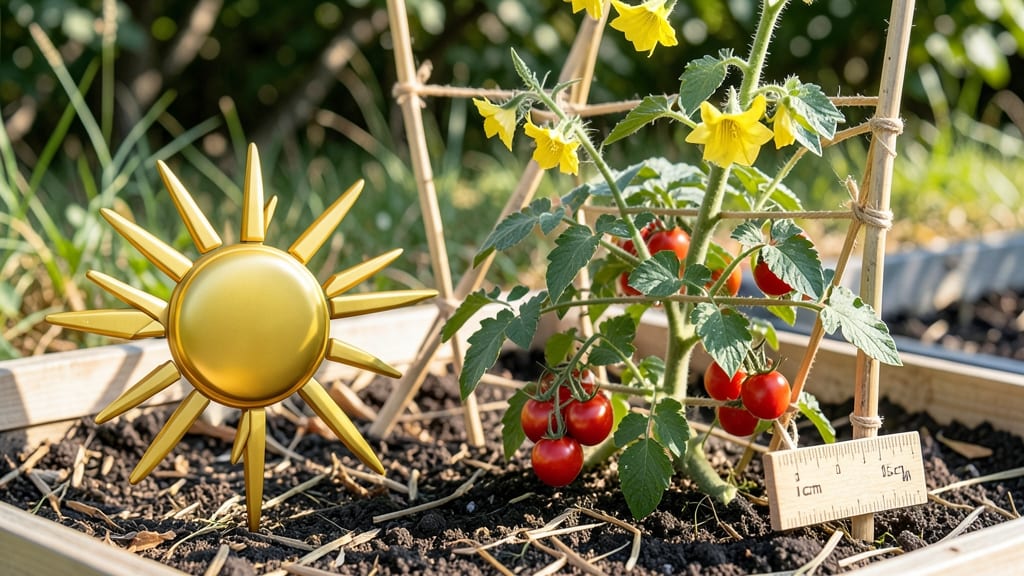
Cherry tomatoes have sun requirements of 6-8+ hours of direct sunlight daily—any less and you’ll get bitter fruit or none at all. 🌞 Last summer, my cherry tomatoes in the shady corner produced half the yield of my sunniest plants, and the flavor?
Forget it. They needed more light to sweeten up properly.
Climate makes all the difference: in hot, dry regions, afternoon shade helps prevent sunscald, while cooler areas thrive with full sun all day. Leggy stems or sparse fruit? That’s your plant begging for more light. Even a few feet of shade can cut production by 30%.
You can boost sunlight with simple tricks: prune lower leaves to improve airflow, rotate containers weekly, or plant near reflective surfaces like white fences. Companion plants like basil or marigolds also help by repelling pests that stress plants under weak light.
For best results, place tomatoes where they get morning sun and afternoon shade in extreme heat. In cooler climates, full sun all day is ideal. The payoff? Juicy, flavor-packed tomatoes that make grocery-store varieties taste like cardboard.
Understanding Sunlight Struggles
Sunlight is the lifeblood of cherry tomatoes—too little or too much can sabotage growth, flavor, and yield. But why do these issues happen in the first place? Let’s break down the science behind the most common sun-related problems.
Cherry tomatoes are full-sun plants, meaning they thrive with 6–8+ hours of direct sunlight daily. When they don’t get enough, their struggles become obvious:
- Weak, leggy stems 🌱: Plants stretch toward light (a survival tactic called etiolation), becoming spindly and prone to snapping. This happens because the plant prioritizes reaching upward over thickening its stems. - Pale, yellowish leaves 🍃: Chlorophyll production slows without strong light, leading to a washed-out appearance.
The leaves may also develop interveinal chlorosis (yellowing between veins), a sign of poor photosynthesis. - Poor fruit set 🍅: Inadequate light reduces flower pollination and fruit development.
Tomatoes need energy from sunlight to convert sugars into flavorful fruit—without it, they’ll produce small, bland, or even no tomatoes at all. - Susceptibility to pests 🐛: Weak plants attract aphids, whiteflies, and spider mites, which thrive on stressed foliage.
Why it happens:
- Shade from nearby structures (trees, fences, buildings) blocks critical sunlight.
- Cloudy or rainy seasons reduce natural light intensity.
- Overcrowded plants compete for light, leaving some in the shade.
- Incorrect container placement (e.g., tomatoes in a north-facing pot with no supplemental light).
While cherry tomatoes love sun, intense afternoon heat (especially in hot climates) can cause problems:
- Sunburnt leaves & fruit 🔥: Leaves develop white or brown scorch marks, and tomatoes get blotchy, leathery patches (a condition called sunscald).
This occurs when high UV rays and heat exceed the plant’s protective pigments. - Blossom drop 🌸: Extreme heat stresses flowers, causing them to fall off before pollination.
Temperatures above 90°F (32°C) can halt pollen production entirely. - Stunted growth 📉: The plant diverts energy to heat stress protection (like producing more antioxidants) instead of growing, leading to slower development.
Why it happens:
- Lack of afternoon shade in peak summer months.
- Reflective surfaces (concrete, metal, or light-colored soil) amplify heat and UV exposure.
- Poor watering habits (drought stress makes plants more vulnerable to sun damage).
- Young plants (still developing protective pigments) are more susceptible than mature ones.
Not all sunlight is created equal—partial shade or dappled light can confuse cherry tomatoes:
- Small, misshapen fruit 🍅➡️🍆: Inconsistent light leads to uneven ripening and odd growth patterns (e.g., lopsided tomatoes).
- Weak, uneven vines 🌿: Plants grow toward the strongest light source, creating a lopsided canopy that’s harder to support.
- Increased disease risk 🦠: Moisture trapped in shaded leaves creates a humid microclimate, promoting fungal issues like early blight or powdery mildew.
Why it happens:
- Mixed light conditions (e.g., morning sun + afternoon shade).
- Tall plants casting shadows on lower leaves or neighboring tomatoes.
- Improper trellising (vines sprawling instead of growing upward for even light exposure).
Light intensity changes with the seasons and latitude, catching gardeners off guard:
- Short winter days ❄️: Reduced sunlight slows growth, leading to smaller harvests or delayed ripening.
- Long summer days 🌞: While more daylight helps, heat stress (not light) often becomes the limiting factor.
- High-altitude or northern climates 🏔️: Lower UV levels can weaken plants, requiring supplemental grow lights in greenhouses or indoor setups.
Why it happens:
- Natural daylight variations (e.g., 10-hour days in summer vs. 6 in winter).
- Geographic location (e.g., tomatoes in Alaska need more care than those in California).
- Greenhouse limitations (glass filters some UV light, reducing intensity).
Cherry tomatoes crave consistency—whether it’s bright, direct light or gentle shade during heatwaves. The issues above stem from mismatches between the plant’s needs and its environment. The good news?
Once you identify the root cause, fixes (like relocating plants, adjusting shade cloth, or improving watering) are straightforward. Stay tuned for our next section on actionable solutions to optimize your tomatoes’ sunlight!
Fixing Sun Struggles for Cherry Tomatoes
Now that you understand why your cherry tomatoes might not be thriving under the sun, let’s tackle the fixes—practical, step-by-step solutions to ensure your plants bask in the perfect light for juicy, flavorful harvests.
Whether your tomatoes are wilting, stunted, or just not producing, these fixes will get them back on track.
Problem: Your cherry tomatoes aren’t getting enough sunlight (less than 6–8 hours of direct sun daily).
Solutions:
- 🔥 Move to a Sunnier Spot Relocate pots or seedlings to a location with full sun exposure. South-facing windows, balconies, or open garden beds are ideal. If your yard has shady spots, consider a sun-tracking trellis or reflective surfaces (like white walls or mirrors) to redirect light.
- 🍳 Use Grow Lights for Indoor Growers If you’re growing indoors, supplement natural light with LED grow lights (12–16 hours/day). Place lights 6–12 inches above plants and adjust as they grow. A simple full-spectrum bulb can work in a pinch!
- 🌱 Prune Overhanging Branches Trim nearby trees or bushes blocking sunlight. Even a few hours of extra light can make a difference in fruit development.
💡 Prevention Tip: When planting, avoid tall structures (like fences or buildings) that cast long shadows. If you’re in a high-rise apartment, a south-facing window with a light reflector can maximize exposure.
Problem: Your tomatoes are getting too much direct sun (especially in hot climates), leading to sunburn or stress.
Solutions:
- 👨🍳 Provide Afternoon Shade Use shade cloth (30–50%) during peak afternoon hours (12–4 PM) to prevent heat stress. Secure it with stakes or a lightweight frame. Alternatively, plant near taller crops (like corn or sunflowers) to create natural shade.
- 🥘 Mulch to Regulate Soil Temperature Apply a 2–3 inch layer of mulch (straw, grass clippings, or wood chips) to keep roots cool and retain moisture. This also prevents soil from overheating, which can shock plants.
- 💦 Increase Watering Frequency Deep watering early in the morning helps tomatoes withstand heat. Aim for 1–2 inches of water per week, adjusting for extreme heat. Drip irrigation is best—it delivers water directly to roots without wetting leaves (which can cause sunburn).
✨ Pro Tip: If your tomatoes are blistering or turning white, they’re sunburned. Move them to a partial shade spot (like under a 30% shade cloth) until they recover.
Problem: Your garden has patchy sunlight, causing some plants to thrive while others struggle.
Solutions:
- 🔪 Rotate Pots Regularly If growing in containers, turn pots 180° every few days to ensure all sides get equal sun exposure. This prevents lopsided growth and maximizes light absorption.
- 🌱 Interplant with Companion Crops Pair cherry tomatoes with low-growing companions (like basil, lettuce, or radishes) that won’t block sunlight. Avoid tall plants (e.g., pole beans) that could shade them later in the season.
- ⏰ Stagger Planting Times If your garden has morning vs. afternoon sun, plant some tomatoes in early spring (for morning sun) and others in late spring (for afternoon sun). This balances light distribution over time.
🎯 Prevention Tip: Before planting, map your garden’s sunlight patterns for a few days. Use a sunlight tracker app or simply observe where shadows fall at different times of day.
Problem: Sun intensity varies by season—too weak in winter, too harsh in summer.
Solutions:
- 🌱 Extend the Growing Season In cooler months, use row covers or cold frames to trap heat and provide extra light. For winter indoor growing, supplement with grow lights to maintain 8+ hours of light.
- 🔥 Harden Off Gradually If moving plants outdoors from indoors, acclimate them slowly to prevent sun shock. Start with 2–3 hours of morning sun, then gradually increase exposure over 1–2 weeks.
- 🌡️ Choose Heat-Tolerant Varieties If you live in a hot climate, opt for cherry tomato varieties bred for heat, like:
- Solar Fire
- Heatmaster
- Black Cherry
💡 Prevention Tip: Keep a garden journal to note which spots get the most consistent sun. This helps you plan next year’s layout for optimal light.
By addressing these common sun-related issues, your cherry tomatoes will soon be bursting with flavor and producing abundant harvests. The key is observation, flexibility, and a little extra care—your plants will thank you with sweet, juicy rewards! 🍅✨
Frequently asked questions
How do I know if my cherry tomatoes are getting enough sun?
Look for strong, dark green leaves and plenty of flowers/fruit. If your plants are leggy, pale, or producing few tomatoes, they need more light. A simple test: If your hand casts a shadow under the plant during midday, it’s getting enough sun.
Can I grow cherry tomatoes in partial shade?
They’ll survive with 4–6 hours of sun, but expect smaller yields and less flavor. In partial shade, focus on heat-tolerant varieties like 'Solar Fire' and supplement with grow lights if indoors. Shade cloth (30%) can help in hot climates.
Why are my cherry tomatoes turning white or blistering?
This is sunscald—too much direct sun without proper hydration. Move plants to morning sun + afternoon shade and water deeply in the morning. Mulch helps too! If already damaged, prune affected leaves to redirect energy to healthy growth.
How do I maximize sun exposure in containers?
Place pots on south-facing surfaces and rotate them quarter-turns weekly for even light. Use reflective materials (white walls, mirrors) to bounce extra light onto plants. For balconies, hang containers near railings to catch reflected sunlight.
Do cherry tomatoes need more sun than regular tomatoes?
No—their sun requirements are identical (6–8+ hours daily). However, cherry tomatoes ripen faster with full sun, so they benefit from slightly more light if you want continuous harvests. The key difference is their compact size makes them more adaptable to partial shade.