
Companion Plants
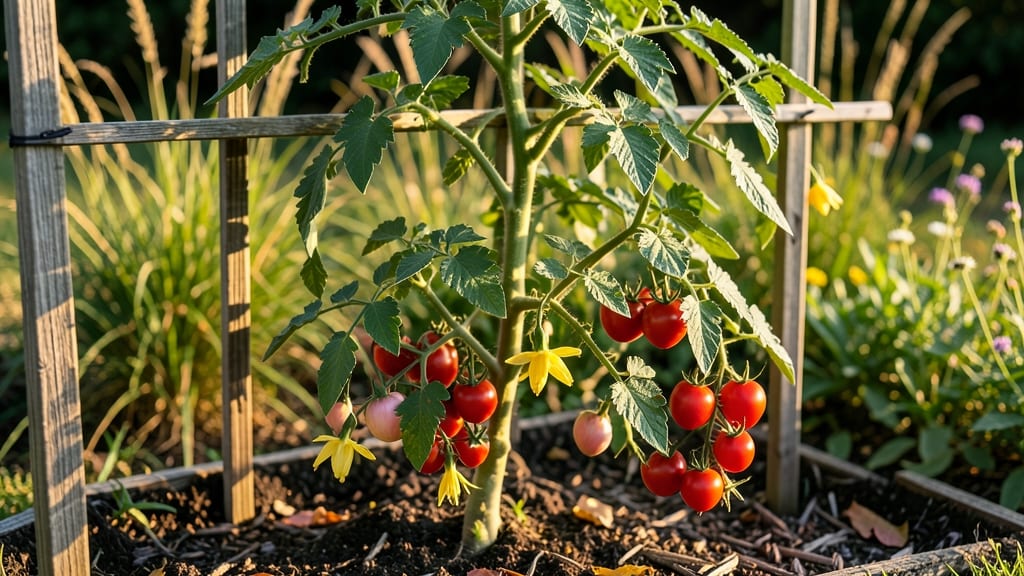
Climbing tomato plants transform a small corner into a vertical harvest goldmine. 🌱 I learned the hard way that skipping trellises leads to sprawling vines, broken stems, and half the fruit rotting on the ground—until I switched to sturdy cages and pruned like a pro.
The right setup turns your tomatoes from a messy jungle into a tidy, high-yielding powerhouse.
Start with indeterminate varieties like 'Sungold' or 'Cherokee Purple'—they grow 6+ feet tall and keep producing until frost. You'll need a 5-foot-tall trellis (cage, stake, or DIY wooden frame) and soft pruning shears to guide growth.
The secret? Prune suckers (those little shoots between stems) weekly to focus energy on fruit, not leaves. Within 4-6 weeks, you'll see vines climbing steadily toward the sun.
By mid-summer, your trellis will be heavy with sun-ripened tomatoes hanging just above the soil—no more lost harvests. The plants stay healthier too, with better air circulation that cuts back on disease.
Even in tight spaces, you'll get 2-3x more tomatoes than from sprawling bushes, and the fruit tastes sweeter from climbing toward the light.
This method works for balconies, patios, or backyard corners—just adjust trellis height to your space. The only real mistake? Waiting too long to prune. I'll show you how to keep those vines under control without snapping stems or sacrificing yield.
📚 In This Guide
- What you need
- Instructions
- Tips and common mistakes
- Wrapping up and next steps
What you need
- ● Climbing tomato varieties: 3–6 plants (e.g., 'Sungold,' 'Sweet Million,' or 'Cherokee Purple').
- ● Trellis or support: DIY option: 6–8 ft tall wooden stakes (2x4s) or bamboo poles, spaced 3–4 ft apart.
- ● Store-bought: A 6–8 ft tall blank">tomato cage or blank">A-frame trellis (galvanized metal preferred).
- ● Garden twine or soft ties: 10–15 ft (jute or Velcro strips to avoid stem damage).
- ● Pruning shears: Bypass pruners (sharp and sterilized).
- ● Potting soil or compost: 1–2 bags (rich in organic matter for heavy feeders).
- ● Fertilizer: Balanced 10-10-10 or tomato-specific fertilizer (follow package rates).
- ● Mulch: Straw or shredded leaves (3–4 inches thick to retain moisture).
- ● Drip irrigation kit: Saves time and keeps roots happy.
- ● Plant clips or soft ties: Reusable fabric ties to protect stems.
- ● Companion plants: Basil, marigolds, or borage to deter pests.
- ● Shade cloth: 30% coverage for hot climates (prevents sunscald).
- ● Garden journal: Track growth stages and pruning notes!
Step-by-Step trellis training for climbing tomato plants
Here's how to coax those sprawling vines into vertical superstars without breaking stems or sacrificing yield.
🪴 Step 1: Build or Select a Sturdy Trellis System
Start with a 4-foot-tall trellis that's at least 2 feet wide for each plant. I swear by wooden dowels or bamboo stakes (6-8 feet long) driven 6 inches into the ground—they're cheap, durable, and easy to adjust. For heavier varieties like 'Beefsteak', add a horizontal crossbar at the top to prevent toppling. The key is spacing: 3 feet between plants gives roots room to breathe while keeping vines from tangling.
If using a mesh or netting system, stretch it taut between two sturdy posts—loose webbing will tangle vines and create rot pockets. I like to tie the top of the trellis to a stake for extra stability, especially in windy areas. This ensures your plants grow upward instead of flopping over when fruit gets heavy.
☀️ Step 2: Train Young Plants Early to Avoid Snapping
When seedlings reach 12 inches tall, gently weave the main stem around the trellis support every 4-6 inches. Use soft plant ties or old T-shirts—never wire or anything that can cut into stems. The first few wraps should be loose enough to slide as the plant grows. I always do this in the late afternoon when stems are slightly pliable from warmth.
Watch for suction cups forming on the stem where it touches the trellis—these are your plant's way of gripping. If you see them, you're doing it right. Never force growth; if a vine resists, wait a day and try again. The goal is to guide, not wrestle, the plant upward. Stronger stems develop when they're trained gradually, not yanked into place.
🌿 Step 3: Prune Strategically for Airflow and Fruit Production
Once the main stem reaches the trellis top, pinch off the growing tip to encourage lateral branches. Remove any suckers (those little shoots in the leaf axils) that appear below the first flower cluster—these drain energy from fruit production. I use clean pruning shears and make cuts at a 45-degree angle just above a leaf node to prevent water from pooling.
Leave 2-3 strong suckers above the first flower cluster to develop into secondary stems. These will bear fruit while keeping the plant's center open for airflow. Too much pruning = fewer tomatoes; too little = crowded vines that invite disease. Aim for a bushy but airy structure—you should see light through the center when looking at the plant from above.
✂️ Step 4: Support Heavy Fruit Without Breaking Stems
When tomatoes reach golf-ball size, it's time to add extra support. Tie the main stem to the trellis every 8-12 inches using soft fabric strips—never wire or twine, which can girdle stems as they thicken. The rule is: tie where the stem touches the trellis, not where it's growing toward it. This prevents stem damage as fruit swells.
For indeterminate varieties, remove the top flower cluster once the plant hits your trellis height—this redirects energy to existing fruit. You'll know you're doing it right when the lower branches bear heavy clusters without sagging. If you see stems bending under weight, add a small sling made from old pantyhose to cradle the fruit until it ripens.
💧 Step 5: Adjust Care for Vertical Growth Patterns
Water at the base only, never overhead once fruit sets. Wet leaves + humidity = blight risk. I use a soaker hose for 10-15 minutes every other day during hot spells, keeping soil 2 inches deep consistently moist. Let the top inch dry between waterings—this prevents blossom-end rot while encouraging deep root growth.
Fertilize with balanced 10-10-10 when flowers appear, then switch to low-nitrogen 5-10-10 once fruit forms. Too much nitrogen = leafy vines, few tomatoes. You'll see the difference in 3-5 days: leaves darken, stems thicken, and flowers set more reliably. Mulch with straw to retain moisture and prevent soil-borne diseases from splashing onto leaves.
Tips & tricks for perfect vertical tomato growth
Mastering the art of trellising climbing tomato plants transforms sprawling messes into organized, high-yielding vertical gardens. Here's how to elevate your technique beyond the basics.
Trellis Stability is Non-Negotiable: If you're using wooden dowels for your 4-foot-tall trellis, drive them at least 8 inches deep into the ground—not just 6 inches—to prevent leaning during wind or heavy fruit loads. For container gardens, secure the base with zip ties to a sturdy frame. I learned this the hard way when my first trellis collapsed under a single 'Beefsteak' tomato—now I always over-engineer stability. The extra 2 inches of depth makes all the difference when fruit reaches golf-ball size.
Timing Your Training Sessions: The late afternoon timing in Step 2 isn't arbitrary—it's when plant stems are most flexible thanks to daytime warmth. If you must train in the morning, water the base thoroughly first to increase stem pliability. Watch for those suction cups forming: they're your plant's natural grip mechanism. When you see them developing, you're doing it right—no need to tighten ties. For stubborn vines, I've found gently twisting the stem before tying helps it find purchase naturally.
Pruning Precision for Airflow: That 45-degree angle when removing suckers isn't just about aesthetics—it's about preventing water from pooling at the cut site, which can invite rot. I use clean pruning shears dipped in rubbing alcohol between cuts to maintain hygiene. For the 2-3 suckers you leave above the first flower cluster, space them evenly around the stem. This creates a balanced canopy that catches sunlight while allowing airflow to prevent fungal diseases. Too many suckers? Your plant will focus on leaves rather than fruit.
Fruit Support Systems: When tomatoes reach golf-ball size, I recommend adding support every 6-8 inches rather than the full 8-12 inches range—especially for heavy varieties. For the pantyhose slings, cut strips about 12 inches long and tie them in a hammock shape under the fruit. This simple addition can prevent stem snapping during sudden rain or wind. The key is to adjust the slings as fruit grows—don't make them so tight they constrict the stem.
Pro Tips for Climbing Tomato Plants
- Mastering the art of trellising climbing tomato plants transforms sprawling messes into organized, high-yielding vertical gardens.
- Trellis Stability is Non-Negotiable: If you're using wooden dowels for your 4-foot-tall trellis, drive them at least 8 inches deep into the ground—not just 6 inches—to prevent leaning during wind or heavy fruit loads.
- Timing Your Training Sessions: The late afternoon timing in Step 2 isn't arbitrary—it's when plant stems are most flexible thanks to daytime warmth.
Frequently asked questions
Got questions about climbing tomato plants? You’re not alone! Here are answers to the most common concerns—from setup to troubleshooting—to help you grow like a pro.
How soon can I start training my tomato plants to climb?
Start training as soon as you transplant seedlings (about 2–3 weeks after sowing). Use soft ties or twine to gently guide stems upward. Avoid waiting too long—once plants get heavy with fruit, they’re harder to maneuver. Pro tip: Prune suckers (side shoots) early to focus energy on upward growth!
What if my tomato plants are already too tall for a trellis?
No panic! If your plants outgrew their support, reinforce the trellis with sturdy stakes or cages and weave vines through gently. For late-stage training, use clothespins or Velcro strips to secure branches without damaging stems. If the plant is flopping, trim lower leaves to lighten the load.
Will climbing tomatoes ripen faster than bush varieties?
Yes! Climbing tomatoes often ripen 1–2 weeks earlier because their fruit faces more sunlight and air circulation. Plus, vertical growth prevents soil-borne diseases. Just ensure your trellis is 6+ feet tall—taller plants yield more fruit!
What should I do if my trellis keeps snapping under the weight?
Upgrade to a heavier-duty trellis (e.g., metal cages, wooden A-frames, or reinforced bamboo). Distribute weight evenly by tying vines in a zigzag pattern and pruning overloaded branches. For extra support, stake the trellis into the ground at a 45° angle or use guy wires.
Can I grow climbing tomatoes in containers?
Use large containers (15+ gallons) with a freestanding trellis or tomato cage. Dwarf or indeterminate varieties (like ‘Sungold’ or ‘Cherokee Purple’) thrive in pots. Just ensure the container has drainage holes and you’re fertilizing regularly—container plants dry out faster!
Wrapping up and next steps
Growing climbing tomato plants on a trellis isn’t just a clever space-saving hack—it’s a game-changer for healthier, more abundant harvests! With the right trellis training techniques, you’ll enjoy fewer broken stems, better airflow, and tomatoes that practically beg to be picked. 🌱✨
Ready to take the next step? Start by observing your plants weekly—prune, tie, and adjust as needed. Soon, you’ll be the proud gardener of a thriving vertical tomato tower! Grab your pruners and get growing!