
Plants
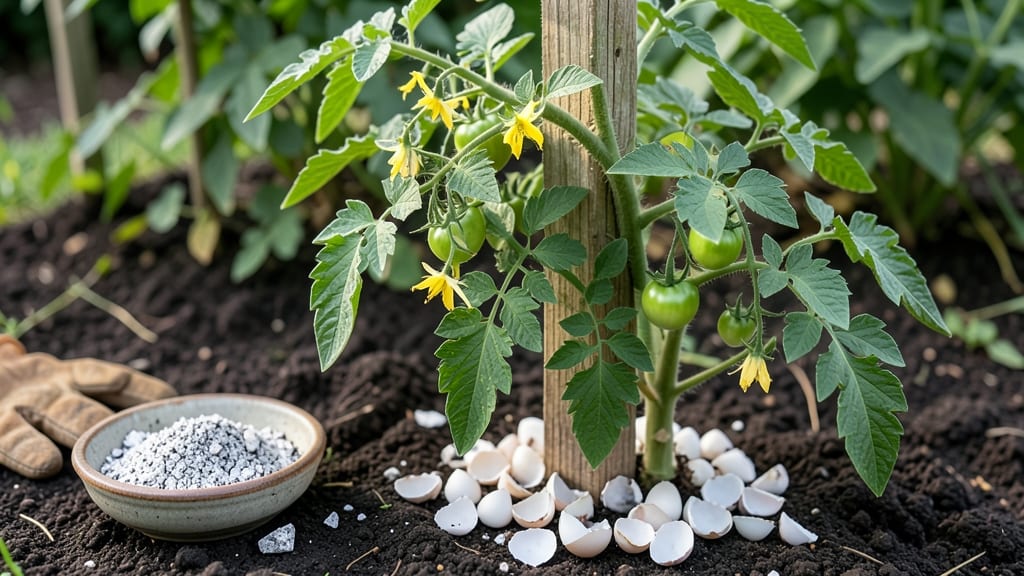
Crushed eggshells for tomato plants provide calcium and magnesium, strengthening cell walls, preventing blossom end rot, and improving soil structure while deterring pests like slugs and snails. Mix finely into soil or compost before planting for best results.
Using crushed eggshells gives tomato plants a natural calcium boost that works better than many synthetic options. 🌱 The shells break down gradually, releasing essential minerals over time rather than overwhelming the plant all at once.
This slow-release method helps maintain proper soil chemistry, which is especially important for preventing blossom end rot—a common tomato problem caused by calcium deficiency.
I've found that adding eggshells also makes the soil slightly more alkaline, creating an environment that discourages slugs and other pests from taking up residence near your plants.
For best results, bake the eggshells first to kill any bacteria, then grind them into a fine powder. You can work this powder directly into the soil at planting time or sprinkle it around the base of established plants.
Just remember to water it in well so the minerals can fully integrate into the soil structure. This simple garden hack can make a big difference in your tomato harvest!
💡 In This Article
- How Eggshells Prevent Blossom End Rot in Tomatoes
- Best Ways to Apply Crushed Eggshells to Tomato Plants
How eggshells prevent blossom end rot in tomatoes
Blossom end rot occurs when tomatoes lack calcium—a mineral essential for building strong cell walls. The affected fruit develops dark, sunken spots at the blossom end, often leading to rot and crop loss.
Eggshells contain about 38% calcium carbonate by weight, which gradually dissolves in soil, providing a steady supply of this critical nutrient. Unlike synthetic calcium sources like lime or gypsum, eggshells release calcium slowly over 3-6 months, preventing sudden spikes that can harm plant roots.
The key to effectiveness lies in soil pH balance. Eggshells are slightly alkaline (pH ~8.5), which helps neutralize acidic soils where calcium becomes less available to plants. In acidic conditions (pH <6.0), calcium binds tightly to soil particles, making it inaccessible.
By raising soil pH gradually, eggshells create an optimal environment for calcium uptake. 🌱 For comparison, garden lime (calcium carbonate) works similarly but lacks eggshells' magnesium content, which also supports plant health.
What makes eggshells particularly valuable is their dual action: they prevent blossom end rot while improving soil structure. The coarse texture of crushed shells creates tiny air pockets, enhancing drainage and root growth.
This is especially helpful in heavy clay soils where waterlogging can worsen calcium deficiency. The abrasive texture also deters slugs and snails, which avoid the sharp edges of eggshell fragments.
For maximum impact, aim to incorporate 1-2 cups of crushed eggshells per plant at planting time, then top-dress with ½ cup every 4-6 weeks during the growing season.
This schedule mimics natural calcium availability, preventing sudden deficiencies. The slow-release nature of eggshells contrasts sharply with fast-acting synthetic fertilizers, which can cause nutrient imbalances if overused.
One common misconception is that eggshells provide nitrogen, but they contain negligible amounts. Their true power lies in calcium and magnesium—two minerals that work synergistically to strengthen plant cell walls.
Studies show that calcium alone can reduce blossom end rot by up to 70% when applied correctly, making eggshells one of the most cost-effective organic solutions for tomato growers.
To visualize the process: Imagine calcium as the "mortar" holding plant cells together. When deficient, cells weaken like bricks without mortar, leading to rot. Eggshells act as a natural mortar supply, reinforcing the plant's structural integrity from the ground up. 💫