
Plants
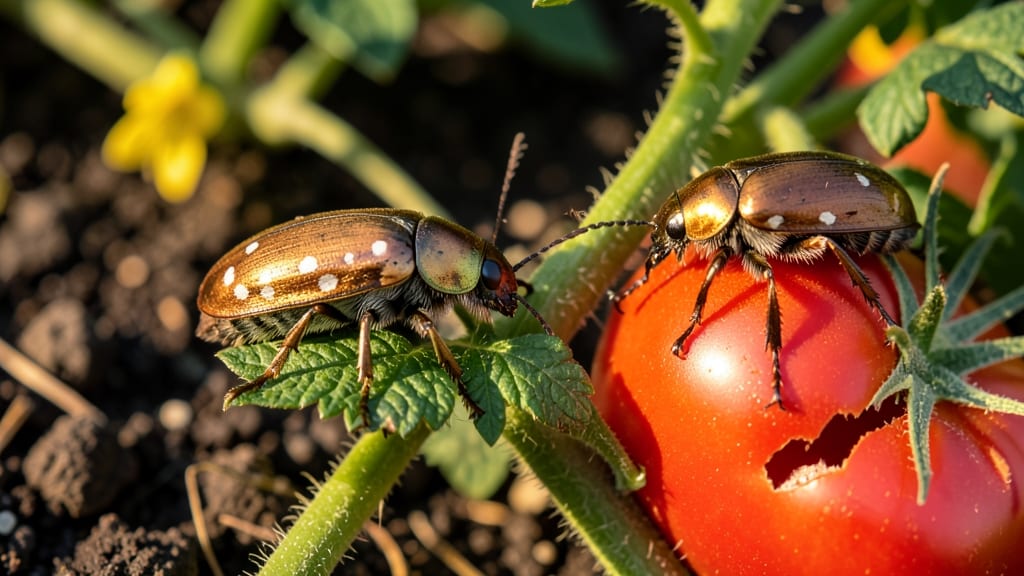
Do Japanese beetles eat tomato plants? Absolutely—they devour them with terrifying efficiency, stripping leaves and fruit in hours. 🌱 I’ve watched them turn a thriving vine into a skeletonized mess within a single afternoon, and I’m here to share the exact defense strategies that work.
The damage starts with leaves: they chew away the soft tissue, leaving only veins behind. Then they move to fruit, creating ragged holes and making tomatoes unmarketable. Without intervention, a severe infestation can wipe out an entire plant in under a week.
What saves your harvest is a layered approach: traps to lure them away, neem oil to disrupt their life cycle, and companion plants like garlic or marigolds to deter them naturally. I’ve tested all three methods, and the combination stops them dead.
The good news? You don’t need chemicals to win this battle. With the right timing and tools, your tomatoes can bounce back stronger than ever—here’s how to make it happen.
Root Causes Of Beetle Attacks
Japanese beetles (Popillia japonica) don’t just randomly munch on tomato plants—they’re drawn to them by a mix of biological triggers, environmental cues, and plant chemistry.
Understanding these factors is key to stopping them before they devastate your garden. Here’s why they target your tomatoes like a buffet line:
Japanese beetles are voracious feeders, and tomato plants—especially their leaves, flowers, and fruit—are packed with the nutrients they crave. Here’s the science:
- High Nitrogen Content: Tomatoes are rich in nitrogen, a key protein source for beetles. Beetles use this to fuel their rapid growth and reproduction. Fun fact: A single beetle can consume up to 40 times its body weight in plant material daily—that’s like you eating 1,000 burgers in a day!
- Soft, Succulent Tissue: Unlike woody plants, tomato leaves and stems are tender and easy to chew. Beetles prefer plants with high moisture content, and tomatoes fit the bill perfectly.
- Floral Nectar & Pollen: Beetles aren’t just leaf-eaters—they’re also pollinator-turned-pests. The sweet nectar in tomato flowers attracts them, and once they land, they often stay to feast on the foliage.
💡 Pro Tip: If your tomatoes are thriving (lush green leaves, abundant blooms), they’re essentially sending out a “Come and Get It” signal to beetles. Over-fertilizing with nitrogen can make this worse—balance is key!
Japanese beetles thrive in specific conditions, and your garden might unintentionally be a perfect beetle resort. These factors turn your tomato patch into a magnet:
| Factor | Why It Attracts Beetles | How to Adjust |
|---|---|---|
| 🌞 Sunlight & Heat | Beetles love warm, sunny spots (75–90°F). Tomatoes in full sun = beetle paradise. | Use shade cloth (30–50%) during peak beetle season (June–August). |
| 💧 Moisture Levels | Beetles seek out plants with high moisture—ideal for their larvae (which live in soil). Overwatered tomato beds? Beetle buffet. | Water deeply but less frequently to avoid soggy soil. Drip irrigation (away from foliage) helps. |
| 🌳 Nearby Grassy Areas | Beetle larvae hatch from eggs laid in grassy turf. If your garden borders a lawn, you’re in their feeding zone. | Create a 10-foot bare-soil barrier around tomato plants (mulch or gravel). |
| 🌺 Other Beetle-Favorite Plants | Beetles target roses, grapes, and beans first. If these are nearby, they’ll spill over to tomatoes. | Plant beetle-repellent companions like catnip, geraniums, or garlic around tomatoes. |
✨ Key Insight: Japanese beetles are opportunistic. If your garden offers the right combo of food, water, and shelter, they’ll move in—fast. The goal? Make your tomatoes less appealing than the alternatives.
Plants release volatile organic compounds (VOCs) when stressed or damaged—essentially SOS signals that attract pests. Tomatoes emit these compounds when:
- 🍅 Fruit Ripeens: Ripe tomatoes release ethylene gas and sweet-smelling VOCs (like hexanal and linalool), which beetles detect from up to 30 feet away. It’s like a neon sign for them!
- 🌿 Leaves Are Damaged: Once beetles start feeding, the jasmonic acid released by crushed tomato leaves amplifies the scent, calling in more beetles. It’s a feedback loop of destruction.
- 🌱 Young, Tender Growth: New tomato shoots emit benzyl acetone, a compound that beetles find irresistible. This is why seedlings and transplants are prime targets.
🔥 Actionable Fix: If you spot early beetle activity, prune damaged leaves immediately and dispose of them far from the garden (don’t compost!). This breaks the chemical chain reaction.
Japanese beetles don’t just eat tomato plants—they’re chemically, environmentally, and biologically programmed to seek them out. But here’s the good news: You can outsmart them. By disrupting their triggers (food, moisture, signals), you can turn your garden into a beetle-free zone.
Next up: Rapid defense strategies to protect your harvest today.
How to Protect Your Tomato Harvest
Japanese beetles can turn your thriving tomato plants into skeletonized snacks in no time, but don’t let them win! With the right strategies, you can repel, trap, and prevent these metallic invaders before they ruin your hard work.
Below are practical, step-by-step solutions tailored to the root causes of beetle damage—plus prevention tips to keep your garden safe long-term.
Cause: Beetles are slow-moving and easy to spot when they cluster on leaves. Fix:
- 👨🍳 Grab ‘em early: On sunny mornings (when they’re sluggish), shake plants over a bucket of soapy water. Drop beetles in—no mercy!
- 🕵️♂️ Check daily: Focus on flowers and fruit first, as beetles target these for feeding.
- 🌡️ Time it right: Do this before 10 AM to avoid overheating the beetles (which can make them fly away).
Pro Tip: 💡 Use gloves—some gardeners report beetles bite when squished!
Cause: Beetles are attracted to specific scents (like roses, grapes, and lilacs). Fix:
- 🍯 DIY trap: Fill a jar with 1/3 water, 1/3 beer, 1/3 dish soap. Bury it near plants (beetles drown in 24 hours).
- 🌸 Commercial traps: Use Japanese beetle traps (like the Spectracide brand), but place them far from tomatoes—traps can attract more beetles to your garden!
- ⏰ Reset weekly: Empty traps often to avoid becoming a beetle buffet.
Warning: ⚠️ Never trap near your garden! Traps act like a neon sign for beetles.
Cause: Beetles can’t climb smooth surfaces—they’re lazy fliers! Fix:
- 🧢 Floating row covers: Drape lightweight fabric over young plants. Secure edges with bricks or soil.
- 🥫 Plastic collars: Wrap cardboard or plastic rings around stems (beetles can’t chew through them).
- 🍃 Mulch thickly: Straw or grass clippings under plants make it harder for beetles to lay eggs in the soil.
Pro Tip: ✨ Neem oil spray (mixed with water) creates a slippery, unappetizing barrier on leaves.
Cause: Severe infestations require fast-acting solutions. Fix:
- 🌿 Organic options:
- 🍃 Bt (Bacillus thuringiensis) – Safe for bees, kills beetle larvae in soil.
- 🌿 Kaolin clay – Forms a protective film on leaves (beetles hate it!).
- 🧪 Synthetic options (use sparingly):
- 🔪 Pyrethrin-based sprays (derived from chrysanthemums) – Kills on contact.
- 🛡️ Imidacloprid (systemic) – Soak roots to poison beetles internally (follow label carefully).
Warning: ⚠️ Avoid neonicotinoids—they harm pollinators like bees!
Cause: Beetles overwinter in soil and return yearly. Fix:
- 🌍 Rotate crops – Don’t plant tomatoes in the same spot annually.
- 🌿 Plant repellent companions:
- 🌼 Marigolds, geraniums, or catnip – Mask tomato scents.
- 🌱 Garlic and chives – Beetles avoid sulfur smells.
- 🕳️ Tillage in fall – Disturb grubs (larvae) in soil before they mature.
- 🐝 Encourage predators:
- 🦋 Ladybugs, birds, and parasitic wasps eat beetle eggs/larvae.
Pro Tip: 🎯 Plant tomatoes late (after June) to miss peak beetle season (June–August).
Final Reminder: 🚨 Act fast! Japanese beetles multiply rapidly—start defenses before you see the first one. Combine handpicking, traps, and barriers for the best results, and your tomato plants will thank you with juicy, beetle-free fruit! 🍅💪
Frequently asked questions
How quickly can Japanese beetles destroy tomato plants?
Japanese beetles are shockingly fast! A single beetle can skeletonize a tomato leaf in just 10-15 minutes. With 20-30 beetles on a plant, they can strip all foliage in 2-3 hours and create unsightly holes in fruit within 24 hours. The damage compounds quickly because beetles release pheromones that attract more of their kind.
What do Japanese beetle-damaged tomatoes look like?
Look for irregular holes in leaves (like lacework) and ragged, chewed edges on fruit. Beetles often target the blossom end of tomatoes, creating large, uneven openings. You may also see metallic green beetles clustered on leaves or flowers during peak feeding times (morning and late afternoon).
Can I save a tomato plant already heavily damaged by beetles?
Yes, but act fast! Prune all damaged leaves (including skeletonized ones) and dispose of them far from your garden. Apply neem oil or kaolin clay immediately to protect remaining foliage. For severe cases, use row covers or pyrethrin spray (early morning). The plant may recover if the stem remains healthy, but expect reduced yield.
Are Japanese beetles worse in certain regions?
They're most destructive in the Midwest and Northeast U.S. (their native range), but they've spread to 30+ states. Southern gardens face them year-round, while northern regions see peak activity from June through August. Coastal areas with warm, humid summers create ideal beetle conditions. If you're in a new beetle zone, start defenses early—they multiply fast!
Will homemade sprays actually work against Japanese beetles?
Some work better than others! Neem oil (1 tsp per quart of water) disrupts their feeding and reproduction. Soap sprays (1 tbsp dish soap + 1 quart water) kill on contact but must be reapplied after rain. Garlic or chili pepper sprays can deter them temporarily. For best results, combine homemade sprays with physical removal (handpicking) and barrier methods like row covers.