Planting
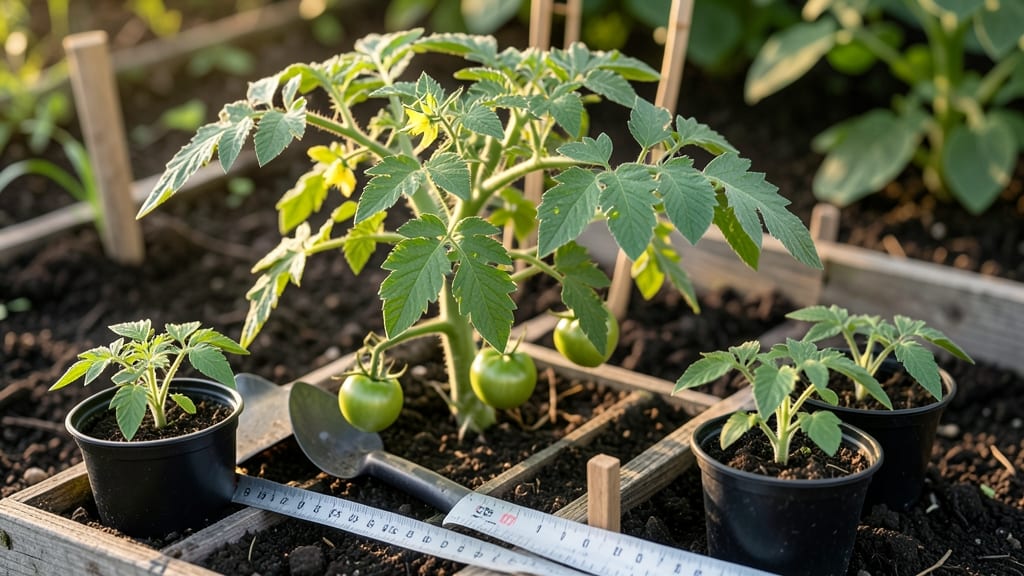
Planting tomato plants the right distance apart ensures strong growth, better air flow, and a bigger harvest — but many gardeners guess wrong, leading to crowded vines or wasted space.
Whether you're growing indeterminate varieties that climb or determinate bushes that stay compact, spacing makes all the difference. Too close, and you risk disease and stunted fruit; too far, and you lose precious garden real estate.
The key is matching your tomato type to the right measurements — and I’ll show you exactly how.
In this guide, you’ll find the exact spacing rules for every tomato variety, plus how to adjust for containers, trellises, and small gardens. No more second-guessing — just a foolproof system for planting your 🍅 tomatoes the way pros do it.
Ready to maximize your yield? Let’s break down the numbers so you can plant with confidence, whether you’re a beginner or a seasoned gardener fine-tuning your rows.

Tomato plant spacing guidelines by variety: determinate vs indeterminate rules
Getting the tomato plant spacing right is one of the most critical decisions for a successful harvest. Determinate and indeterminate varieties have completely different needs, and planting them too close can lead to fungal diseases, poor fruit quality, and reduced yield.
I’ve grown both types for years, and I’ve learned that even a few inches can make the difference between a thriving plant and a struggling one.
The key difference lies in their growth habits: determinate tomatoes (bush types) stop growing at a certain height and produce fruit all at once, while indeterminate tomatoes (vining types) keep growing and produce fruit continuously.
This means their spacing requirements are worlds apart. Let’s break it down so you can maximize your garden’s potential without wasting space or risking disease.
| Variety Type | Plant Spacing (inches) | Row Spacing (feet) | Mature Height | Best For |
|---|---|---|---|---|
| Determinate (Bush) | 18–24" | 2–3 ft | 3–5 ft | Canning, sauces, containers |
| Indeterminate (Vining) | 24–36" | 3–4 ft | 6–10+ ft | Fresh eating, slicing, trellises |
| Dwarf Varieties | 12–18" | 1.5–2 ft | 1–3 ft | Containers, small gardens |
| Heirloom (Indeterminate) | 30–36" | 3–4 ft | 6–12 ft | Trellises, large harvests |
| Standard (Determinate) | 24–30" | 2.5–3 ft | 4–6 ft | Ground planting, cages |
For determinate tomatoes, like Roma or Celebrity, the rule is simple: plant them 18–24 inches apart in rows spaced 2–3 feet apart. These varieties grow into compact bushes, so they don’t need much room to spread.
I’ve found that 24 inches gives them enough space to breathe while still allowing for easy harvesting. If you’re growing them in containers, one plant per 5-gallon pot works perfectly.
On the other hand, indeterminate tomatoes, such as Sungold or Brandywine, need significantly more space because they grow 6–10 feet tall and produce fruit continuously. Planting them 24–36 inches apart in rows 3–4 feet apart ensures they have room to sprawl or climb a trellis.
I once planted indeterminate varieties too close, and they struggled with blight because of poor air circulation. Since then, I’ve made sure to give them the space they deserve.
If you’re growing dwarf varieties, like Tiny Tim or Patio Princess, you can space them as close as 12–18 inches apart. These are perfect for balcony gardens or small containers, but even they benefit from a little extra room—18 inches is ideal—to prevent overcrowding.
For heirloom tomatoes, which are often indeterminate, I recommend giving them 30–36 inches of space. Their vines can get heavy with fruit, so a sturdy trellis is a must.
Another factor to consider is your garden layout. If you’re using raised beds, you can plant tomatoes closer together—12–18 inches apart for determinates and 18–24 inches for indeterminates—because the soil stays warmer and drier, reducing disease risk.
Just make sure to prune regularly to improve air flow. For ground planting, stick to the wider spacing guidelines to avoid competition for nutrients and water.
Proper spacing isn’t just about preventing disease—it’s also about maximizing yield. When tomatoes have enough room, they produce larger, healthier fruit and are less stressed. I’ve noticed that my indeterminate varieties produce 30–50% more tomatoes when spaced correctly compared to when
How to adjust tomato spacing for different growing methods (containers, raised beds, trellises)
Your growing method completely changes how far apart you should plant tomato plants. In containers, you can squeeze them closer than in raised beds, while trellises let you maximize vertical space.
Even in-ground planting requires adjustments based on your tomato's mature size and growth habit. Let's break down the ideal spacing for each method to maximize your harvest without sacrificing plant health.
For container gardening, spacing becomes critical since pots have limited space. Most determinate varieties (like 'Roma' or 'Celebrity') can handle 12-18 inches apart in 5-gallon containers, while indeterminate types (such as 'Sungold' or 'Cherokee Purple') need 18-24 inches in larger 7-10 gallon pots.
Remember, root competition is your biggest enemy in containers, so prioritize pot size over crowding.
| Growing Method | Determinate Spacing | Indeterminate Spacing | Container Size | Key Tips |
|---|---|---|---|---|
| Containers | 12-18" | 18-24" | 5-10 gal | Use trellis; prune suckers |
| Raised Beds | 18-24" | 24-36" | N/A | Mulch heavily; rotate crops |
| Trellises | 12-18" | 12-18" | N/A | Prune aggressively; stake early |
| In-Ground | 24-36" | 36-48" | N/A | Plant in trenches; mulch |
In raised beds, you can plant tomatoes closer together than in-ground because the soil warms faster and drains better. For determinate varieties, aim for 18-24 inches apart in rows spaced 24-36 inches apart.
Indeterminate types need 24-36 inches between plants and 36-48 inches between rows. The key is to create trenches or hills in your raised bed to improve drainage and give roots more room to spread.
When using trellises, you can dramatically reduce spacing because the plants grow upward instead of outward. Both determinate and indeterminate varieties can be planted 12-18 inches apart when trellised, as long as you provide strong support and prune regularly.
This method is perfect for small spaces or balcony gardens, but be prepared to train vines and remove suckers to maintain airflow and prevent disease.
For in-ground planting, follow the classic rules: 24-36 inches apart for determinate types and 36-48 inches apart for indeterminate varieties. The extra space allows roots to establish fully and prevents soil-borne diseases from spreading.
If you're growing in high-density gardens, consider using straw bales or pallets to create elevated planting areas, which lets you plant closer while still improving drainage.
Pro tip: Always adjust spacing based on your local climate. In hot, humid areas, increase spacing by 25% to improve airflow. In cooler climates, you can plant slightly closer since tomatoes grow more slowly.
And remember, mulching with straw or grass clippings helps retain moisture and regulate soil temperature, making your spacing adjustments even more effective.