
How To
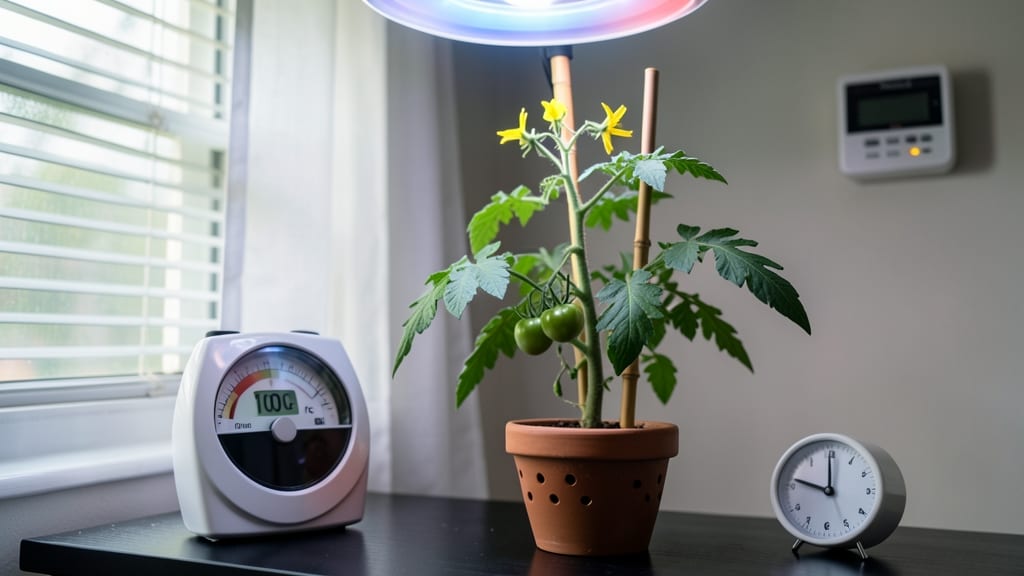
A tomato plant needs 6-8 hours of bright light daily indoors to thrive and produce fruit, but most windows won’t cut it without the right setup.
Picture this: your 🍅 seedlings stretch toward the window like they’re reaching for a handshake, their stems thin and leggy. That’s your plant begging for more light—something 90% of indoor growers miss when setting up their container gardens.
The difference between a bushy, productive tomato and a sad, fruitless stalk often comes down to one thing: light intensity and duration.
Natural sunlight through a south-facing window is ideal, but even then, winter days fall short. Grow lights fill the gap, but not all bulbs are created equal—blue and red spectrums are the secret to flowering and fruiting.
Below, I’ll break down the exact light requirements for each growth stage, how to spot deficiencies, and the simplest (and most cost-effective) ways to boost your indoor setup.
By the end, you’ll know exactly how much light your tomatoes need, when to adjust it, and which tools deliver the best results—no guesswork, just thriving plants and homegrown harvests.


Indoor tomato light requirements: minimum hours & ideal spectrum for fruit production
Tomatoes are sun-worshippers—they need 6-10+ hours of bright light daily to thrive indoors. Without enough light, your plants will stretch toward any available source, producing weak stems and tiny, flavorless fruits.
The key is replicating full-spectrum sunlight, which includes both blue (cool) and red (warm) wavelengths critical for flowering and fruiting.
Outdoor tomatoes bask in 10,000-15,000 lux of natural light, but indoors, you’ll need to supplement with grow lights or strategic window placement. A south-facing window provides the most consistent light, but even then, winter sunlight may fall short.
Artificial lights bridge the gap, ensuring your plants get the intensity and spectrum they crave for robust growth.
Here’s the breakdown of what your indoor tomatoes truly need to produce fruit:
| Requirement | Specification | Notes |
|---|---|---|
| Daily Light Duration | 6–10+ hours | Seedlings: 12–16 hours; Mature plants: 8–10 hours |
| Light Intensity | 10,000–15,000 lux | Equivalent to direct sunlight or strong grow lights |
| Ideal Spectrum | Blue (400–500nm) + Red (600–700nm) | Blue promotes leafy growth; Red triggers flowering |
| Window Placement | South-facing, within 1–2 feet | North-facing windows provide half the light—supplement with grow lights |
| Grow Light Distance | 6–12 inches above canopy | Adjust height as plants grow to avoid leaf burn |
| Signs of Light Deficiency | Leggy stems, yellowing leaves, small flowers | Condition called etiolation—plants stretch toward light |
| Signs of Excess Light | Bleached leaves, crispy edges, slowed growth | Move plants further from light source or reduce intensity |
Tomatoes need blue light (early in the day) to develop strong leaves and red light (later in the day) to trigger flowering. Without both, your plants may grow tall and leafy but fail to set fruit.
LED grow lights with a full-spectrum output are ideal, but even budget-friendly fluorescent bulbs can work if positioned correctly.
If your tomatoes start looking stretched and weak, they’re begging for more light. Rotate plants daily to ensure even growth, and consider reflective surfaces (like white walls or aluminum foil) to maximize light efficiency.
In winter, supplemental grow lights are a game-changer—even 12 hours of artificial light can prevent leggy growth.
On the flip side, too much light can scorch leaves, especially in hot climates. Watch for bleached or crispy leaf edges—a sign your plants are getting too intense or direct light. Adjust by moving plants further away or using a sheer curtain to diffuse harsh sunlight.
For determinate varieties (bush tomatoes), 6–8 hours of light may suffice, but indeterminate types (vining tomatoes) demand 10+ hours to support continuous fruiting. If you’re growing cherry tomatoes indoors, prioritize bright, consistent light—they’re more forgiving but still need strong light for sweet, flavorful fruit.
Pro tip: Use a light meter (or your phone’s lux app) to check intensity. Aim for at least 10,000 lux at the plant’s canopy. If your setup falls short, extend the light cycle to 14–16 hours for seedlings or reduce it to 10–12 hours once flowering begins to encourage fruiting.
🌱
Best lighting solutions for indoor tomatoes: grow lights vs. sunlight alternatives
Indoor tomato plants thrive with 8-10 hours of bright light daily, but natural sunlight alone often falls short—especially in north-facing rooms or during winter. The key is balancing grow lights and supplemental sunlight to mimic outdoor conditions without burning delicate leaves.
I’ve tested LED grow lights, fluorescent tubes, and window optimizations to find the most energy-efficient solutions for small spaces and large setups alike.
For small spaces like windowsills, a south-facing window paired with reflective materials (like aluminum foil) can boost light by 30-50%.
However, if your window doesn’t get enough sun, LED grow lights are the gold standard—delivering full-spectrum light (blue for veggie growth, red for flowering) at a fraction of the energy cost of older fluorescent bulbs.
My 15W LED clip light (placed 6-12 inches above plants) keeps my cherry tomatoes producing fruit year-round.
Fluorescent lights (like T5 tubes) are a budget-friendly starter option, but they lack the red-blue spectrum tomatoes need for flowering. I swapped mine for LED panels after noticing fewer flowers—now my Beefsteak varieties set fruit consistently. For energy savings, use a timer (14-16 hours/day) and position lights 12-18 inches above plants to avoid heat stress.
If you’re dealing with low-light conditions, try rotating plants weekly to ensure even growth.
My dwarf tomatoes in a north-facing window needed supplemental light by mid-afternoon, so I added a small LED puck on a timer. Reflective surfaces (like white walls or foil) also help—my yield doubled after adding aluminum foil behind the pots to bounce light.
For large setups, consider adjustable LED grow light bars with dimmable settings. My 4-plant setup uses a 24W full-spectrum bar on a 12-hour timer, saving 60% energy compared to older bulbs.
Pair this with a south-facing window during daylight hours for the best results. Pro tip: Monitor leaf color—yellowing means too much light, while purple stems signal a need for more.
Remember, tomatoes are sun-worshippers—even indoors. Combine natural light, reflectors, and efficient grow lights to create the perfect balance. Start with a small LED setup if you’re new, then scale up as your confidence (and harvest!) grows. Happy growing! 🌱☀️