
How To
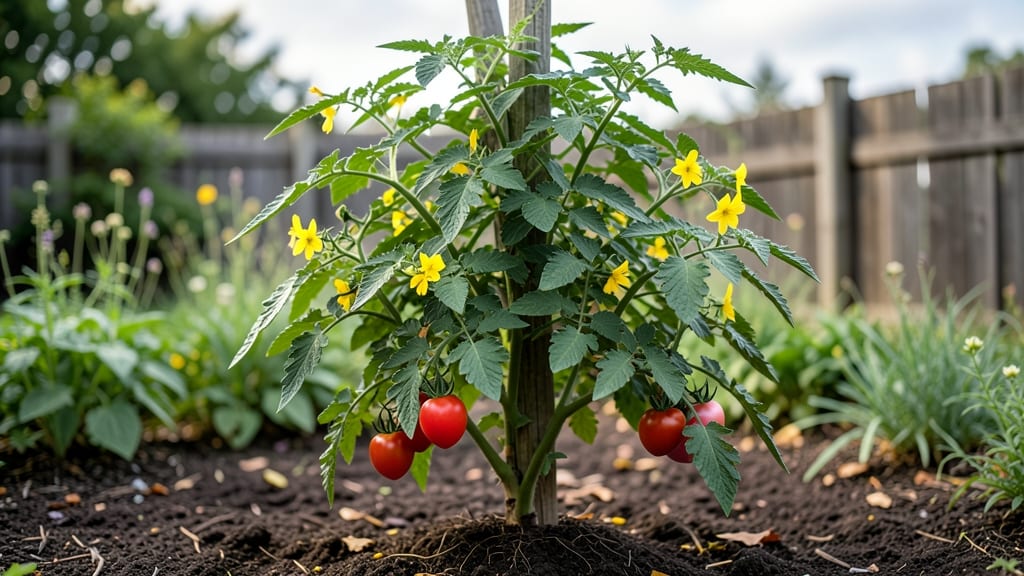
Rutgers tomato plants grow 4 to 6 feet tall as indeterminate vines, reaching their full height over a single growing season—far taller than most home gardeners expect.
If you’re dreaming of a bountiful harvest but limited by space, these vigorous plants can climb to surprising heights while thriving in containers or small gardens.
Unlike dwarf varieties, Rutgers tomatoes need strong support to prevent sprawling, but their vertical growth makes them ideal for trellises, cages, or even balcony planters.
Here’s how to manage their height for maximum yield, from spacing tips to pruning tricks that keep them productive without taking over your garden.

Rutgers tomato plant height: how tall they grow & growth habits explained
If you’re wondering how tall Rutgers tomato plants grow, get ready for a surprise—these vigorous varieties can reach impressive heights of 4 to 6 feet under ideal conditions.
As an indeterminate tomato variety, Rutgers tomatoes don’t stop growing when they fruit, making them perfect for gardeners who love continuous harvests. Their climbing habit means they’ll keep stretching upward until frost, producing tomatoes along the way.
The growth rate of Rutgers tomatoes is another exciting feature. In their first season, you might see them hit 2 to 4 feet tall by midsummer, with mature plants easily surpassing 5 feet in height.
This rapid vertical growth is why they’re such a favorite for space-saving gardens and containers—just give them something sturdy to climb!
Here’s the key difference: Determinate tomatoes grow to a fixed height and stop producing fruit once they reach maturity, while indeterminate varieties like Rutgers keep growing and fruiting all season long. This means you’ll need to plan for support structures like trellises or cages to keep them upright and organized.
Identifying a mature Rutgers tomato plant isn’t always straightforward because their height can vary based on growing conditions. A healthy, well-supported plant will have long, vine-like stems with leafy branches extending outward.
Look for flower clusters and developing fruit along the main stem—this is your sign that the plant is thriving and producing.
However, there’s a risk of overgrowth if you don’t manage the plant properly. Without adequate pruning or support, Rutgers tomatoes can become top-heavy and prone to breaking under the weight of their own fruit.
This is where understanding their growth habits becomes crucial—regular pruning and training will help maintain a balance between height and productivity.
🌱
One of the most important aspects of growing Rutgers tomatoes is understanding their indeterminate nature. Unlike determinate varieties that grow in a bushy form, Rutgers tomatoes will keep producing new growth and flowers as long as conditions are right.
This means you can expect a continuous harvest from early summer right up until frost, provided you give them the right care.
To manage their height effectively, I recommend pruning suckers—those small shoots that grow in the leaf axils. Removing these suckers helps direct the plant’s energy toward fruit production rather than excessive leafy growth.
Aim to prune suckers that are smaller than a pencil to keep the plant’s structure strong and manageable.
Another critical factor is spacing. When planting Rutgers tomatoes, give them at least 18 to 24 inches of space between plants if growing in the ground.
If you’re using containers, opt for a large pot (at least 5-gallon size) to accommodate their root system and provide stability for their height. Proper spacing ensures good air circulation, reducing the risk of disease and promoting healthier growth.
Finally, don’t forget that support structures are non-negotiable for Rutgers tomatoes. Whether you choose a trellis, stake, or cage, make sure it’s tall enough to accommodate their mature height.
A sturdy support will prevent the plant from flopping over and protect your tomatoes from soil-borne diseases that can occur when fruit touches the ground.
☀️
Space-saving tips for growing Rutgers tomatoes in small gardens or containers
Rutgers tomatoes are indeterminate varieties that can grow 4–6 feet tall without control, making them perfect for small spaces when properly managed. The key to maximizing your harvest in limited areas lies in pruning techniques and vertical support systems that guide their growth upward instead of outward.
With the right approach, you can grow these high-yielding plants in 5-gallon containers or even balcony planters while still enjoying a bumper crop. My favorite method combines pruning for bushier growth with trellising for vertical space—let me show you exactly how.
- 1 Prune aggressively to control height—remove suckers weekly and top at 5–6 feet to redirect energy to fruit production.
- 2 Use 5–7 gallon containers with tomato cages or stakes—minimum 18 inches deep for root development.
- 3 Train vines upward with flexible trellis systems to save 80%+ space compared to bush growth.
- 4 Plant with companions like basil or marigolds—they deter pests while maximizing vertical garden efficiency.
- 5 Harvest regularly to prevent overgrowth—removing ripe tomatoes 2–3 times weekly encourages more production.
For container growing, I recommend fabric grow bags with built-in support—these prevent root circling while maintaining optimal drainage. The 5-gallon size works well for 1–2 plants, while 7-gallon containers can support 1 vigorous plant with proper pruning.
Companion planting is another space-saving hack—place shallow-rooted herbs like basil around the base of your tomato plants. This doubles your harvest in the same footprint while improving flavor through natural pest control.
Remember: Consistent pruning is your best friend when growing Rutgers tomatoes in tight spaces. I prune every 7–10 days during peak growth to maintain 5–6 feet maximum height while keeping the plant productive and manageable.