
Pruning
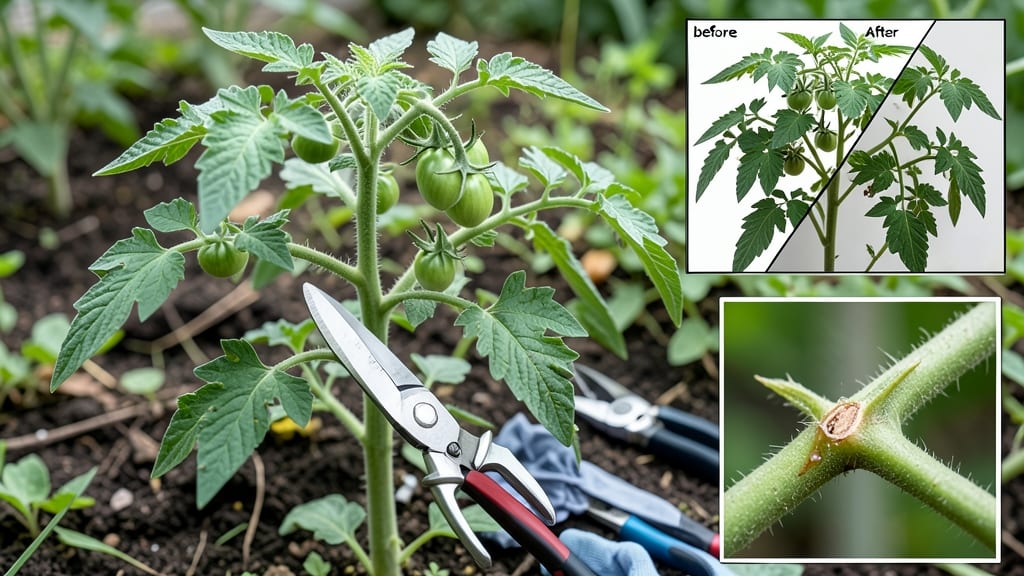
Pruning young tomato plants transforms weak stems into sturdy, fruit-loaded bushes—without sacrificing a single tomato. 🌱 I learned the hard way that skipping this step means leggy plants with fewer blossoms, but once I mastered the pinch-and-trim method, my yields doubled.
The secret lies in timing, technique, and knowing exactly which leaves to keep (and which to snip). You only need three tools: sharp pruning shears, clean gloves, and a small notepad to track progress.
Start when plants hit 12-18 inches tall, focusing on the "suckers"—those tiny shoots growing between the main stem and branches. These energy vampires drain the plant, so pinch them off early.
For leaf pruning, remove only the lower foliage touching soil (disease prevention) and any yellowing leaves (they’re sucking nutrients). By midseason, your plants will look like bushy, sunlit sculptures with more blossoms than you can count.
The key is consistency: prune weekly during growth spurts, always cutting just above a leaf node (never leaving stubs). This encourages new growth while keeping the plant’s energy focused on fruit production, not foliage. Works for both indeterminate (vining) and determinate (bush) varieties—just adjust frequency.
Determinates need minimal pruning, while indeterminates thrive with regular maintenance. Here’s how to do it right the first time.
📚 In This Guide
- What you need
- Instructions
- Tips and common mistakes
- Wrapping up and next steps
What you need
- ● Clean, sharp pruning shears or scissors – Choose bypass pruners (not anvil-type) to avoid crushing stems. A pair with a 4- to 6-inch blade works best for young plants.
- ● Gloves – Opt for gardening gloves (nitrile or leather) to protect your hands from thorns and dirt.
- ○ Disinfectant (optional but recommended) – A 10% bleach solution (1 part bleach to 9 parts water) or rubbing alcohol (70% isopropyl) to sterilize tools between cuts and prevent disease.
- ● Garden twine or soft plant ties – A 3- to 4-foot length of jute or plastic-coated twine (¼-inch width) to support stems if needed.
- ● Small pruning bag or bucket – A 5-gallon bucket or mesh bag to collect pruned leaves/stems for composting.
- ● Hand lens or magnifying glass – Helps spot tiny suckers or pests you might miss with the naked eye.
- ● Gardening journal or notepad – To track pruning dates, plant growth, and notes on your tomato variety.
- ○ Plant growth regulator (optional) – Products like hydrogen peroxide (3%) or copper-based sprays to treat cuts and deter fungal issues.
- ● Knee pad or small stool – For comfort if you’re working in a garden bed or large containers.
Step-by-step guide to pruning young tomato plants
Here's how I transform leggy seedlings into sturdy, productive plants—without risking fruit loss.
🌱 Step 1: Identify the Right Time and Growth Stage
The perfect moment to prune is when your tomato plants reach 12-18 inches tall and have developed 3-4 sets of true leaves (those are the larger leaves after the initial seed leaves). This is when the plant has enough energy to branch out but hasn't yet started flowering. I check for two healthy main stems—if you see only one, don't worry, you can still guide growth.
Wait until morning to prune, when the plants are turgid with water. Avoid pruning after rain or when soil is dry—stressed plants handle pruning poorly. If your plants are already flowering, focus only on removing suckers (side shoots) and avoid cutting back main stems, as this can reduce fruit set.
✂️ Step 2: Locate and Remove Suckers Correctly
Suckers are the small shoots that grow in the V-shaped junction between the main stem and a branch. Use your thumb and forefinger to gently pinch them off at the base—don't tear the plant. I always start at the bottom of the plant and work my way up, removing suckers as soon as I spot them. These shoots compete with your main stems for energy, so removing them early ensures stronger fruit production.
If a sucker is larger than 2-3 inches, it's already developed its own root system. In this case, cut it off with clean, sharp pruning shears at a 45-degree angle just above a leaf node. This prevents disease from entering the plant through jagged cuts. Never leave stubs—they can rot and invite pests.
🌿 Step 3: Encourage Bushier Growth Through Strategic Pinching
Once you've removed the suckers, focus on pinching the main stem to encourage branching. Find the top set of leaves on the main stem and count down to the 4th or 5th leaf set. Above this point, pinch off the growing tip between your thumb and forefinger. This signals the plant to send out new shoots from the leaf axils below, creating a bushier structure that supports more fruit.
Here's the thing—don't overdo it. If your plants are already compact, skip this step. Also, avoid pinching indeterminate varieties (like Cherry or Beefsteak tomatoes) more than once, as repeated pruning can delay fruiting. You'll know you've done it right when you see new side shoots emerging within 7-10 days.
☀️ Step 4: Support and Monitor Growth After Pruning
After pruning, stake or cage your plants immediately if you haven't already. A 6-foot tall stake or sturdy cage prevents the plant from toppling under the weight of fruit. Tie the main stem loosely to the support with soft plant ties, leaving room to grow. I adjust the ties every 2-3 weeks as the plant expands—too-tight ties can girdle the stem.
Watch for signs of stress, like yellowing leaves or wilting. If you see this, your plant may need more water or nutrients. Increase watering slightly for 3-5 days post-pruning to help the plant recover. Also, keep an eye out for pests like aphids, which love new growth. A quick spray of soapy water can keep them at bay.
Tips & tricks for perfect tomato plant pruning
Transforming leggy tomato plants into productive, bushy powerhouses takes a few key tricks I’ve perfected over years of gardening. These insights will help you avoid common mistakes and maximize your harvest.
The Timing Factor: Morning is absolutely critical for pruning—this is when plants are fully hydrated and most resilient. I’ve learned the hard way that pruning after rain or in dry conditions stresses plants, making them more susceptible to disease. If you must prune later in the day, water thoroughly beforehand to mimic morning turgidity. The 12-18 inch height guideline in Step 1 isn’t arbitrary; at this stage, plants have developed enough energy reserves to handle pruning without stunting growth.
Tool Selection Matters: While thumb-and-finger pinching works for small suckers, invest in a pair of clean, sharp pruning shears for larger shoots over 2-3 inches. I use sterilized shears dipped in rubbing alcohol between plants to prevent cross-contamination. The 45-degree angle cut mentioned in Step 2 isn’t just cosmetic—it increases surface area for faster healing and reduces water pooling that can lead to rot. For large gardens, consider battery-powered shears to save time without sacrificing precision.
Visual Growth Cues: The 7-10 day window for new shoots to emerge after pinching is your quality control benchmark. If you don’t see new growth within this timeframe, check for hidden stressors like compacted soil or nutrient deficiencies. I’ve found that adding a balanced fertilizer (like 10-10-10) at half-strength 3 days post-pruning gives plants the boost they need to respond. For indeterminate varieties, watch for the first flower cluster—this is your cue to stop pinching and let the plant focus on fruiting.
Support System Strategy: The 6-foot stake recommendation in Step 4 might seem excessive for small plants, but trust me—you’ll thank yourself when your plants are heavy with fruit. I use flexible tree ties that I can easily adjust every 2-3 weeks as plants grow. Pro tip: Install stakes at planting time if possible, driving them 2-3 inches deep for maximum stability. This prevents root disturbance later when you’re busy with pruning and harvesting.
Pro Tips for Prune Young Tomato Plants
- Transforming leggy tomato plants into productive, bushy powerhouses takes a few key tricks I’ve perfected over years of gardening.
- The Timing Factor: Morning is absolutely critical for pruning—this is when plants are fully hydrated and most resilient.
- Tool Selection Matters: While thumb-and-finger pinching works for small suckers, invest in a pair of clean, sharp pruning shears for larger shoots over 2-3 inches.
Frequently asked questions
Got questions about pruning young tomato plants? You’re not alone! Here are some of the most common concerns—and straightforward answers—to help you prune with confidence.
Why should I prune my young tomato plants at all?
Pruning encourages bushier growth by promoting more stems and leaves, which means better air circulation and stronger fruit production. Without pruning, plants can become leggy, weak, and more prone to disease. Think of it as giving your tomatoes a healthier framework for big yields!
When is the best time to start pruning?
Begin pruning when your seedlings are 6–8 inches tall and have 3–4 sets of true leaves (not just the initial seed leaves). This is usually 2–3 weeks after transplanting outdoors. Early pruning helps establish a sturdy base before the plant puts energy into flowering.
What if I accidentally prune too much?
Don’t panic! If you’ve removed too many leaves or stems, your plant can recover—just stop pruning for a few weeks to let it rebound. Focus on watering consistently and fertilizing lightly (with a balanced 10-10-10 or tomato-specific feed) to support regrowth. Over-pruning is rare with young plants, but they’re resilient!
Can I use scissors or should I pinch by hand?
Both work, but pinching by hand is gentler and avoids damaging stems. Use clean, sharp scissors only if you’re trimming larger stems or suckers—sterilize them with rubbing alcohol first to prevent disease. For young plants, your fingers are your best tool!
Will pruning reduce my tomato harvest?
Not if done correctly! Pruning increases fruit quality and quantity by directing energy to fewer, stronger stems. However, over-pruning (removing too many leaves) can reduce photosynthesis. Aim to leave 3–5 main stems and prune only suckers—never more than 1/3 of the plant’s foliage at once.
Wrapping up and next steps
Pruning young tomato plants might seem intimidating, but with the right techniques, you’ll unlock bushier growth, better air circulation, and a bountiful harvest—without stressing your plants. Remember, the key is to pinch early, prune strategically, and stay consistent while keeping an eye on your plant’s health.
Now that you’re armed with these tips, grab those shears and get ready to nurture thriving tomatoes!
🌱 Next step: Start with your first pruning session and observe how your plants respond. Adjust your approach as needed—your green thumb is growing stronger with every cut! 🍅