Planting
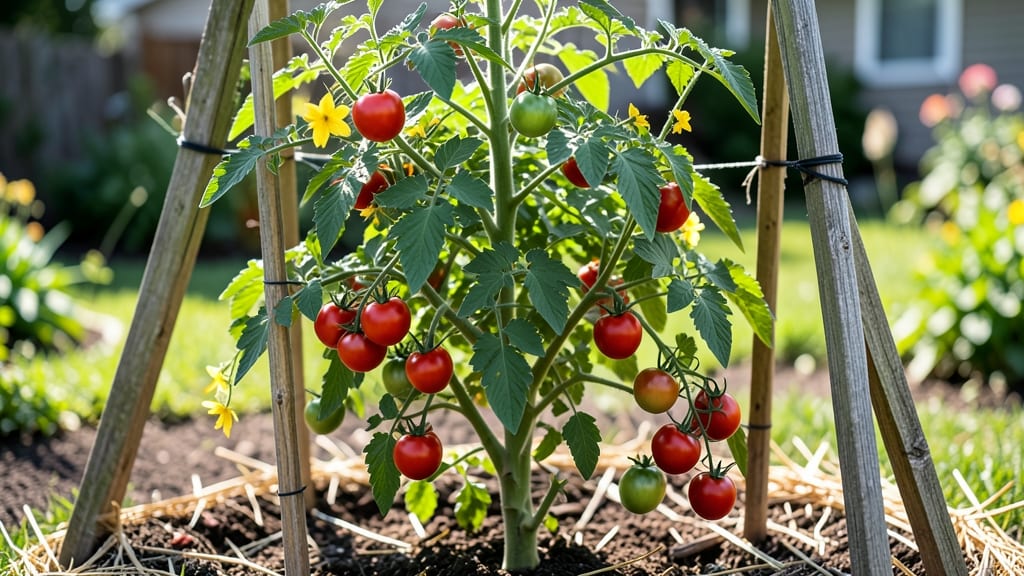
The Husky Cherry Red tomato plant height tops out between 3 and 6 feet—a compact yet vigorous grower that thrives in tight spaces without sacrificing yield.
You’ve likely heard that tomatoes need room to sprawl, but this variety defies that myth. Its semi-determinate growth means it stays manageable, whether you’re growing in a 5-gallon container or a raised bed. The key? Pruning and support—two simple steps that keep vines from outgrowing their space.
Let’s break down what to expect at each growth stage, how spacing affects fruit production, and the best supports to keep those cherry-red clusters within reach—without letting the plant turn into a jungle.
From seedling to harvest, you’ll learn how to optimize height for your garden’s layout, whether you’re working with vertical space or limited square footage.

Husky Cherry Red tomato plant height: expected growth stages & vine size
The Husky Cherry Red tomato is a semi-determinate variety, meaning it grows to a manageable height while still producing fruit continuously. Unlike indeterminate varieties that can tower up to 10 feet, these vines typically stay between 3 to 5 feet tall under ideal conditions.
Understanding their growth stages helps you plan spacing, supports, and pruning for a thriving harvest.
From seedling to maturity, Husky Cherry Red tomatoes follow predictable height milestones. Early growth focuses on leaf development, while later stages prioritize vine expansion and fruit production.
Environmental factors like sunlight, water, and container size can influence how tall your plants grow, sometimes pushing them to the upper limit or keeping them more compact.
When grown in containers, Husky Cherry Red tomatoes typically stay shorter—around 3 to 4 feet—because their root systems are restricted. However, they can still reach 5 feet if given a large enough pot (at least 5-gallon capacity) and proper care.
In-ground planting usually results in taller vines, especially if you provide trellis support or allow them to sprawl naturally.
One key factor influencing height is whether you prune your plants. Semi-determinate varieties like this one benefit from light pruning to redirect energy toward fruit production rather than excessive vine growth.
Removing suckers (the small shoots between the main stem and branches) helps keep the plant more compact while increasing airflow, which reduces disease risk.
If you're growing Husky Cherry Red tomatoes in a small-space garden or balcony, consider using a cage or trellis to control height and improve fruit accessibility. Without support, vines can sprawl up to 6 feet, making harvesting difficult.
A well-placed trellis not only saves space but also encourages upward growth, keeping the plant within your desired height range.
Environmental factors like sunlight exposure and temperature also play a role in vine size. Plants grown in full sun (6-8+ hours daily) tend to be slightly taller and more robust, while those in partial shade may stay shorter but produce fewer fruits.
Similarly, cooler temperatures can slow growth, keeping vines more manageable during early spring or late fall planting.
To maximize yield while keeping your Husky Cherry Red tomatoes at an ideal height, I recommend starting with a 5-gallon container if space is limited. Add a tomato cage at planting time to provide early support, and prune regularly to remove any aggressive suckers.
This approach ensures your plants stay between 3 and 4 feet tall while still producing an abundance of sweet, red cherry tomatoes.
For those growing in-ground, allow 18-24 inches of space between plants to accommodate their mature spread. If you notice vines exceeding 5 feet, it’s a sign they need more support or pruning.
Regularly check for signs of overgrowth, such as crowded leaves or fruit touching the ground, and adjust your care routine accordingly.
Remember, the goal isn’t just to control height but to create an environment where your Husky Cherry Red tomatoes thrive. With the right balance of support, pruning, and spacing, you’ll enjoy a bountiful harvest without sacrificing garden space or plant health. 🌱
Pruning Husky Cherry Red tomatoes for compact growth: step-by-step guide
Controlling the height of Husky Cherry Red tomato plants is key to maximizing fruit production in limited spaces. Without pruning, these semi-determinate vines can sprawl up to 4-5 feet tall, but strategic pruning keeps them between 3-4 feet—perfect for containers or small gardens.
The right technique improves airflow, reduces disease risk, and directs energy to fruit development instead of excessive foliage.
I’ve found that early-season pruning (when plants are 12-18 inches tall) sets the foundation for compact growth. Focus on removing suckers—those small shoots growing between the main stem and branches—and lower leaves that touch the soil.
This creates a balanced canopy while preventing overcrowding. For containers, I prune even more aggressively to prevent root-bound stress.
How to Prune Husky Cherry Red Tomatoes for Compact Growth
-
Step 1: Gather Tools
Clean, sharp bypass pruners (for stems thicker than a pencil) and hand pruners (for suckers). Disinfect tools with rubbing alcohol to prevent disease spread. -
Step 2: Identify Suckers
Look for small shoots in the leaf axils (where leaves meet stems). Suckers grow at a 45-degree angle—remove them when they’re 1-2 inches long to avoid energy drain. -
Step 3: Prune Lower Leaves
Remove leaves touching the soil to improve air circulation and reduce blight risk. Stop pruning leaves when the first fruit cluster appears to maintain photosynthesis. -
Step 4: Thin Main Stems
For ground-planted tomatoes, keep 2-3 main stems and remove weaker ones. In containers, limit to 1-2 stems to prevent overcrowding. -
Step 5: Late-Season Adjustments
After the first fruit set, reduce pruning to maintenance only. Remove only diseased leaves or overly dense foliage to avoid stressing the plant.
Timing matters just as much as technique. I prune Husky Cherry Reds in two key phases: early growth (when plants are young) and fruit set (when flowers appear).
Avoid heavy pruning during heatwaves—plants need energy to recover. In containers, I prune weekly to control height, while ground-planted tomatoes can handle biweekly pruning.
One common mistake I see is over-pruning—removing too many leaves at once can reduce photosynthesis and limit fruit production. Aim to leave enough green foliage to support the plant’s energy needs. For container growers, I recommend vertical pruning (training vines upward) to save space without sacrificing yield.
After pruning, I always water deeply to help the plant recover and apply a balanced fertilizer (like 10-10-10) to support new growth. Within 2-3 weeks, you’ll notice better airflow, fewer diseases, and more accessible fruit—especially in tight spaces.
The result? A compact, productive vine that fits perfectly in your garden plan.
For small-space gardens, I pair pruning with trellising or staking to guide growth upward. This not only saves space but also makes harvesting Husky Cherry Reds easier. With the right approach, you can keep these vines at an ideal height of 3-4 feet while maximizing your harvest.