
Fertilization
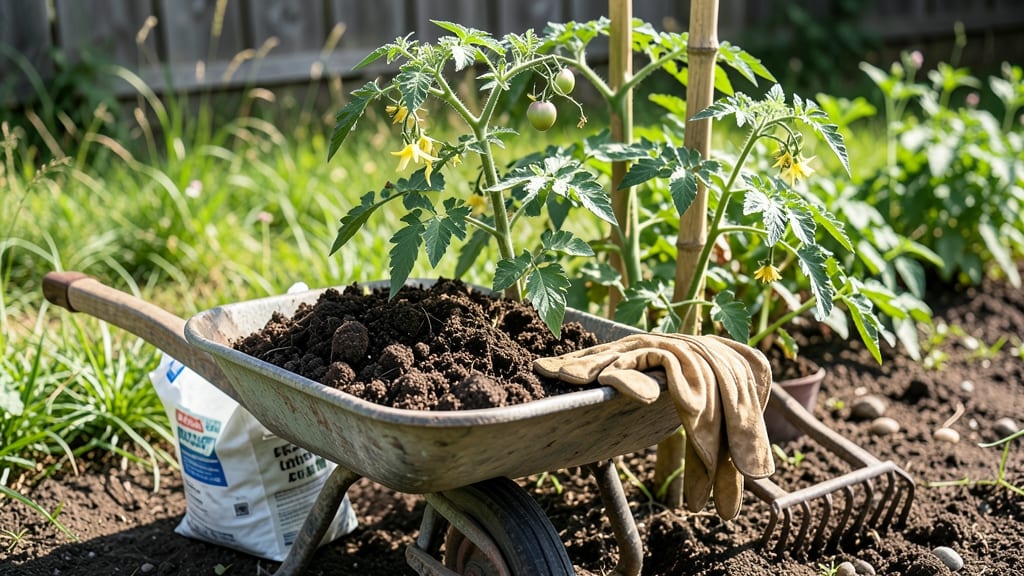
Horse manure is good for tomato plants when properly composted, providing rich organic nutrients like nitrogen, phosphorus, and potassium while improving soil structure and moisture retention. Fresh manure can harm plants due to high ammonia levels and pathogens, so aging or composting is essential.
When you compost horse manure correctly, it transforms into a powerhouse for tomato gardens. 🌱 The balanced nutrients—especially nitrogen for leafy growth and potassium for fruit development—mirror what commercial fertilizers offer but with the added bonus of improved soil aeration.
I've seen firsthand how composted horse manure boosts yields compared to synthetic options, though you'll want to monitor pH levels since it can sometimes make soil slightly acidic over time.
The key difference from fresh manure lies in its safety profile: composting eliminates harmful bacteria while preserving beneficial microbes that break down organic matter into plant-available forms.
For best results, I recommend mixing composted horse manure into the soil before planting rather than applying it as a top dressing. This gives the nutrients time to integrate fully, preventing nutrient spikes that could stress young tomato plants.
A general rule is to use about 2-3 inches of composted manure per square yard, but always test your soil first—overdoing it can lead to excess salts that inhibit water absorption.
💡 In This Article
- Nutrient Content in Horse Manure for Tomato Growth
- How to Safely Apply Horse Manure to Tomato Gardens
Nutrient content in horse manure for tomato growth
Horse manure delivers a nutrient trifecta that tomato plants crave: nitrogen (0.5-1.5%), phosphorus (0.2-0.5%), and potassium (0.3-0.8%). The nitrogen content supports vigorous leaf and vine growth, while phosphorus promotes strong root development and flowering - critical for tomato plants that need to establish quickly.
Potassium, often the limiting factor in many soils, helps tomatoes resist disease and improves fruit quality by enhancing sugar content. Unlike synthetic fertilizers, these nutrients are released slowly as microbes break down the organic matter, preventing the rapid spikes that can burn plant roots.
The real advantage lies in the micronutrient profile. Horse manure contains significant amounts of calcium (0.5-1.0%) and magnesium, both essential for preventing blossom-end rot - that dreaded calcium deficiency that turns tomato bottoms mushy.
It also provides trace minerals like zinc and iron that support chlorophyll production, giving tomato leaves their vibrant green color.
When compared to cow manure (which has slightly lower nitrogen) or chicken manure (which can be too "hot" with higher phosphorus), horse manure strikes a balanced middle ground that's particularly well-suited for tomatoes' nutrient demands.
What makes horse manure especially valuable is its carbon-to-nitrogen ratio of about 20:1 to 30:1. This balance means it composts faster than woodier materials while still providing long-lasting nutrition.
The organic matter content can reach 20-30% when fully composted, which dramatically improves soil structure by increasing water retention and aeration - two critical factors for tomato plants that hate soggy roots but need consistent moisture.
The fibrous texture from bedding materials creates ideal pore spaces for root growth while preventing compaction.
However, the nutrient availability varies dramatically based on composting method. Hot composting (reaching 130-160°F) breaks down pathogens and weed seeds while concentrating nutrients, whereas cold composting produces a slower-release fertilizer. The key difference is that hot composted manure has 50-70% more available nitrogen due to accelerated microbial activity.
For tomato plants, this means faster initial growth but requires careful monitoring to avoid over-fertilization during fruiting stages.
One often-overlooked benefit is the manure's effect on soil biology. Horse manure introduces beneficial microbes that help suppress harmful pathogens like Fusarium wilt, a common tomato disease. These microbes also produce growth-promoting hormones that stimulate root development.
The organic matter creates a sponge-like structure that holds 3-5 times more water than mineral soil, reducing irrigation needs while preventing the soil from drying out too quickly - a common issue with sandy soils where tomatoes often struggle.
For visual comparison, imagine spreading a 2-inch layer of composted horse manure over a garden bed - it transforms from dense, compacted soil to a fluffy, dark brown material that crumbles easily between fingers.
This texture improvement alone can double the root zone volume where tomatoes can access nutrients and water. The dark color indicates high organic content that will continue feeding plants for months after application, unlike chemical fertilizers that provide only immediate nutrition.