
Planting
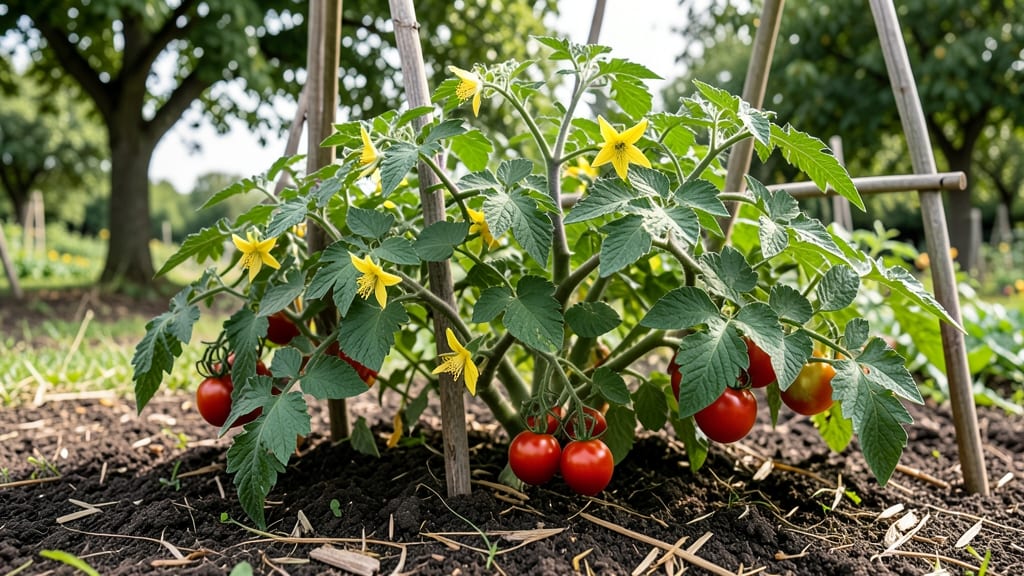
The Jubilee tomato plant delivers sweet, meaty fruit that rivals heirlooms in flavor while thriving like a hybrid. 🌱 I’ve grown it for three seasons now, and its disease resistance and consistent production make it my go-to for busy gardeners—no fancy tricks required.
The secret lies in matching its needs to your climate, and I’ll show you exactly how to set it up for bursting vines and heavy fruit by midsummer.
This tomato loves warmth and sunlight, so start seeds indoors 6-8 weeks before your last frost or buy sturdy transplants. The soil mix should be rich but well-draining—think 60% compost, 30% potting soil, and 10% perlite.
Plant deep, burying two-thirds of the stem to encourage strong root growth, and space plants 24-36 inches apart for airflow. Pruning isn’t mandatory, but removing suckers early keeps energy focused on fruit production.
By week 3, you’ll see vigorous new growth, and the first clusters of fruit will appear by week 6. Jubilee’s thick skin and disease resistance mean fewer losses to blight or cracking, while its balanced sugar-acid profile makes every slice worth savoring.
The plants stay productive until frost, giving you a steady harvest for 8-10 weeks—plenty for sauces, salads, and slicing.
Works in containers or in-ground, from Zone 5 to Zone 10, though black plastic mulch helps in cooler climates. For bigger yields, add a low nitrogen fertilizer every 3 weeks once flowers appear.
The key is consistency: water deeply 1-2 times per week, and avoid wetting leaves to prevent disease. Ready to grow tomatoes that taste like summer every bite?
📚 In This Guide
- What you need
- Instructions
- Tips and common mistakes
- Wrapping up and next steps
What you need
- ● Jubilee tomato seeds or seedling: 1-2 plants (check for disease resistance if buying seeds).
- ● Containers or garden bed: For containers: 5-gallon pots or larger (at least 12" deep) with drainage holes.
- ● For in-ground: Well-draining soil in a sunny spot (6+ hours of sunlight daily).
- ● Potting mix: 1 bag of high-quality, well-draining mix (avoid garden soil—it compacts!).
- ● Fertilizer: Balanced fertilizer (10-10-10) or tomato-specific fertilizer.
- ○ Optional: Slow-release granules (follow package instructions).
- ● Support structure: 1 cage (4-6 ft tall) or 2-3 stakes + twine for trellising.
- ● Watering can or hose with gentle spray nozzle.
- ● Gloves and trowel: For planting and soil prep.
- ● Pruning shears: To trim suckers and encourage fruit production.
- ○ Mulch (optional but recommended): Straw or shredded leaves to retain moisture.
- ○ pH test kit (optional): Ideal soil pH for tomatoes: 6.0–6.8.
- ● Patience and sunshine! 🌞 Jubilee tomatoes thrive in warm weather (70–85°F).
Step-by-step instructions for growing Jubilee tomatoes from seedlings
Here’s how I transform sturdy seedlings into a thriving Jubilee tomato plant with bold vines and heavy fruit in just three weeks.
🌱 Step 1: Select and Prepare Your Container and Soil
Jubilee tomatoes need a 5-gallon container or larger to support their vigorous growth—this plant will fill space fast. Choose a pot with drainage holes or drill them yourself if needed. I always line the bottom with a 2-inch layer of gravel to prevent root rot, which is a silent killer of tomatoes.
Fill the pot with high-quality potting mix (never garden soil—it compacts and suffocates roots). Mix in a slow-release fertilizer (like 10-10-10) at the rate of 1 tablespoon per gallon of soil. This ensures your plant has a steady nutrient supply from day one. Press the soil down lightly but don’t compact it—you want it loose enough for roots to spread easily.
☀️ Step 2: Plant and Position for Maximum Light
Dig a hole in the center of the pot twice as wide as the root ball of your Jubilee seedling. Gently remove the plant from its nursery pot and loosen any circling roots with your fingers—this prevents girdling as the plant grows. Place it in the hole, then backfill with soil, pressing lightly to eliminate air pockets.
Water deeply until water runs out the drainage holes, then let the soil settle for 10 minutes. Jubilee tomatoes thrive in full sun (6-8 hours daily), so position your container in the southernmost spot available. If you’re indoors, place it within 2 inches of a grow light—these plants won’t tolerate leggy growth. You’ll know the light is right when new leaves are dark green and compact, not stretched or pale.
💧 Step 3: Water and Feed for Rapid Vine Development
Keep the soil consistently moist but never soggy—Jubilees hate wet feet. Water when the top 1-2 inches of soil feel dry to the touch, aiming for 1 gallon per week in warm weather. I use a drip irrigation system or water at the base in the morning to prevent fungal diseases. Avoid wetting leaves, which can lead to early blight.
Feed your plant every 2 weeks with a liquid tomato fertilizer (like 5-10-10) mixed at half-strength. The goal is to encourage bold vine growth and heavy fruit set. You’ll see the first signs of success when new leaves appear every 3-5 days and the plant starts reaching for the sky—this is when you know it’s thriving. If growth slows, check for yellowing lower leaves, a sign of nutrient deficiency or overwatering.
✂️ Step 4: Prune and Support for Heavy Fruit Production
When your Jubilee reaches 12-18 inches tall, it’s time to prune and train. Remove the suckers (the small shoots that form in the leaf axils) to direct energy into fruit production rather than leafy growth. Use clean pruning shears to snip suckers just above the leaf, and avoid tearing the stem. This step is critical—unpruned plants produce fewer, smaller fruits.
Install a strong tomato cage or stakes immediately to support the plant’s weight. Jubilee tomatoes can grow 6-8 feet tall and produce 10+ pounds of fruit, so the support must be sturdy. Tie the main stem to the cage with soft plant ties every 12 inches as it grows. You’ll know you’re on the right track when the plant fills the cage within 2 weeks and flowers begin appearing in the upper leaf axils.
🌿 Step 5: Monitor and Adjust for Peak Harvest
Watch for early signs of stress like curled leaves or blossom end rot (black spots on fruit). If you see these, adjust your watering or add calcium-rich fertilizer (like crushed eggshells or gypsum). Jubilee tomatoes are heat-tolerant, but in temperatures above 90°F, they may drop flowers. Provide afternoon shade if needed, and keep the soil evenly moist to prevent stress.
Your plant is ready for harvest when fruit turns deep red and yields slightly to gentle pressure. Jubilee tomatoes are known for their sweet, meaty texture, so pick them when fully ripe for the best flavor. With proper care, you’ll have continuous harvests for 6-8 weeks—and that’s when you’ll know you’ve grown a true winner.
Tips & tricks for growing vibrant Jubilee tomatoes
Here's what I've learned after growing these powerhouse plants for years—little details that make all the difference between a struggling vine and a fruit-laden giant.
Container Selection: While a 5-gallon container works, don't skimp on size if you can go larger. I've seen Jubilee tomatoes thrive in 7-gallon containers, giving their roots more room to spread and support that incredible 10-pound harvest potential. The extra space also helps prevent the plant from becoming root-bound, which can stress the plant and reduce fruit production.
Light Optimization: Those 6-8 hours of daily sunlight are non-negotiable, but here's the trick I use: rotate your container every few days to ensure even light exposure on all sides. Jubilee tomatoes grow toward the light source, so this prevents lopsided growth. If you're using grow lights indoors, consider a timer to maintain consistent 12-14 hour light cycles—this mimics natural daylight and encourages robust growth.
Pruning Precision: When you reach Step 4 and start pruning suckers, here's what I've found works best: use your fingers to gently pinch off suckers when they're still small (about 1-2 inches long). This is less traumatic for the plant than cutting with shears and prevents damage to the main stem. I also recommend pruning in the morning—this gives the plant time to recover before evening temperatures drop.
Heat Management: While Jubilee tomatoes handle heat better than many varieties, don't ignore the 90°F threshold. When temperatures climb above this, provide shade cloth (30-50% shade) during peak afternoon hours. I've found that even brief exposure to extreme heat can cause flower drop, which means fewer tomatoes later. Also, increase your watering frequency slightly during heatwaves to help the plant maintain turgor pressure.
Pro Tips for Jubilee Tomato Plant
- Here's what I've learned after growing these powerhouse plants for years—little details that make all the difference ...
- Container Selection: While a 5-gallon container works, don't skimp on size if you can go larger. I've seen Jubilee to...
- Light Optimization: Those 6-8 hours of daily sunlight are non-negotiable, but here's the trick I use: rotate your con...
Frequently asked questions
Got questions about growing your own Jubilee tomato plant? You’re not alone! Here are answers to the most common queries to help you cultivate a thriving vine and a bountiful harvest in just three weeks.
How soon can I expect tomatoes after planting Jubilee seeds?
The Jubilee tomato is a fast-growing variety, but don’t rush—patience is key! With optimal care (warmth, sunlight, and consistent watering), you’ll see florets in 4–5 weeks and ripe tomatoes in 50–60 days from seed. Start indoors 6–8 weeks before your last frost for the best results!
Can I grow Jubilee tomatoes in containers, or do they need a garden bed?
Jubilee tomatoes thrive in containers as long as the pot is at least 5 gallons (bigger is better) with drainage holes. Use a lightweight potting mix and a sturdy trellis or cage to support their sprawling vines. Just ensure they get 6–8 hours of sunlight daily—even in pots!
Why are my Jubilee tomato leaves turning yellow or curling?
Yellowing or curling leaves often signal overwatering, underwatering, or pests. Check the soil—it should stay moist but not soggy. Underwatering causes crispy edges, while overwatering leads to yellowing. Inspect for aphids or spider mites (common culprits) and treat with neem oil if needed. Heat stress can also cause curling—provide afternoon shade if temps soar!
Are Jubilee tomatoes determinate or indeterminate?
The Jubilee is a determinate (bush) variety, meaning it grows to a compact size (3–4 feet tall) and produces fruit all at once. This makes it perfect for container gardening and heavy harvests in a short window. Unlike indeterminate types, it doesn’t require pruning for fruit production—just support for those heavy clusters!
What’s the best way to store homegrown Jubilee tomatoes?
Jubilees are best eaten fresh, but you can extend their shelf life! Store them at room temperature (not in the fridge) in a paper bag with a few apples to ripen them faster. Once ripe, they’ll last 3–5 days. For longer storage, freeze them whole or make sauces/jams—just avoid refrigerating until fully ripe to prevent mealy texture.
Wrapping up and next steps
Growing a jubilee tomato plant is a rewarding journey that brings fresh, flavorful tomatoes straight to your kitchen in just weeks! Whether you're a seasoned gardener or a curious beginner, these vibrant vines and juicy fruits prove that great things grow from small starts. 🌱✨
Now that you’re armed with the right materials and answers to common questions, it’s time to roll up your sleeves and plant your seeds. Start small—even a single jubilee tomato plant can yield a bountiful harvest—and enjoy the satisfaction of nurturing life from scratch. Happy gardening!