Companion Plants
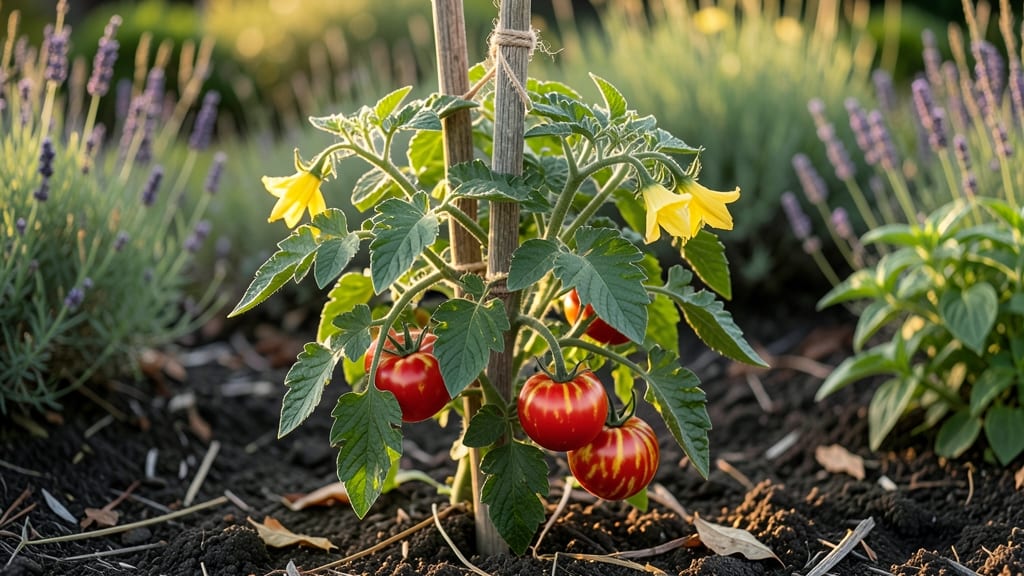
Growing Red Zebra tomato plants means you'll harvest striped heirloom tomatoes that taste like nothing from the grocery store. 🌱 These plants aren't just pretty—they're productive, disease-resistant, and perfect for gardeners who want both beauty and flavor.
The secret lies in their care, which starts with the right soil and sunlight setup.
You'll need a spot with 6-8 hours of direct sun, well-draining soil rich in organic matter, and consistent moisture—never soggy roots. Red Zebras thrive in containers or in-ground beds, making them versatile for any garden.
The striped fruit develops best when plants get balanced care, so prune regularly to encourage airflow and remove suckers to focus energy on fruit production.
By midsummer, you'll be harvesting deep red, striped tomatoes with a sweet-tart flavor that pairs perfectly with fresh basil. These plants reward patience with abundant harvests and striking visual appeal that turns heads at farmers' markets.
The key is staying vigilant against common issues like blight or cracking—preventative care keeps them thriving.
Whether you're a seasoned gardener or trying heirlooms for the first time, Red Zebras deliver unmatched flavor and drama. Their unique stripes make them a conversation starter, while their robust growth makes them a reliable choice. Start with these basics, and you'll be enjoying homegrown beauty—and taste—all season long.
📚 In This Guide
- What you need
- Instructions
- Tips and common mistakes
- Wrapping up and next steps
What you need
- ● Red Zebra tomato seeds or seedlings – Choose Solanum lycopersicum 'Red Zebra' (indeterminate variety, 70-80 days to maturity). Buy 2-4 plants for a small garden or 6+ plants for larger harvests.
- ● Well-draining potting mix or garden soil – A 50/50 blend of compost and sterile potting soil works best. Avoid heavy clay soils.
- ● Containers or garden space – Containers: 5-gallon pots or larger (at least 12-18 inches deep) with drainage holes. Use 2-3 plants per container.
- ● Garden beds: Ensure full sun (6-8+ hours daily) and 6-8 feet between plants for airflow.
- ● Tomato cages or stakes – 6-8 feet tall (bamboo, metal, or spiral). 2-3 cages per plant for support.
- ● Balanced fertilizer (10-10-10 or 5-5-5) – 1 tablespoon per plant at transplanting, then monthly.
- ● Mulch (straw or shredded leaves) – 2-3 inches thick to retain moisture and suppress weeds.
- ● Hand trowel or transplanting spade – For digging and planting.
- ● Watering can or hose with gentle nozzle – Avoid blasting leaves to prevent disease.
- ● Pruning shears – For removing suckers and shaping plants.
- ● Compost or worm castings – Boosts soil fertility (1 cup per plant at planting).
- ● Epsom salt (magnesium sulfate) – 1 tablespoon per gallon of water every 4-6 weeks for leaf health.
- ○ Companion plants (optional but fun!) – Basil – Repels pests and enhances flavor.
- ● Marigolds – Deters nematodes.
- ● Avoid planting near fennel or dill (can stunt growth).
- ● Last frost date – Wait until soil is at least 50°F (10°C) before transplanting seedlings outdoors.
- ● Sunny spot – No compromise here—Red Zebras thrive in full sun!
- ● Patience – These beauties take 70-80 days to fruit, but every striped tomato is worth the wait!
Step-by-step guide to growing Red Zebra tomato plants
Here's how to cultivate these stunning striped tomatoes with bold flavor—my foolproof method for vibrant plants and plentiful harvests.
🌱 Step 1: Choose the Right Location and Prepare Soil
Red Zebra tomatoes thrive in full sun—at least 6-8 hours daily. I always pick the warmest, sunniest spot in my garden because these plants need consistent heat to develop their signature striped pattern and sweet-tart flavor. Avoid low-lying areas where cold air settles, as even brief chills can stunt growth.
Amend your soil with 2-3 inches of compost and a handful of balanced organic fertilizer (like 5-5-5) before planting. These tomatoes love rich, well-draining soil with a pH between 6.0-6.8. Work the compost into the top 12 inches of soil to encourage deep root development, which helps the plants withstand drought and produce larger fruits.
🪴 Step 2: Plant Seedlings at the Right Depth and Spacing
Plant your Red Zebra seedlings 12-18 inches apart in rows spaced 24-36 inches apart to allow for proper air circulation—a must for preventing fungal diseases like early blight. Dig a hole just deep enough to bury the stem up to the first set of true leaves. This encourages stronger root growth from the buried stem sections.
Gently remove the seedling from its container and loosen the roots if they're circling. Place it in the hole at a slight angle (about 45 degrees) to encourage upward growth. Fill the hole with soil, pressing lightly to eliminate air pockets. Water immediately after planting to settle the soil and remove any air gaps around the roots.
☀️ Step 3: Provide Consistent Watering and Support
Water deeply 1-2 times per week, aiming for 1-1.5 inches of water per week. I always water in the early morning so the foliage has time to dry before evening, which reduces the risk of fungal diseases. Use drip irrigation or soaker hoses to keep water at the base of the plant and avoid wetting the leaves.
Install sturdy tomato cages or stakes at planting time. Red Zebra plants can grow 4-5 feet tall and produce heavy fruit, so they need strong support. I use 6-foot bamboo stakes tied with soft plant ties to avoid damaging the stems as they grow. Prune suckers (the small shoots that form in the leaf axils) regularly to direct the plant's energy into fruit production rather than excessive foliage.
✂️ Step 4: Prune and Fertilize for Maximum Yield
Begin pruning when the plant reaches 18-24 inches tall. Remove suckers (the shoots that grow between the main stem and branches) to improve air circulation and fruit production. I prune suckers that are smaller than 1/4 inch in diameter to avoid stressing the plant. Leave only the main stem and the strongest branches to support the heavy fruit load.
Fertilize every 4-6 weeks with a low-nitrogen, high-phosphorus fertilizer (like 3-4-6) to encourage flowering and fruiting. Stop fertilizing 4-6 weeks before the first frost to allow the plant to harden off and prepare for the end of the growing season. Mulch around the base of the plant with 2-3 inches of straw or shredded leaves to retain moisture and suppress weeds.
🍅 Step 5: Harvest and Enjoy the Striped Beauty
Harvest Red Zebra tomatoes when they reach their full size and develop their signature striped pattern. These tomatoes typically ripen 70-80 days after transplanting, but timing can vary based on your climate. Gently twist the tomato to remove it from the vine—avoid pulling, as this can damage the plant.
Use harvested tomatoes within 3-5 days for the best flavor and texture. Store them at room temperature, away from direct sunlight, to maintain their vibrant stripes and sweet-tart taste. If you have an abundance, you can slice and freeze them for later use in sauces, salsas, or salads.
Tips & tricks for perfect Red Zebra tomato cultivation
These game-changing insights will help you coax out the full potential of your striped tomato plants.
Sunlight Strategy: While the instructions call for 6-8 hours of daily sun, I've found that positioning plants slightly west-facing can actually intensify the red stripes—those late-afternoon rays create the perfect conditions for the anthocyanins that give them their signature color. Just avoid east-facing spots where morning dew lingers, as prolonged moisture can encourage fungal issues.
Soil Depth Secret: When amending that top 12 inches with compost, don't just scratch it in—dig deeper! Use a broadfork to loosen the soil down to 18 inches. This creates a "root highway" that helps the plants access nutrients during dry spells. I've seen Red Zebras withstand weeks-long droughts when planted this way, while shallow-rooted plants wilt dramatically.
Watering Wisdom: The 1-1.5 inches per week guideline works perfectly in most climates, but here's the pro move: water only in the morning, and use a rain gauge to track your actual rainfall. If you get 1 inch from rain, you can skip one scheduled watering. Overwatering is actually one of the biggest mistakes—it dilutes soil nutrients and creates perfect conditions for blight.
Pruning Precision: When you reach the 18-24 inch pruning stage, focus on removing suckers that grow above the first flower cluster. These early suckers can divert energy from fruit production. I also recommend leaving the first few leaves on the main stem—this helps establish a strong framework for the plant's vertical growth.
Pro Tips for Red Zebra Tomato Plants
- These game-changing insights will help you coax out the full potential of your striped tomato plants.
- Just avoid east-facing spots where morning dew lingers, as prolonged moisture can encourage fungal issues.
- Soil Depth Secret: When amending that top 12 inches with compost, don't just scratch it in—dig deeper!
Frequently asked questions
When is the best time to plant Red Zebra tomatoes?
Plant Red Zebra seeds indoors 6–8 weeks before your last frost date (typically March–April in most climates). Transplant seedlings outdoors after soil warms to 55°F+ and nighttime temps stay above 50°F. For cooler regions, use black plastic mulch or row covers to extend the season. Pro tip: Start seeds in biodegradable pots to avoid root disturbance!
How do I tell if my Red Zebra tomato plants are healthy?
Healthy plants have deep green leaves, sturdy stems, and vibrant striped fruit. Watch for yellowing leaves (nutrient deficiency), wilting (underwatering), or spots (disease). Prune suckers (side shoots) regularly to improve airflow and fruit production. Red Zebra tomatoes thrive with 6–8 hours of sunlight daily and consistent moisture.
Why aren’t my Red Zebra tomatoes ripening?
Ripening issues often stem from cool temps, low light, or uneven watering. Ensure plants get full sun (6+ hours) and consistent moisture—fluctuations cause blossom-end rot or cracked fruit. If nights dip below 55°F, use row covers or move pots to a warmer spot. Pro tip: Harvest green tomatoes indoors and ripen them in a paper bag with a banana!
What are the best companion plants for Red Zebra tomatoes?
Red Zebra tomatoes love companions like basil, marigolds, onions, and carrots (they deter pests and improve flavor). Avoid planting near corn, fennel, or brinjals (eggplants), as they compete for nutrients. Interplanting with nasturtiums also lures aphids away from your tomatoes!
Where can I buy Red Zebra tomato seeds or plants?
Order seeds from reputable suppliers like Baker Creek Heirloom Seeds, Seed Savers Exchange, or Etsy. For live plants, check local nurseries, farmers' markets, or online stores (e.g., Burpee, Bonnie Plants). Pro tip: Buy organic seeds if you prioritize heirloom varieties—Red Zebra is a favorite for its bold flavor and striking looks!
How do I prevent pests like hornworms or aphids on my Red Zebra plants?
Handpick hornworms (they’re camouflaged—look for green poop!) and spray neem oil or insecticidal soap for aphids. Introduce ladybugs or parasitic wasps for natural control. Pro tip: Plant basil nearby—its scent repels pests and enhances tomato flavor!
Wrapping up and next steps
Growing red zebra tomato plants isn’t just about adding a stunning visual to your garden—it’s about savoring a flavor experience that rivals (or even surpasses!) store-bought tomatoes. Their striking stripes, disease resistance, and rich taste make them a must-have for both beginners and seasoned gardeners.
Whether you’re experimenting with companion plants or simply eager to elevate your harvest, these tomatoes prove that beauty and bold flavor go hand in hand.
Ready to take the next step? Start small—plant a few seeds or seedlings this season—and watch your garden (and your plate) transform! 🌱✨