
Pests
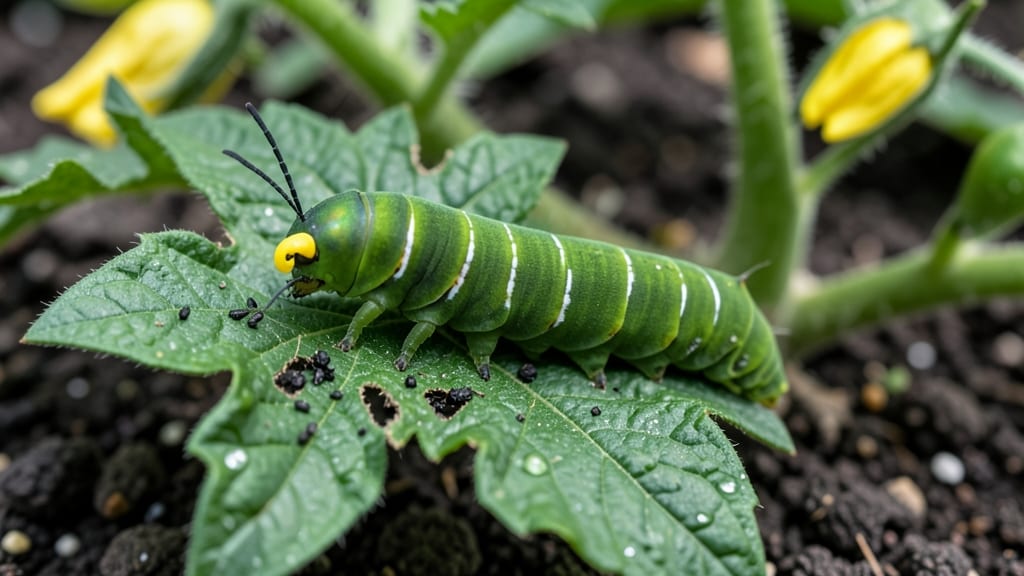
Tomato plant caterpillars can strip your plants bare in days—unless you act fast. 🌱 I’ve watched hornworms and loopers turn lush tomato plants into skeletal remains, but these 3 easy steps will save your harvest without harsh chemicals.
The worst offenders are hornworms (green with white stripes) and tomato loopers (green with smooth bodies). They hide under leaves during the day, chewing through fruit and foliage overnight. The damage? Jagged holes, defoliation, and fruit that’s unfit to eat.
With a simple neem oil spray or BT (Bacillus thuringiensis), you’ll stop the destruction in its tracks. These organic methods work within 24-48 hours and won’t harm bees or other beneficial insects. The key is acting early—once caterpillars reach 2 inches, they’re harder to control.
Prevention is even simpler: row covers in early season, handpicking at dusk, and planting basil nearby (its scent repels pests). Your tomatoes will stay healthy, and you’ll avoid the heartbreak of a ruined crop.
The Hidden Triggers Behind Caterpillar Attacks
Those tiny, voracious caterpillars munching on your tomato plants aren’t just random visitors—they’re drawn by a mix of environmental cues, plant chemistry, and even your garden’s layout. Understanding why they target your tomatoes is the first step to stopping them organically.
Let’s break down the science behind their behavior, so you can outsmart them before they devour your harvest.
Tomato plants produce natural compounds that either attract or repel pests, and caterpillars have evolved to zero in on the ones that scream, “Eat me!” Here’s how it works:
- Volatile Organic Compounds (VOCs): When tomato leaves are damaged—even slightly—plants release volatile organic compounds like green leaf volatiles (GLVs) and jasmonates. These chemicals act like a dinner bell for caterpillars, signaling, “Fresh meal alert!” 🚨
- High-Nitrogen Foliar Content: Tomatoes with lush, nitrogen-rich leaves are caterpillar magnets. While nitrogen fuels growth, it also makes plants more palatable to chewing insects like hornworms and loopers. Test your soil: If your plants have dark green, soft leaves, they’re likely over-fertilized with nitrogen.
- Sugary Nectar Traps: Some caterpillars (like the tomato fruitworm) are drawn to the sugary exudates on tomato flowers and fruit. These sticky secretions aren’t just food—they’re like a GPS beacon for moths laying eggs near them.
Actionable fix: Balance your soil with phosphorus-rich compost (like bone meal) to strengthen plant defenses. Avoid late-season nitrogen spikes—this makes tomatoes taste better to you, but it’s an all-you-can-eat buffet for caterpillars.
Caterpillars don’t just appear—their parents (moths) scout for the ideal tomato patch. Your garden might be inviting them with these unintentional perks:
| Factor | Why It Attracts Moths | How to Fix It |
|---|---|---|
| 🌙 Nighttime Lighting | Moths are drawn to artificial lights (especially white or yellow bulbs), which mimic moonlight and help them navigate. They’ll hover near lit areas to lay eggs on nearby plants. | Switch to red or amber LED bulbs (insects can’t see these wavelengths) or use motion-activated lights timed for dawn/dusk. |
| 🌿 Weedy Borders | Moths use “landmark plants” (like dandelions or milkweed) to orient themselves. If your tomato patch is surrounded by wild hosts, they’ll assume it’s a safe nursery. | Create a 2-foot “moth-free zone” around tomatoes by removing weeds and planting catnip or basil (moths avoid these scents). |
| 💧 Moisture-Rich Soil | Moths prefer laying eggs in humid microclimates, where caterpillars thrive. Overwatered or low-lying tomato beds are prime real estate. | Improve drainage with raised beds or gravel mulch. Water at the base (not overhead) to reduce humidity around foliage. |
Pro tip: 🌡️ Timing matters. Most tomato pests (like hornworms) emerge in late spring to early summer when nights are warm. Monitor your plants during this window—early intervention saves your crop!
Caterpillars don’t just choose tomato plants—they’re programmed to. Their life cycle is a finely tuned machine for destruction, and understanding it helps you disrupt their plan:
- Step 1: Egg Laying (The Silent Invasion) Moths lay eggs on the underside of leaves (where predators can’t reach). A single female tomato hornworm moth can deposit 2,000+ eggs in her lifetime. By the time you spot caterpillars, it’s often too late—they’ve been feasting for days.
- Step 2: Larval Feasting (Chaos Mode) Newly hatched caterpillars double in size in 48 hours if food is abundant. They target young leaves first (softer = easier to digest) but will strip a plant bare in 3–5 days if unchecked.
- Step 3: Pupation (The Disappearing Act) When caterpillars reach ~2 inches, they drop to the soil to pupate, emerging as moths 2 weeks later. This means one infestation can re-infect your garden next season if pupae survive.
Break the cycle: Handpick eggs (they’re tiny white ovals) and destroy them in soapy water. For pupae, till the soil in fall to expose them to predators or birds.
Now that you know why caterpillars target your tomatoes, the next step is organic control strategies to kick them off your plants—without chemicals. Stay tuned!
Beat Back Chewing Invaders Naturally
Caterpillars munching on your tomato plants can feel like a nightmare, but with the right organic tactics, you can reclaim your garden without harsh chemicals. Below are targeted solutions based on the most common causes—from hungry larvae to hidden eggs—and how to stop them in their tracks.
Plus, we’ll share prevention tips to keep your tomatoes thriving long-term.
If you’ve noticed tiny white eggs clustered on the undersides of leaves, act fast—they’ll hatch into voracious caterpillars in days.
How to Fix It:
- 👨🔧 Scrape or brush off eggs with a stiff brush or your fingers (wear gloves!). Drop them into soapy water to drown them.
- 🌿 Use neem oil spray (1 tsp neem oil + 1 tsp mild soap + 1 quart water). Spray every 5–7 days to disrupt egg development and deter new ones.
- 🐛 Introduce parasitic wasps (like Trichogramma)—these tiny allies lay eggs inside caterpillar eggs, preventing hatching. Order them online or find them at garden centers.
💡 Pro Tip: Check leaves daily during peak caterpillar season (late spring to early summer). Early detection = less damage!
Small caterpillars are easier to remove than their larger, fatter cousins. Manual removal is the fastest way to protect your plants.
How to Fix It:
- 🕵️♂️ Inspect plants at dawn or dusk when caterpillars are sluggish. Look under leaves, in leaf folds, and near stems.
- 👨🍳 Drop them in soapy water (a bucket with 1 tbsp dish soap works). Never release them near your garden—they’ll just return!
- 🥘 Use a drop cloth or newspaper to shake caterpillars off plants, then dispose of them far from your garden.
⏰ Time-Saver: If you’re short on time, pick off the biggest ones first—they’re eating the most!
Physical barriers and traps can block caterpillars before they reach your tomatoes.
How to Fix It:
- 🛡️ Cover young plants with row fabric (fine mesh that blocks insects). Secure edges with soil or clips to prevent caterpillars from crawling underneath.
- 🍎 Set up pheromone traps for specific pests like hornworms. Hang traps near your plants to confuse male moths and reduce egg-laying.
- 🌿 Plant sacrificial crops like basil or dill nearby—caterpillars may prefer these over your tomatoes, giving your plants a fighting chance.
🎯 Prevention Bonus: Rotate crops yearly to disrupt caterpillar life cycles and reduce egg-laying hotspots.
When caterpillars are already feasting, natural sprays can break their appetite or kill them on contact.
How to Fix It:
- 🌿 Bacillus thuringiensis (Bt) – A bacteria-based spray that’s safe for humans and pets but deadly to caterpillars. Mix as directed and spray directly on leaves where larvae are feeding. Reapply after rain.
- 🍋 Spicy pepper spray – Blend 1 tbsp cayenne pepper + 1 tsp dish soap + 1 quart water. Spray on leaves (test on a small area first—it can burn some plants). Reapply every 3–4 days.
- 🥬 Beer trap for cutworms – Fill a shallow dish with beer and bury it near plants. Cutworms are attracted to the smell and drown. Replace every few days.
✨ Extra Defense: Companion plant with marigolds—their strong scent repels many caterpillar species.
Mother Nature has her own pest control squad. Attract beneficial insects to keep caterpillar populations in check.
How to Fix It:
- 🐞 Ladybugs and lacewings – Buy eggs or adults online and release them near your tomato plants. They devour caterpillar eggs and young larvae.
- 🐸 Frogs and toads – Create a shady, moist habitat (like a small pond or damp corner) to attract them. They’ll snack on caterpillars overnight.
- 🐦 Birds – Hang a bird feeder or install a birdhouse nearby. Birds like robins and sparrows love munching on caterpillars.
💡 Long-Term Tip: Avoid broad-spectrum pesticides—they kill both pests and beneficial predators, throwing your garden’s balance off.
Final Reminder: Consistency is key! Check your plants regularly, combine 2–3 methods (e.g., handpicking + Bt spray + companion planting), and your tomatoes will stay safe, happy, and productive. 🍅✨
Frequently asked questions
What are the most common tomato plant caterpillars I should watch for?
The two worst offenders are tomato hornworms (large green caterpillars with white stripes) and tomato loopers (smaller, smooth-bodied green caterpillars). Hornworms can grow up to 4 inches and skeletonize plants overnight, while loopers create jagged holes in leaves. Look for their droppings (black frass) as an early warning sign.
How do I know if my tomato plants have caterpillar eggs?
Check the undersides of leaves for tiny white ovals (about the size of a pinhead). These are usually caterpillar eggs, and they’ll hatch in 3-5 days. If you see clusters of them, act fast—neem oil or hand removal can prevent an infestation before it starts.
Can I use dish soap to kill caterpillars on my tomato plants?
Yes, but with caution. Mix 1 tablespoon dish soap with 1 quart water and spray directly on caterpillars. The soap disrupts their protective wax layer, causing dehydration. Just avoid spraying flowers (it can harm pollinators) and reapply after rain. For severe infestations, combine with Bacillus thuringiensis (Bt) for better results.
Will caterpillars return next year if I don’t treat them now?
Absolutely—their life cycle means they’ll come back stronger. Moths lay eggs that overwinter in soil or plant debris, so remove all plant waste in fall and till the soil to expose pupae to predators. Also, rotate crops yearly to break their life cycle and use row covers early in the season for prevention.
Are there any plants that naturally repel tomato caterpillars?
Yes! Basil, marigolds, and dill are the most effective. Plant them near your tomatoes—their strong scents mask the plant’s natural attractants. You can also try catnip (moths avoid it) or nasturtiums as sacrificial crops to lure pests away from your main harvest.