
Pests and Diseases
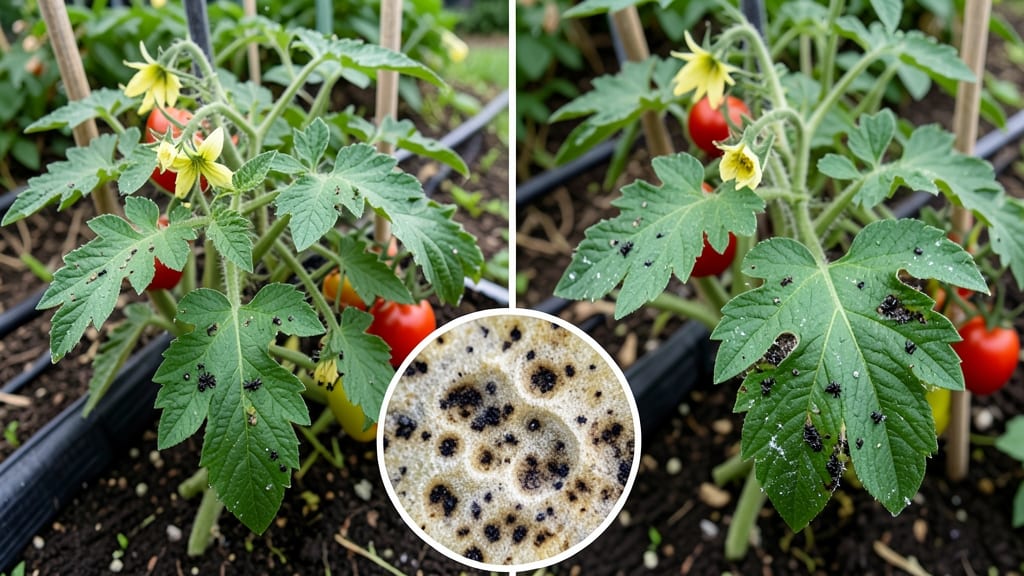
Black dots on tomato leaves mean one thing: your plants are under siege. 🌱 I’ve seen this turn a thriving vine into a sad, spotted mess if ignored—but there’s always a fix.
The dots could signal early blight, spider mites, or even overwatering, and each needs a different approach to save your harvest.
Most gardeners panic when they spot these tiny black marks, but the key is acting fast. Early blight thrives in damp conditions, while spider mites leave behind a fine webbing.
I’ve used a mix of neem oil, copper fungicide, and simple pruning to turn things around—even when my tomatoes looked like they were giving up.
You’ll learn to spot the difference between fungal spots and insect damage, plus how to prevent future outbreaks. The secret? Good airflow, proper watering, and keeping your garden clean. With these tricks, your plants will bounce back stronger than ever.
Whether you’re dealing with a small patch or a full-blown crisis, this guide covers everything from quick fixes to long-term prevention. Let’s get those leaves healthy again!
Root Causes of Black-Spotted Tomato Leaves
Discovering tiny black dots dotting your tomato leaves can feel like a gardener’s nightmare—but understanding the science behind it is the first step to reclaiming your plants. These spots rarely appear randomly; they’re usually a symptom of pest activity, fungal infections, or environmental stress.
Below, we break down the most common culprits, why they strike, and how they wreak havoc on your tomatoes.
Most black dots on tomato leaves are a direct result of insect feeding or egg-laying. These pests don’t just nibble—they leave behind a trail of damage that weakens your plants. Here’s who’s likely to blame:
🔍 Aphids: The Sap-Sucking Menace
Aphids are among the most common culprits behind black dots. While they themselves are tiny (often green, black, or yellow), their excrement (honeydew) and sooty mold create those telltale black specks. Here’s how it happens:
- Feeding damage: Aphids pierce tomato leaves to suck out sap, leaving behind stippled or yellowed areas where cells are damaged.
- Honeydew production: Their sugary waste drips onto leaves, creating a sticky residue that attracts sooty mold fungus—a black, velvety growth.
- Viral transmission: Aphids spread plant viruses (like Tomato Yellow Leaf Curl Virus) that can further stress leaves, making them more susceptible to fungal infections.
Pro tip: Check the undersides of leaves for clusters of aphids—if you see them, the black dots are almost certainly their doing. 🔍
🐞 Spider Mites: The Invisible Web Weavers
Though spider mites are microscopic, their feeding patterns and webbing create a stippled, black-dotted appearance—especially in dry conditions. Here’s the science:
- Cell destruction: Mites insert their mouthparts into leaf cells, causing chlorosis (yellowing) and tiny dead spots that look like black freckles under stress.
- Webbing: Heavy infestations produce fine silk threads that trap debris, making leaves appear speckled.
- Environmental triggers: Hot, dry weather doubles mite populations, as they thrive in low humidity.
💡 Key clue: Hold a white sheet under a leaf and tap it—if tiny moving dots (mites) scatter, they’re your problem.
🪰 Thrips: The Slash-and-Dash Bandits
Thrips are tiny, winged insects that scratch leaves while feeding, leaving behind black fecal spots and silver streaks. Their damage is unique:
- Razor-like mouthparts: They slice leaf surfaces, causing necrotic (dead) black dots where cells rupture.
- Fungal hitchhikers: Their scratches create entry points for Botrytis blight or Alternaria, worsening the blackening.
- Flowers at risk: Thrips also attack tomato blossoms, leading to cat-facing (scarring) on fruit.
🌡️ Watch for: Thrips love warm, dry conditions—if your garden is baking, they’re likely lurking.
Not all black dots are from pests—fungal spores and diseases can also create similar symptoms. These pathogens thrive in moist conditions and often go unnoticed until they’ve taken hold.
🍅 Early Blight: The Concentric Circle Culprit
Alternaria solani, the fungus behind early blight, causes target-like black spots with concentric rings. Here’s how it infiltrates:
- Spores in soil: The fungus overwinters in plant debris, launching spores via splashing water (rain or irrigation) onto lower leaves.
- Warm, wet weather: Ideal conditions are 75–85°F with high humidity—perfect for spore germination.
- Leaf collapse: As spots expand, leaves yellow and die, reducing photosynthesis and weakening the plant.
🎯 Prevention tip: Remove lower leaves (where spores land) and space plants for airflow to starve the fungus. ⏰
🌧️ Sooty Mold: The Honeydew’s Dark Shadow
Sooty mold isn’t a primary pathogen—it’s a secondary invader that grows on the honeydew left by pests like aphids or scale insects. Here’s the chain reaction:
- Pest waste = fungal buffet: Honeydew provides nutrients for Capnodium spores, which sprout into black, fuzzy colonies.
- Blocked sunlight: Sooty mold coats leaves, reducing photosynthesis by up to 50%, stunting growth.
- No direct plant harm: Unlike early blight, sooty mold doesn’t kill cells—but it weakens the plant, making it vulnerable to other diseases.
✨ Quick fix: Blast leaves with water to wash off mold, but treat the pests first or it’ll return.
Sometimes, black dots aren’t from pests or fungi at all—they’re a physical response to stress. Extreme conditions can cause cellular damage that manifests as speckling.
☀️ Sun Scorch: Too Much of a Good Thing
Intense sunlight, especially after overnight watering or cool temps, can cause sun scorch. Here’s the science:
- Water droplets act like lenses: Morning dew or sprinklers magnify sunlight, burning leaf surfaces and creating crispy, blackened spots.
- Young leaves at risk: New growth is more vulnerable due to thinner cell walls.
- Heatwaves worsen it: Temperatures above 90°F increase transpiration, drying out leaves faster.
🔥 Solution: Water deeply in the morning (not at night) and use shade cloth for young plants.
💧 Overwatering: Drowning the Roots
While underwatering causes wilting, overwatering leads to root suffocation and fungal entry points. Black dots here signal:
- Root rot: Excess moisture creates Phytophthora or Pythium, which spread to leaves via the vascular system, causing black, water-soaked spots.
- Nutrient starvation: Waterlogged soil blocks oxygen, preventing roots from absorbing nutrients, leading to chlorosis and necrosis.
- Leaf tip burn: Overwatered plants often develop blackened edges due to imbalanced nutrient uptake.
🌧️ Fix it: Let soil dry 1–2 inches deep between waterings and improve drainage with compost. 🏗️
Now that you know the
Quick Fixes for Speckled Tomato Foliage
Got those pesky black dots marring your tomato leaves? Don’t panic—most causes have simple, organic solutions that’ll have your plants thriving again in no time. Below, we’ve matched the likely culprits to their fixes, plus prevention tips to keep your tomatoes healthy long-term.
If your tomato leaves are dotted with black specks (especially in damp conditions), fungal diseases like early blight or black spot might be the culprit.
🍳 Step 1: Remove the Damage
- Snip it out: Use clean, sharp scissors or pruners to trim away infected leaves—never compost them (spores can survive!).
Drop them in a sealed bag instead. - Focus on lower leaves: These are most vulnerable to soil-borne fungi. Aim to keep the plant’s center open for airflow.
👨🍳 Step 2: Boost Airflow
- Space plants 18–24 inches apart to reduce humidity buildup.
- Stake or cage tomatoes to prevent leaves from brushing the wet soil.
🥘 Step 3: Organic Fungicide Spray
Mix 1 tbsp baking soda + 1 tsp dish soap + 1 gallon water in a spray bottle. Apply to both sides of leaves every 7–10 days until new growth appears.
For a stronger defense, try: - Neem oil spray (1 tsp neem oil + 1 tsp mild soap + 1 quart water). Shake well and spray early in the morning to avoid burning leaves. - Copper fungicide (follow label instructions) for severe cases.
⏰ Prevention Tips
- Water at the base (not overhead) to keep leaves dry.
- Rotate crops—don’t plant tomatoes in the same spot yearly.
- Mulch with straw to prevent soil splashing onto leaves.
Seeing tiny black dots crawling or clustered on leaves? You’re likely dealing with aphids, spider mites, or fungus gnats.
🔪 Step 1: Blast Them Off
- Spray with water: Use a strong stream from a hose to knock aphids off leaves (do this in the morning so leaves dry quickly).
- For mites: Wipe leaves with a damp cloth dipped in soapy water (1 tsp mild soap per quart).
🌡️ Step 2: Introduce Beneficial Insects
- Ladybugs or lacewings devour aphids. Buy them online or attract them with dill or fennel plants.
- Predatory mites (like Phytoseiulus persimilis) target spider mites. Release them at dusk when mites are least active.
🎯 Step 3: Homemade Sprays
- Garlic spray: Blend 1 chopped garlic bulb + 1 tsp cayenne pepper + 1 quart water. Strain, add 1 tsp soap, and spray weekly.
- Insecticidal soap: Mix 2 tbsp castile soap + 1 quart water.
Test on a small leaf first—some plants are sensitive!
✨ Prevention Tips
- Yellow sticky traps catch fungus gnats and aphids before they multiply.
- Avoid over-fertilizing with nitrogen—it attracts soft-bodied pests like aphids.
- Inspect new plants before bringing them home (quarantine for a week if possible).
If the black dots appear after extreme heat, cold, or nutrient deficiency, your tomatoes might be under stress.
💡 Step 1: Check Soil and Water
- Drought stress? Water deeply 1–2 inches per week (more in extreme heat). Use drip irrigation to avoid wetting leaves.
- Overwatering? Let the top inch of soil dry out between waterings.
Yellowing leaves with black specks could signal root rot—trim affected roots if repotting.
🥗 Step 2: Feed Smart
- Balanced fertilizer: Use a 5-10-10 or 10-10-10 formula (nitrogen-phosphorus-potassium) to prevent deficiencies.
- Compost tea: Brew a week-long compost tea (1 part compost to 5 parts water) to boost microbial activity in the soil.
🌱 Prevention Tips
- Mulch with straw or grass clippings to retain moisture and regulate soil temperature.
- Use shade cloth (30–50%) in scorching climates to protect leaves.
- Test your soil—pH between 6.0–6.8 is ideal for tomatoes.
Pro Tip: 💡 Rotate your fixes! If one method doesn’t work after 2 weeks, switch tactics—pests and fungi adapt quickly. Keep a garden journal to track what works best for your climate.*
Frequently asked questions
Are black dots on tomato leaves always a sign of disease?
No, they can indicate several issues beyond disease. Black dots often signal pest activity (like aphids or spider mites), fungal infections (such as early blight), or even environmental stress from sun scorch or overwatering. Always check for other symptoms like webbing, sticky residue, or yellowing leaves to narrow down the cause.
How can I tell if the black dots are from pests vs. fungus?
Look for these clues: If you see tiny moving insects, sticky honeydew, or fine webbing, it's likely pests. Fungal issues usually show as concentric rings, blackened veins, or velvety growth. Hold a white sheet under a leaf and tap it—if tiny dots scatter, you’ve got mites or aphids.
Will removing infected leaves stop the black dots from spreading?
Yes, but it's just one step! Prune away infected leaves immediately (don't compost them) to prevent spores from spreading. Combine this with proper airflow, organic fungicides (like neem oil), and consistent watering at the base. For pests, use a strong water spray or insecticidal soap to knock them off.
Can I still harvest tomatoes if the leaves have black dots?
It depends on the cause. If the issue is environmental (like sun scorch) or early-stage pest damage, your tomatoes may still be safe to eat. However, if fungal diseases like early blight are present, avoid eating leaves with black spots—they can harbor harmful spores. Always wash harvested tomatoes thoroughly before eating.
How often should I spray neem oil to prevent black dots?
Apply neem oil every 7-10 days during growing season as a preventive measure. For active infections, spray every 5-7 days until new growth appears. Always mix it with a drop of mild soap and apply in the early morning to avoid leaf burn. Rotate with other organic sprays like garlic or copper fungicide to prevent resistance.