
Planting
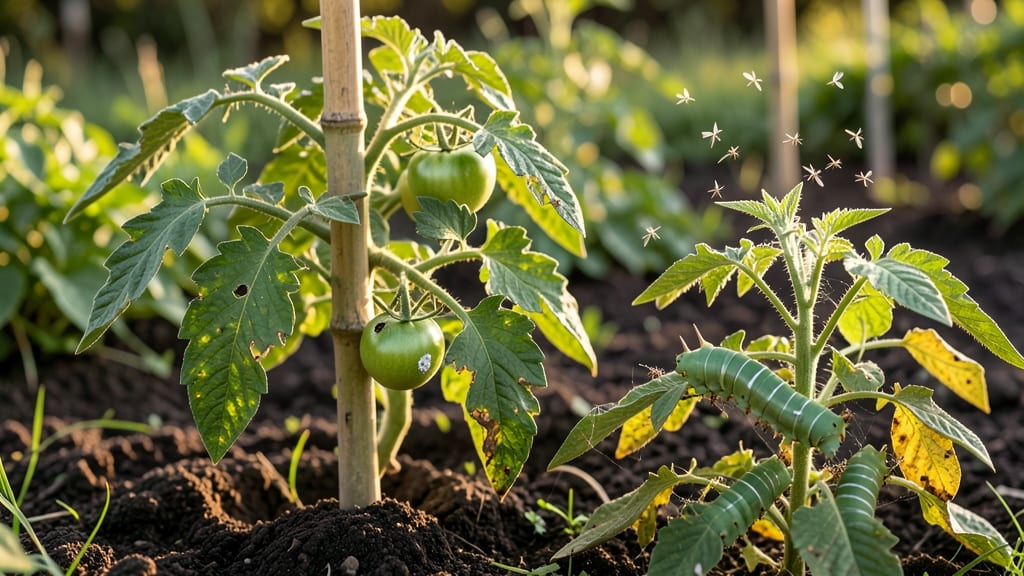
Seeing tiny holes in your tomato plants and wondering what pests are eating your leaves? 🌱 These tomato plant pests photos show you exactly what’s attacking your plants—and how to stop it before your harvest disappears.
I’ve spent years battling these pests, and these 10 common invaders will look completely different once you see them up close.
The damage isn’t always obvious until it’s too late. Aphids cluster on new growth, hornworms strip leaves overnight, and spider mites create fine webbing that turns foliage yellow.
Each pest leaves a unique signature—crisp edges, skeletonized leaves, or sticky residue—so you’ll learn to spot them early and act fast. No more guessing games in your garden.
You’ll walk away knowing exactly what to look for, how to treat each pest naturally, and which plants to introduce as allies. Your tomatoes will stay lush, productive, and free from the most common threats. The best part? Most solutions take less than 10 minutes once you recognize the problem.
Whether you’re dealing with a sudden outbreak or just want to stay ahead, this guide gives you the visual tools to protect your plants. No more mystery pests ruining your harvest—just clear photos and straightforward fixes. Let’s get your tomatoes thriving again.
Root Causes Of Tomato Plant Attacks
Understanding why pests target your tomato plants is half the battle in defense. These tiny invaders don’t just strike randomly—they’re drawn by specific conditions that make your garden a buffet. Here’s a breakdown of the science behind their behavior, so you can outsmart them before they strike.
Tomatoes thrive in good airflow, but when plants are too close together, humidity lingers, and pests get a cozy hideout.
Here’s the science: - Poor ventilation creates a damp microclimate, perfect for fungus gnats and aphids, which love moist soil and leaves. - Shaded leaves (from overcrowding) weaken the plant’s defenses, making it easier for hornworms and whiteflies to feast undetected. - Root competition stresses plants, releasing volatile organic compounds (VOCs) that attract pests like cutworms (they’re drawn to stressed plant scents).
Actionable fix: Space tomato plants 18–24 inches apart (or as recommended for your variety) and prune lower leaves to improve airflow.
A healthy tomato plant fights off pests naturally, but nutrient deficiencies, overwatering, or disease leave it vulnerable.
Here’s how it plays out: - Nitrogen deficiency (yellowing lower leaves) signals to aphids that the plant is struggling—easy pickings! - Overwatering softens plant tissue, making it easier for slugs and earwigs to chew through stems and leaves. - Fungal infections (like early blight) create entry points for secondary pests like spider mites, which thrive on weakened foliage.
Actionable fix:
- Test soil pH (6.0–6.8 is ideal) and amend with compost for balanced nutrients.
- Water deeply but infrequently (1–1.5 inches per week) to avoid soggy roots.
- Remove infected leaves immediately to prevent pest infestations.
Tomatoes release chemical signals that pests can detect from yards away.
Here’s what’s happening: - Tomato volatiles (like green leaf volatiles, GLVs) attract hornworms, fruitworms, and even whiteflies—these compounds are like a dinner bell. - Damaged leaves release even more stress signals, calling in reinforcements (e.g., aphids swarm faster when they detect wounded plants). - Night-blooming flowers (like tomatoes) emit scent plumes that draw moths (future hornworms) from miles away.
Actionable fix:
- Prune aggressively to remove damaged or yellowing leaves (reduces scent cues).
- Interplant with pest-repelling herbs (basil, marigolds, or dill) to mask tomato scents.
- Harvest ripe fruit promptly—overripe tomatoes release fermentation odors that attract fruit flies and wasps.
Pests don’t attack year-round—they’re triggered by temperature, rain, and plant maturity.
Here’s the timeline: | Pest | Peak Season | Why They Strike Now | |-------------------|----------------------|--------------------------------------------------| | Aphids | Early spring/fall | Cool temps + new growth = easy feeding. | | Hornworms | Summer (June–Aug) | Warm nights + flowering tomatoes = ideal host. | | Whiteflies | Late summer | Heat stress weakens plants; they thrive in 80°F+. | | Fungus gnats | Spring/fall (wet) | Overwatered soil = larval paradise. | | Cutworms | Early spring/late fall| Cool, damp soil = easy burrowing. |
Actionable fix:
- Monitor weather patterns—pests surge after heavy rain or sudden heat waves.
- Use row covers in early spring to block cabbage loopers and early aphid waves.
- Adjust irrigation in summer to prevent whitefly outbreaks (drip irrigation > overhead).
Even well-meaning gardeners unknowingly spread pests.
Here’s how: - Reusing contaminated tools (pruners, trellises) transfers viral diseases (like tomato mosaic) that attract aphids. - Composting infested plant debris can hatch cutworms or slug eggs the next season. - Over-fertilizing with nitrogen leads to soft, sappy growth—a buffet for hornworms and stink bugs.
Actionable fix:
- Sterilize tools with rubbing alcohol between plants.
- Remove all plant debris by fall (or compost in a hot bin for 3+ months).
- Rotate crops yearly to starve soil-borne pests (e.g., don’t plant tomatoes in the same spot two years in a row).
Quick Fixes for Tomato Plant Pests
Got unwanted visitors feasting on your tomatoes? Don’t panic—these practical, step-by-step solutions will help you reclaim your garden before pests turn your harvest into a buffet. Below, we match common tomato pests to their fixes, plus prevention tips to keep your plants thriving.
🔥 Spot them: Large green caterpillars with white stripes, often hiding on leaves or stems.
🍳 How to Remove Them:
- Handpick them! 👨🍳 Wear gloves and pluck them off (drop them in soapy water—no mercy!).
- Release beneficial predators: Ladybugs and parasitic wasps (like Cotesia congregata) love hornworms. Buy or attract them naturally with dill or fennel plants.
💡 Prevention Tips:
- Neem oil spray (weekly) deters egg-laying moths.
- Plant basil nearby—its scent repels hornworms.
🔥 Spot them: Clusters of small green/black bugs on new growth or undersides of leaves.
🔪 How to Eliminate Them:
- Blast them off with a strong water spray (aphids hate this!).
- Soap spray solution: Mix 1 tbsp mild liquid soap + 1 quart water. Spray directly (test on a few leaves first).
- Introduce ladybugs—they’re aphid-eating machines!
🌡️ Prevention Tips:
- Encourage natural predators like lacewings and parasitic wasps.
- Avoid over-fertilizing (soft new growth attracts aphids).
🔥 Spot them: Tiny red/yellow dots on leaves, webbing (like dust), or stippled foliage.
⏰ How to Treat Them:
- Rinse leaves with water (mites hate humidity).
- Neem oil or horticultural oil (spray every 5–7 days until gone).
- Increase humidity—mites love dry conditions. Use a mist bottle or shade cloth.
🎯 Prevention Tips:
- Prune for airflow—mites thrive in crowded, dry plants.
- Use reflective mulch (like aluminum foil) to disorient them.
🔥 Spot them: Tiny white moths fluttering when you disturb leaves; sticky residue on lower leaves.
🍳 How to Trap & Kill Them:
- Sticky yellow traps (hang near plants to catch adults).
- Insecticidal soap or neem oil (spray undersides of leaves).
- Yellow dish trap: Fill a yellow bowl with soapy water—whiteflies are drawn to the color.
💡 Prevention Tips:
- Remove infested leaves immediately (don’t compost them!).
- Avoid overwatering—whiteflies love stressed plants.
🔥 Spot them: Yellow-orange beetles or striped larvae chewing holes in leaves.
🔪 How to Stop Them:
- Handpick adults/larvae (drop in soapy water).
- Diatomaceous earth (food-grade) around the base—it’s like sandpaper to their soft bodies.
- Row covers (early in the season) block them completely.
🌡️ Prevention Tips:
- Rotate crops—don’t plant tomatoes/solomon in the same spot yearly.
- Plant trap crops like nasturtiums to lure them away.
🔥 Spot them: Shiny trails, ragged holes in leaves/fruit, or slimy trails at dawn.
🍳 How to Trap & Block Them:
- Beer traps: Bury a shallow dish filled with beer—slugs drown in it.
- Copper tape around pots (gives them a mild electric shock).
- Crushed eggshells or diatomaceous earth as a barrier.
🎯 Prevention Tips:
- Water in the morning (slugs hide during the day).
- Remove hiding spots (boards, thick mulch).
✨ Pro Tip: Always inspect plants regularly (especially undersides of leaves) and act fast—pests multiply quickly! With these fixes, your tomatoes will stay pest-free and productive all season. 🍅🌱
Frequently asked questions
How do I tell if those tiny yellow dots on my tomato leaves are spider mites or just dust?
Spider mites leave behind fine webbing and create stippled (speckled) patterns on leaves, while dust usually coats leaves evenly. Hold a white sheet of paper under a leaf and tap it—if you see tiny moving specks (red/yellow), it’s mites. Also check for webbing between leaves.
Can I use the same neem oil spray for all tomato pests, or does it only work for some?
Neem oil is effective against aphids, whiteflies, spider mites, and even deters hornworm moths from laying eggs. However, it won’t kill slugs, cutworms, or beetles—those need physical removal or barriers like diatomaceous earth. Always apply in the evening to avoid harming bees.
What’s the fastest way to get rid of hornworms if I find them late in the season?
For an immediate fix, handpick them (drop in soapy water) and release parasitic wasps (like Cotesia congregata)—they’ll handle the rest in 3-5 days. For prevention, wrap tomato stems with aluminum foil (hornworms hate the texture) or plant basil nearby (its scent repels them).
Are there any tomato pests that actually help my plants?
Yes! Ladybugs, lacewings, and parasitic wasps are natural predators that eat aphids, whiteflies, and hornworms. To attract them, plant dill, fennel, or marigolds nearby and avoid pesticides—these beneficial insects are your garden’s built-in pest control.
Why do my tomato plants get pests every year, even when I treat them?
Pests return because they’re drawn to tomato plants themselves—their scent and nutrients are irresistible. The key is breaking the cycle: rotate crops yearly, remove all plant debris by fall, and use reflective mulch (like aluminum foil) to disorient flying pests. Also, overwatering or over-fertilizing weakens plants, making them easier targets.