
Companion Plants
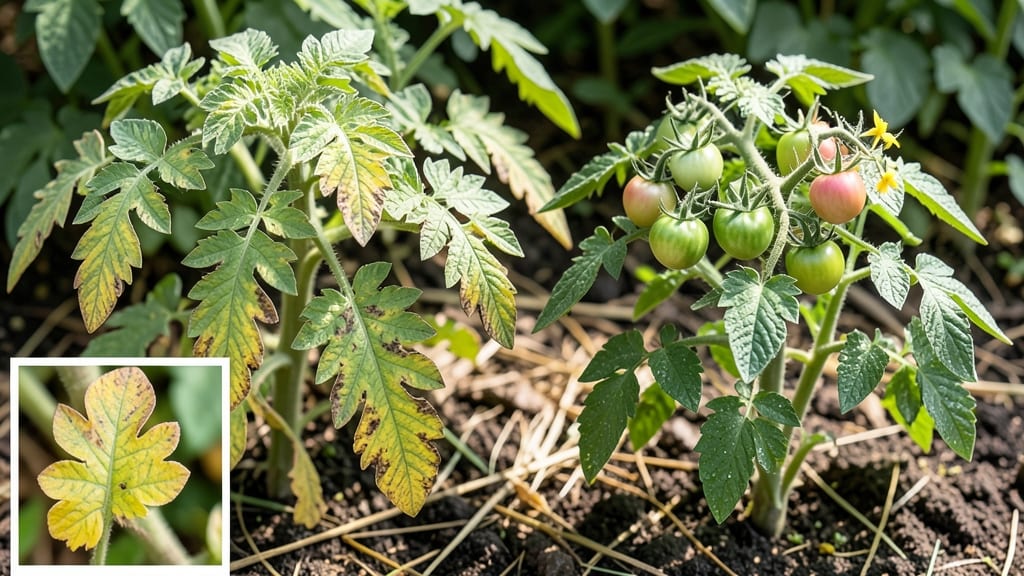
Those tomato plants looking yellow don’t mean your harvest is over—just that they’re signaling a problem loud and clear. 🌱 I’ve seen this happen after heavy rains, nutrient crashes, or even hidden pests, and every time, the right fix brings those leaves back to a deep, healthy green in days.
The key is figuring out what’s causing the yellowing before it spreads to the fruit.
Most yellowing starts with the older leaves first, which is your first clue it’s likely a nutrient issue—especially nitrogen or magnesium. Check the soil moisture too: soggy roots starve plants just as much as dry ones.
If the yellowing spreads to younger leaves or comes with brown spots, you’re probably dealing with disease or pests hiding on the undersides. The good news? All of these have straightforward fixes once you know what to look for.
By the time you’re done, your plants will be back to their vibrant, productive selves—no more pale, wilted leaves ruining your harvest. We’ll cover soil tests, targeted fertilizers, and even how to spot early signs of trouble before they become big problems.
The first step is simple: grab a magnifying glass and inspect those leaves closely.
This works for both garden beds and containers, and the fixes scale from quick DIY solutions to long-term soil improvements. Whether your tomatoes are in pots on the patio or rows in the ground, you’ll have them thriving again in no time. Let’s get those leaves green and growing!
Hidden Causes Behind Yellowing Tomato Leaves
When your tomato plants start turning yellow, it’s often a silent SOS from your garden. But what’s really triggering those sad, pale leaves? The culprits can range from sneaky soil issues to environmental stressors.
Let’s break down the science behind why your tomatoes are losing their green—and how to spot the difference between a quick fix and a deeper problem.
Tomatoes thrive on consistency, but too much water—or waterlogged soil—can suffocate their roots. When roots sit in soggy conditions, they struggle to absorb oxygen, leading to chlorosis (yellowing leaves) and even root rot. This is especially common in heavy clay soils or containers without drainage holes.
How to tell: Check the soil—if it stays damp for days or feels squishy like a sponge, you’re overwatering. Yellowing often starts on the lower leaves first, paired with wilting or mushy stems.
Fix it:
- 🔥 Test your soil: Stick your finger 2 inches deep—if it’s wet, hold off on watering until the top inch is dry.
- 🍳 Improve drainage: Amend heavy soil with perlite, sand, or compost. For pots, ensure they have drainage holes and elevate them off the ground.
- 👨🍳 Water smarter: Deep water 1–2 times per week (depending on climate) rather than daily shallow drinks. Water at the base, not the leaves, to prevent fungal issues.
While tomatoes love sunlight, intense midday heat (especially above 90°F/32°C) can cause leaf edges to yellow and crisp. This is common in greenhouses or hot climates where plants can’t regulate their temperature. Heat stress disrupts chlorophyll production, turning leaves yellow while keeping veins green—a classic sign of sunburn.
How to tell: Yellowing appears on upper leaves exposed to direct sun, often with a papery or brittle texture. You might also see bleached or white patches.
Fix it:
- 🌡️ Provide shade cloth: Use 30–50% shade fabric during peak afternoon sun (12–4 PM).
- 💡 Mulch heavily: Apply 2–3 inches of straw or wood chips to keep roots cool and retain moisture.
- 🎯 Adjust watering: Increase frequency slightly during heatwaves to help the plant cool down (but avoid soggy soil).
Yellow leaves can scream nutrient deficiency, and tomatoes are particularly sensitive to three key issues:
📊 1. Nitrogen Deficiency (General Yellowing)
Nitrogen is the building block of chlorophyll. When soil lacks it, older leaves turn yellow first (a process called senescence), starting at the base and moving upward. This is common in overworked soil or when plants outgrow their fertilizer supply.
💪 2. Magnesium Deficiency (Interveinal Yellowing)
Magnesium helps activate chlorophyll. A shortage causes yellow patches between veins (while veins stay green), often on middle or older leaves. This is frequent in sandy or acidic soils.
🥗 3. Iron Deficiency (Young Leaf Yellowing)
Iron is crucial for chlorophyll production. When soil pH is too high (>7.0), iron becomes unavailable, causing new leaves to yellow entirely (a condition called iron chlorosis). This is common in calcareous or alkaline soils.
How to tell:
Deficiency
Where Leaves Yellow
Other Clues
Nitrogen
Older leaves, base first
Stunted growth, pale stems
Magnesium
Middle/older leaves, between veins
Yellowing spreads to entire leaf over time
Iron
New leaves, entirely yellow
Veins stay green; leaves may curl
Fix it:
- 🔥 Test your soil: A simple pH test kit (ideal range: 6.0–6.8) can reveal alkalinity issues.
- 🌡️ Amend soil:
- For nitrogen: Add compost, fish emulsion, or a balanced fertilizer (10-10-10).
- For magnesium: Use Epsom salt (1 tbsp per gallon of water, applied every 2 weeks).
- For iron: Lower pH with sulfur or use chelated iron supplements.
- ✨ Folate sprays: For quick relief, spray leaves with a liquid iron or magnesium supplement (follow label rates).
Not all yellowing is nutrient-related—pests and pathogens can hijack your tomato’s health, leaving behind telltale signs:
🐜 1. Spider Mites or Aphids
These tiny sap-suckers drain chlorophyll, causing leaves to yellow and crisp. You’ll often see webbing (mites) or sticky residue (aphids) on the undersides.
🍄 2. Early Blight or Septoria Leaf Spot
Fungal diseases create yellow halos around dark spots on leaves. These spots spread upward, weakening the plant’s ability to photosynthesize.
🐛 3. Root-Knot Nematodes
Microscopic worms damage roots, reducing water and nutrient uptake. Yellowing starts at the bottom and spreads as the plant struggles to support itself.
How to tell:
- Pests: Inspect leaf undersides with a magnifying glass. Look for tiny bugs, holes, or honeydew.
- Fungal diseases: Check for dark spots with yellow borders or white mold on leaves.
- Nematodes: Gently pull a plant—if roots are gnarled or have knots, nematodes are likely.
Fix it:
- 🔪 Pests:
- Blast off mites/aphids with a strong spray of water.
- Use neem oil or insecticidal soap (repeat every 5–7 days).
- Introduce beneficial insects like ladybugs or lacewings.
- 🌡️ Fungal diseases:
Revive Your Tomato Plants Naturally
Yellowing tomato leaves aren’t just an eyesore—they’re a cry for help from your plants! 🌱 But don’t worry, most causes have simple, actionable fixes. Below, we’ve mapped out practical solutions for each common issue, from nutrient deficiencies to environmental stressors, plus prevention tips to keep your plants lush and productive.
---
Yellowing often starts with a lack of essential nutrients. Here’s how to diagnose and correct them:
#### 🌿 Nitrogen Deficiency (Lower Leaves Yellow First) Nitrogen is the building block of healthy green leaves. If the older, lower leaves turn yellow while new growth stays green, your plants are nitrogen-starved.
How to Fix It: ✅ 🍳 Add Organic Matter - Mix compost, well-rotted manure (chicken or cow), or worm castings into the soil around the base of the plant (avoid direct contact with stems). - Quick fix: Use a balanced organic fertilizer (like 5-5-5 or 10-10-10) and apply it every 2–3 weeks during the growing season.
✅ 💡 Use Foliar Sprays for Fast Results - Brew a liquid nitrogen tea: Steep 1 cup of compost or manure in 5 gallons of water for 24 hours, then strain and spray on leaves. - Commercial option: Fish emulsion (high in nitrogen) works fast—dilute and spray weekly.
✅ 🌡️ Prevention Tips - Test your soil (DIY kits are affordable!) to check nitrogen levels before planting. - Rotate crops—don’t plant tomatoes in the same spot yearly (they deplete nitrogen). - Mulch heavily with straw or grass clippings to retain soil nitrogen.
---
#### 🍅 Magnesium Deficiency (Yellow Between Veins) If yellow patches appear between leaf veins** (a condition called interveinal chlorosis), your tomatoes lack magnesium, a key nutrient for chlorophyll production.
How to Fix It: ✅ 👨🍳 Apply Epsom Salt (Fast & Cheap) - Dissolve 1 tablespoon of Epsom salt (magnesium sulfate) in 1 gallon of water. - Spray on leaves every 7–10 days until new growth appears. - Bonus: Add 1 tablespoon per plant directly to the soil (water well after).
✅ 🥗 Use Dolomitic Lime (Long-Term Fix) - If your soil is acidic (pH < 6.0), sprinkle dolomitic lime (contains magnesium) around the plant and water thoroughly. - Wait 2–3 weeks before reapplying Epsom salt.
✅ 🎯 Prevention Tips - Avoid over-fertilizing with potassium—it can block magnesium uptake. - Plant tomatoes in slightly alkaline soil (pH 6.0–6.8) for better magnesium absorption.
---
#### 💪 Potassium Deficiency (Yellow Edges & Weak Stems) Yellowing or brown edges on leaves, along with weak stems or poor fruit development, signals a potassium shortage.
How to Fix It: ✅ 🔪 Use Potassium-Rich Fertilizers - Switch to a potassium-heavy fertilizer (like 0-10-10 or banana peel tea). - DIY banana peel tea: Soak 3–4 banana peels in 1 gallon of water for 2 days, then use as a foliar spray or soil drench.
✅ 🌡️ Improve Soil Drainage - Potassium leaches in waterlogged soil—ensure your plants have well-draining soil with sand or perlite mixed in.
✅ ✨ Prevention Tips - Avoid overwatering—potassium washes out in soggy soil. - Compost tea (rich in microbes) helps release bound potassium in the soil.
---
Sometimes, yellowing isn’t about nutrients—it’s about water, light, or pests.
#### 💧 Overwatering or Poor Drainage (Mushy Leaves) If leaves turn yellow and limp (especially near the base), your plants may be drowning in water.
How to Fix It: ✅ ⏰ Adjust Your Watering Schedule - Water deeply but infrequently—tomatoes prefer 1–2 inches of water per week (check soil moisture 1 inch below the surface). - Use drip irrigation to avoid wetting leaves (prevents fungal diseases).
✅ 🏗️ Improve Soil Drainage - Mix sand, perlite, or coconut coir into heavy clay soil. - Raise beds if your garden floods easily.
✅ 💡 Prevention Tips - Test soil moisture before watering—stick your finger in! If it’s damp, wait. - Avoid watering at night—wet leaves invite blight.
---
#### ☀️ Underwatering or Heat Stress (Crispy Yellow Leaves) If leaves curl, yellow, and feel dry to the touch, your plants are thirsty or heat-stressed.
How to Fix It: ✅ 🍳 Give Them a Deep Drink - Water slowly at the base until you see runoff (but not puddles). - Mulch heavily (2–3 inches) to retain moisture.
✅ 🌿 Provide Shade Cloth (For Extreme Heat) - If temps hit 90°F+, drape light shade cloth (30–50%) over plants for a few hours daily.
✅ 🎯 Prevention Tips - Water in the early morning to reduce evaporation. - Choose heat-tolerant varieties like ‘Solar Fire’ or ‘Heatmaster.’
---
#### 🐜 Pests & Diseases (Spots, Holes, or Uneven Yellowing) Yellowing with holes, spots, or sticky residue? Pests or diseases may be the culprit.
How to Fix It: ✅ 🔪 Handpick or Spray Neem Oil - Aphids/spider mites? Spray neem oil solution (1 tsp neem oil + 1 tsp mild soap per quart of water). - Fungal issues (early blight)? Apply copper fungicide or baking soda spray (1 tbsp baking soda + 1 quart water + a drop of soap).
✅ 🌱 Remove Infested Leaves - Prune and destroy heavily damaged leaves (don’t compost them!).
✅ 💡 Prevention Tips - Rotate crops to prevent soil-borne diseases. - Encourage beneficial insects (ladybugs, lacewings) with dill or marigolds nearby.
---
- 📊 Monitor soil pH—tomatoes thrive in 6.0–6.8 pH.
Adjust with lime (raise pH) or sulfur (lower pH). - 🍎 Companion plants help! Grow basil, marigolds, or onions nearby to deter pests and improve growth. - 🌡️ Prune regularly—remove suckers and lower leaves to improve airflow and nutrient flow to fruits.
--- Remember: Yellow leaves can often be reversed with quick action—don’t wait until the problem spreads! Try one fix at a time, observe for 7–10 days, and adjust as needed.
Before you know it, your tomato plants will be back to their vibrant green selves, ready to produce juicy, sun-ripened tomatoes! 🍅🔥
Frequently asked questions
1Why do my tomato leaves turn yellow first at the bottom?
This is often a sign of nitrogen deficiency or overwatering. Older leaves yellow first because the plant moves nutrients to new growth. Check soil moisture—if it's soggy, roots may be suffocating. Try adding compost or a balanced fertilizer to boost nitrogen levels.
2Can yellow tomato leaves spread to the fruit?
Yes, if left unchecked. Nutrient deficiencies or diseases that cause yellowing can weaken the plant, reducing fruit quality. The good news is that fixing the root cause (like adjusting watering or adding Epsom salt for magnesium) usually stops the spread within 1-2 weeks.
3Is Epsom salt safe for tomato plants?
Epsom salt (magnesium sulfate) is a safe, fast fix for magnesium deficiency. Mix 1 tablespoon per gallon of water and spray leaves every 7-10 days. For container plants, you can also sprinkle 1 tablespoon around the base and water it in.
4What's the difference between yellow leaves from overwatering vs. underwatering?
Overwatering causes mushy, limp leaves with yellowing starting at the bottom, often paired with root rot smells. Underwatering shows as crispy, curled yellow edges on upper leaves. Check soil moisture—if it's damp but leaves are yellow, you're overwatering. If dry and brittle, it's thirsty!
5Will pruning yellow leaves help my tomato plants?
Yes, but focus on severely damaged leaves first. Removing yellow leaves improves airflow and directs energy to healthy growth. Never prune more than 1/3 of the plant at once. Use clean scissors to avoid spreading disease.