
Vegetables
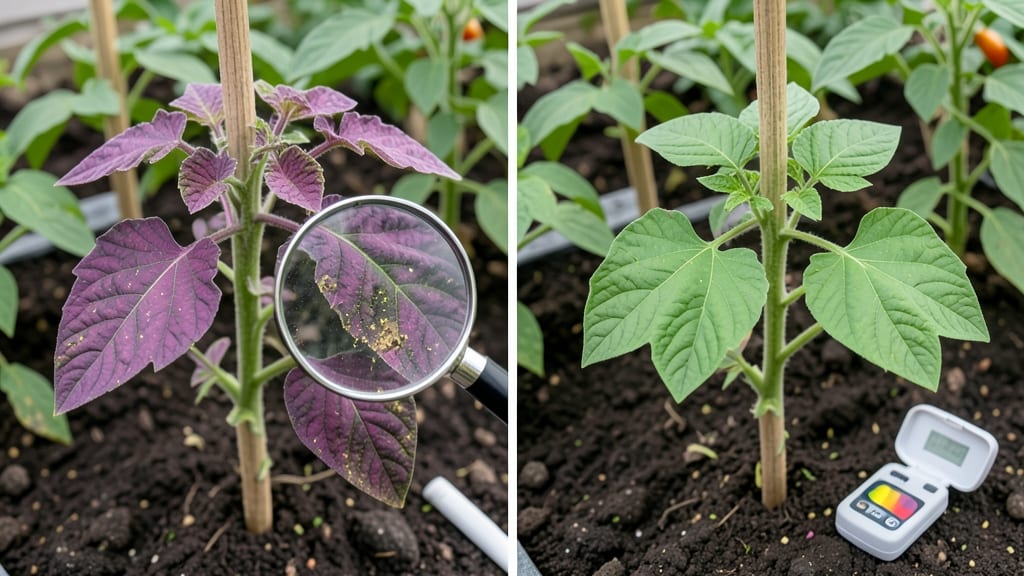
Your tomatoes are turning purple, and panic sets in—this isn’t the color you planted for. 🌱 Purple leaf disorder can strike fast, but the good news is most cases are fixable with the right approach, whether it’s fungal pressure, nutrient stress, or environmental factors.
I’ve seen this happen in my own garden, and the key is acting quickly before the problem spreads.
The purple hue usually starts on older leaves and spreads upward, often paired with yellowing or browning edges. Early blight, purple stem disorder, or even phosphorus deficiency can cause this—each requires slightly different treatment.
The worst part? If ignored, it weakens the plant, stunts growth, and reduces fruit production. But here’s the thing: with the right steps, you can turn this around in just a few weeks.
First, identify the cause—fungal spots, stunted growth, or just odd coloring? Then, we’ll tackle it with organic sprays, soil adjustments, or targeted pruning. You’ll see healthier green leaves within 10-14 days if you catch it early, and your plants will bounce back stronger than before.
The goal isn’t just to stop the purple—it’s to restore your tomatoes to their full, productive potential.
Whether you’re dealing with a single plant or a whole bed, this method works for both container and in-ground gardens. Let’s get those leaves back to vibrant green and your harvest back on track—fast.
Root Causes Behind Purple Leaves
Tomato purple leaf disorder isn’t just a random aesthetic quirk—it’s your plant’s way of signaling distress. Understanding the underlying causes is the first step to restoring your tomatoes to their vibrant, healthy green. Below, we break down the key triggers behind this discoloration, backed by science and actionable insights.
Purple leaves often scream, “Feed me!”—but not in the way you’d expect. While nitrogen is the nutrient most associated with leaf color, phosphorus and potassium deficiencies are the real culprits behind purple hues. Here’s why:
- Phosphorus (P) Shortage 📊 Phosphorus fuels energy transfer in cells, and when it’s lacking, your tomato’s leaves may turn purple or reddish, especially along the veins. This is common in alkaline soils (pH > 7.0), where phosphorus binds to soil particles and becomes unavailable.
Young leaves are often the first to show symptoms because phosphorus is mobile in the plant—older leaves “steal” it to keep critical functions running.
- Potassium (K) Deficit ⚡ Potassium acts like a plant’s electrical system, regulating water movement and enzyme activity. A deficiency causes purple or brownish discoloration, particularly at leaf edges, and weakens the plant’s resistance to disease.
Unlike phosphorus, potassium is non-mobile in the plant, so older leaves show symptoms first.
- Magnesium (Mg) Stress 🌱 While less common, magnesium deficiencies can also trigger purple tinting, especially in older leaves, which turn yellow with purple veins. Magnesium is a building block of chlorophyll, and its absence disrupts photosynthesis. Compacted or overly sandy soils often lack this essential mineral.
💡 Pro Tip: Conduct a soil test before overcorrecting. If phosphorus or potassium is low, apply a balanced fertilizer (like 10-10-10) or bone meal (for phosphorus) and greensand (for potassium). For magnesium, Epsom salt (1 tablespoon per gallon of water, applied foliarly) can work wonders.
Tomatoes are tough, but they hate extremes. Purple leaves can be a red flag (literally) for environmental stressors that disrupt their metabolism:
- Temperature Fluctuations ❄️☀️ Tomatoes thrive in 70–85°F (21–29°C). Below 50°F (10°C) or above 95°F (35°C), their growth stalls, and anthocyanin pigments (the compounds that create purple hues) flood the leaves as a protective response.
This is especially common in spring or fall when nights are chilly, or in greenhouses with poor temperature control.
- Water Stress: Too Much or Too Little 💦🌧️ - Drought Stress: When roots can’t absorb enough water, tomatoes produce anthocyanins to shield leaves from sun damage. Purple leaves paired with wilting or crispy edges?
You’re underwatering. - Overwatering: Soggy soil cuts off oxygen to roots, leading to nutrient uptake failures (like phosphorus or potassium) and purple discoloration. Roots in waterlogged soil also release ethylene gas, which triggers stress responses.
- Light Intensity Issues 🌞🌑 Tomatoes need 6–8 hours of direct sunlight daily. Too little light weakens the plant, causing purple stems and leaves as it struggles to photosynthesize. Conversely, intense afternoon sun (especially in hot climates) can scorch leaves, leading to purple-brown patches.
🔥 Quick Fix: Mulch with straw or wood chips to regulate soil temperature and retain moisture. Use shade cloth (30–50%) if temperatures exceed 90°F (32°C), and water deeply at the base (1–2 inches per week) rather than shallowly.
Not all purple leaves are nutrient-related—some are disease-driven. Two common culprits:
- **Early Blight (Alternaria solani) 🍄 This fungal disease causes purple-brown spots with concentric rings on lower leaves. Unlike nutrient deficiencies, early blight often starts as small, greasy-looking lesions that darken and spread.
The fungus thrives in humid, warm conditions (75–85°F / 24–29°C) and overwinters in soil or plant debris.
- Verticillium or Fusarium Wilt 💀 These soil-borne fungi clog the plant’s vascular system, restricting water and nutrient flow. Early symptoms include purple or yellowing leaves, wilting (even when soil is moist), and stunted growth. Unfortunately, these diseases are incurable—prevention is key.
✨ Prevention Strategy:
- Rotate crops (avoid planting tomatoes in the same spot for 3 years).
- Solarize soil (cover with clear plastic for 4–6 weeks in summer to kill pathogens).
- Remove infected plants immediately and dispose of them in the trash (not compost).
- Use resistant varieties like ‘Mountain Merit’ or ‘Defiant PhR’ if your area is prone to wilt diseases.
Soil pH is the gatekeeper of nutrient availability. Tomatoes prefer a slightly acidic range (6.0–6.8). Outside this zone:
- Alkaline Soil (pH > 7.0) 🧪
- Micronutrient deficiencies (like manganese or zinc) worsen, as these elements are less soluble in alkaline conditions.
- While rare for tomatoes, overly acidic soil can
🎯 Action Plan: Test your soil’s pH with a home kit or lab test. To adjust:
- Raise pH (add lime) – Use pelletized lime (1 lb per 100 sq ft for every 1.0 pH point needed).
- Lower pH (add sulfur) – Apply elemental sulfur (1 lb per 100 sq ft for every 1.0 pH point needed). Results take 2–3 months.
Not all purple leaves are a cry for help! Some tomato varieties are bred to develop anthocyanins as a natural trait, especially when stressed.
Examples: - ‘Indigo Rose’ (purple-skinned tomatoes with purple-tinted leaves). - ‘Black Krim’ (often shows purple hues in cooler weather). - Heirloom varieties like ‘Cherokee Purple’ may have darker stems and veins.
🔍 How to Tell the Difference:
- Nutrient-related purple? Starts on older leaves, often paired with stunted growth or weak stems.
- Genetic purple? Even new growth may have a lavender tint, and the plant looks otherwise healthy.
If your tomato is a known purple variety, no action is needed**—just enjoy the striking foliage! 🌿✨
Quick Fixes for Purple Leaves
Reviving your tomato plants from purple leaf disorder starts with identifying the root cause and applying targeted solutions. Below, we break down practical fixes for the most common triggers, along with prevention tips to keep your plants thriving.
If your tomato leaves are turning purple due to a lack of nitrogen or excess phosphorus, here’s how to correct it:
🍳 Boost Nitrogen for Green Growth
- Use a balanced fertilizer (10-10-10 or 20-20-20) and apply it at half-strength to avoid burning roots.
- Add compost or aged manure (like cow or chicken manure) around the base of the plant for a slow-release nitrogen boost.
- Try a quick fix with diluted liquid fish emulsion (1 tbsp per gallon of water) every 2 weeks.
🌱 Adjust Phosphorus Levels
- If phosphorus is too high, flush the soil with water to leach out excess nutrients.
- Mix in organic matter like peat moss or coconut coir to balance the soil pH and reduce phosphorus buildup.
- Avoid over-fertilizing with high-phosphorus amendments (like bone meal) unless testing confirms a deficiency.
Purple leaves can signal cold stress or heat shock. Here’s how to protect your tomatoes:
🏔️ Shield from Cold Drafts
- Move potted tomatoes indoors (or to a greenhouse) if nighttime temps drop below 50°F (10°C).
- Use row covers or frost blankets to insulate plants in the garden.
- Avoid planting in low-lying areas where cold air pools overnight.
☀️ Prevent Heat Stress
- Provide afternoon shade with shade cloth (30-50%) if temps exceed 90°F (32°C).
- Mulch heavily with straw or wood chips to keep roots cool and retain moisture.
- Water deeply in the morning to prevent wilting and stress.
Purple leaves often mean your tomatoes are struggling with water—either too much or too little.
🚰 Drain Excess Water
- Check soil moisture by sticking your finger 1-2 inches deep—if it’s soggy, hold off on watering.
- Improve drainage by amending clay soil with perlite or sand.
- Use raised beds or containers if your garden retains too much water.
💦 Rehydrate Drought-Stressed Plants
- Water deeply at the base (not the leaves) to encourage strong root growth.
- Apply mulch to lock in moisture and reduce evaporation.
- Use a soaker hose for slow, even watering to prevent shock.
If pests or pathogens are causing purple spotting or discoloration:
🦟 Treat Common Pests
- Spray neem oil (mix 1 tbsp per quart of water) to deter aphids, spider mites, and whiteflies.
- Introduce beneficial insects like ladybugs or lacewings to control pests naturally.
- Remove heavily infested leaves and dispose of them in sealed bags.
🍄 Combat Fungal Infections
- Prune affected foliage with sterilized shears to prevent spread.
- Apply copper fungicide (follow label instructions) for early signs of blight or mildew.
- Space plants properly (18-24 inches apart) to improve airflow and reduce humidity.
Once your tomatoes are back on track, keep these habits to avoid future purple leaf issues:
- 💡 Test your soil every season to monitor nutrient levels (pH, nitrogen, phosphorus, potassium).
- 🌿 Rotate crops to prevent nutrient depletion and disease buildup in the soil.
- 🍅 Choose disease-resistant varieties (like ‘Mountain Merit’ or ‘Celebrity’) for tougher plants.
- ✨ Monitor regularly—catch discoloration early before it spreads!
By tackling the root cause—whether it’s nutrients, weather, water, or pests—you’ll have vibrant green tomatoes in no time. 🍅🌿
Frequently asked questions
Can I still harvest tomatoes if the leaves are purple?
Yes, you can still harvest tomatoes even with purple leaves—this condition primarily affects foliage, not fruit production. However, if the disorder is caused by disease (like early blight), remove infected leaves to prevent spread. Focus on harvesting ripe tomatoes to reduce plant stress and encourage recovery.
How do I tell if purple leaves are from disease or nutrient deficiency?
Check for these clues: disease often shows purple-brown spots with concentric rings (like early blight) or wilting stems (Verticillium wilt). Nutrient issues usually start on older leaves with uniform purple tinting, often paired with stunted growth. Test soil pH and nutrient levels if unsure.
Will Epsom salt fix purple leaves caused by magnesium deficiency?
Yes! Mix 1 tablespoon of Epsom salt per gallon of water and spray it on leaves (including undersides) every 2 weeks. For soil application, sprinkle 1 pound per 100 sq ft around the base. Results may appear in 7-10 days if magnesium was the issue. Avoid overusing—too much sulfur can harm plants.
Can I use coffee grounds to fix purple leaves?
Coffee grounds can help with nitrogen deficiency (which sometimes mimics purple leaves), but they’re not a cure-all. Work 1-2 inches of used grounds into soil monthly to boost nitrogen. For phosphorus/potassium issues, use bone meal or greensand instead. Test soil first to avoid overcorrecting.
How long does it take to see improvement after treating purple leaves?
With proper care, you should see new green growth in 7-14 days. Nutrient fixes (like Epsom salt or fertilizer) work fastest, while disease treatment (fungicides) may take 2-3 weeks to fully reverse. Monitor soil moisture, sunlight, and stress factors—consistency is key!