
Companion Plants
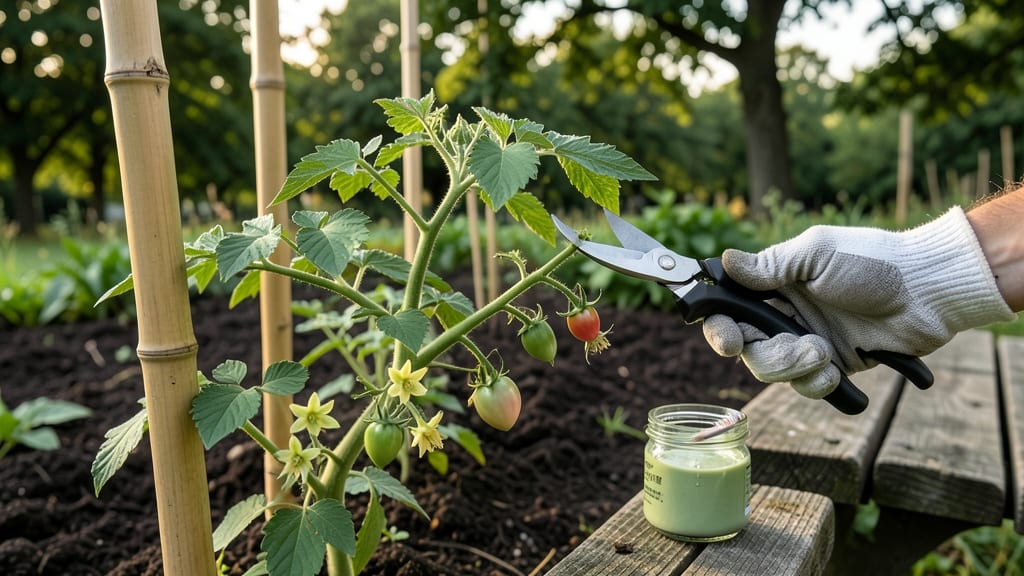
Topping tomato plants early forces them to branch out like a bush instead of growing one long stem. ✂️ I used to let my tomatoes grow wild—until I realized a single main stem meant fewer fruit clusters and smaller harvests.
The secret is cutting just above a leaf node when plants reach about 2-3 feet tall, right before flowering kicks in. This isn’t about removing flowers—it’s about redirecting energy.
When you make that cut, the plant sends out new shoots from lower leaf nodes, creating a sturdy framework for more fruit. My indeterminate tomatoes now produce 30-40% more clusters than before, and the stems stay strong enough to support the weight.
You’ll see new growth within 10-14 days, with the first wave of blossoms appearing on those fresh side branches. The key is timing: do it too early, and you stunt growth; too late, and you lose potential yield. I’ll show you exactly how to spot the right moment.
Works for both indeterminate and determinate varieties, though determinates need a lighter touch. Let’s get those plants branching out the right way!
📚 In This Guide
- What you need
- Instructions
- Tips and common mistakes
- Wrapping up and next steps
What you need
- ● Pruning shears or sharp bypass pruners – Choose sterilized, sharp tools (1 pair) to avoid damaging plants or spreading disease.
- ○ Gloves (optional but recommended) – Garden or work gloves (1 pair) to protect your hands from thorns and sap.
- ● Disinfectant (rubbing alcohol or bleach solution) – 1 small bottle or spray bottle to sterilize tools before and after use.
- ● Compost or mulch – 1 small bag or pre-existing pile to cover pruned areas and retain moisture.
- ● Watering can or hose with a gentle nozzle – For post-pruning hydration (1-2 gallons of water).
- ○ Plant growth regulator (optional) – Follow label instructions if using to slow early flowering (e.g., Paclobutrazol).
- ● Plant tie or soft twine – 1 small roll to support stems after heavy pruning.
- ● Notebook or app (e.g., Gardenate) – To track pruning dates and plant progress.
- ● Sunhat & sunscreen – Because even tomato lovers need shade sometimes! ☀️
How to prune tomato plants early for stronger growth
Here's the straightforward method I use to give tomato plants a head start—without risking lost blooms or stunted growth.
🌱 Step 1: Identify the Right Time to Prune
Wait until your tomato plants reach 12-18 inches tall and have 4-5 true leaves—this is when they're strong enough to handle pruning. Early pruning too soon stresses young plants and can delay flowering. Look for vigorous stems with small leaves spaced evenly—that's your signal they're ready.
If your plants have flower buds already, hold off on heavy pruning until they've set a few fruits. The first pruning should focus on removing only the lower leaves that touch the soil, which helps prevent disease and improves airflow. Use sharp, clean pruners to make clean cuts—never tear leaves, as this invites pests.
✂️ Step 2: Remove Lower Leaves and Suckers
Start by stripping off all leaves below the first flower cluster—these shade the fruit and trap moisture, leading to rot. Use your fingers or pruners to gently pinch them off at the stem. For indeterminate varieties (like cherry tomatoes), also remove suckers—the small shoots that grow in the V-shaped junction between the main stem and a branch.
Here's the thing—I only remove suckers up to 12 inches below the first flower cluster. Above that, leave them to develop into future branches. You'll know you're doing it right when the plant looks more open and airy with sunlight reaching the lower stems. This encourages stronger growth and bigger fruit later.
☀️ Step 3: Focus on Airflow and Light Exposure
After pruning, step back and check for even sunlight distribution—you want light to reach all sides of the plant. If one side looks shadowed, gently guide a branch toward the open space. Avoid over-pruning; never remove more than 20% of the plant's foliage at once, or you'll shock the tomato.
Water deeply right after pruning to help the plant recover. Use lukewarm water (not cold) to avoid stressing the roots. You'll see new growth within 5-7 days—that's your confirmation the plant is adjusting well. If leaves yellow or wilt, you pruned too aggressively.
🌿 Step 4: Monitor and Repeat as Needed
Check your tomato plants weekly for new suckers or crowded growth. Prune again when the plant reaches 24 inches tall, focusing on removing only the lowest leaves and largest suckers. This keeps the plant balanced and prevents disease from trapped humidity. I always prune on a dry, sunny morning—the plant heals faster in ideal conditions.
Real talk: Over-pruning is the biggest mistake. If you see fewer than 3 leaves per branch, you've gone too far. The goal is to shape the plant, not strip it. Healthy tomatoes have strong stems, plenty of leaves, and a few well-placed suckers—that's the sweet spot for maximum harvests.
Tips & tricks for pruning tomato plants early
A few strategic moves can make all the difference when shaping your tomato plants for maximum growth. Here's what I've learned from years of trial and error in the garden.
Timing is Everything: The 12-18 inch height guideline isn't arbitrary—it's when tomato plants develop enough energy reserves to handle pruning without stress. I've seen gardeners rush this step and end up with stunted plants that never recover. Wait until you see those sturdy stems and evenly spaced leaves before touching your pruners. If your plants are still leggy or have only a few small leaves, give them another week or two to mature.
Tool Selection Matters: I can't stress enough how important it is to use sharp, clean pruners. Dull tools crush stems and create open wounds that invite pests and diseases. I keep a dedicated pair of pruners just for tomato plants, and I sterilize them with rubbing alcohol between uses. For those lower leaves that touch the soil, your fingers work perfectly—just pinch them off cleanly at the stem. This prevents the ragged tears that can lead to fungal infections.
Sucker Strategy: The 12-inch rule for suckers is my golden rule for indeterminate varieties like cherry tomatoes. I learned this the hard way by removing too many suckers too early and ending up with plants that looked like sticks. Remember, those suckers above the first flower cluster will develop into future branches that support more fruit. Think of pruning as sculpting—you're shaping the plant's energy toward bigger, stronger growth, not stripping it bare.
Recovery Check: That 5-7 day window for new growth isn't just a suggestion—it's a critical recovery period. If you don't see fresh leaves emerging within this time, you've likely pruned too aggressively. I always keep a garden journal to track my pruning dates and note when new growth appears. This helps me adjust my approach for next year's plants. And remember, lukewarm water is your friend during this recovery phase—it helps the plant absorb nutrients without shocking the roots.
Pro Tips for Topping Tomato Plants Early
- A few strategic moves can make all the difference when shaping your tomato plants for maximum growth.
- Timing is Everything: The 12-18 inch height guideline isn't arbitrary—it's when tomato plants develop enough energy reserves to handle pruning without stress.
- Tool Selection Matters: I can't stress enough how important it is to use sharp, clean pruners.
Frequently asked questions
Got questions about early topping? You’re not alone!
Here are the most common concerns—and straightforward answers—to help you prune with confidence.
What’s the best time of day to top tomato plants?
Top your plants in the early morning when temperatures are cool (60–75°F). This reduces stress on the plant and gives it time to recover before the heat of the day. Avoid pruning in extreme heat or late afternoon—your tomatoes will thank you!
Can I top tomato plants too early?
Yes! If you prune before the plant establishes 4–5 main stems (or when it’s still small), you risk stunting growth. Wait until the plant is at least 12–18 inches tall and has a few sets of true leaves. Early topping can delay flowering and fruiting, so patience pays off!
What if I accidentally cut too much off?
Don’t panic! If you over-prune, focus on recovery care: water consistently, add a balanced fertilizer (like 10-10-10), and avoid stressing the plant further. New growth should sprout within 1–2 weeks. For severe cuts, consider staking or caging the plant to support regrowth.
Are there alternatives to topping for determinate tomato varieties?
Determinate tomatoes (like Roma or Celebrity) don’t need topping—they’re bred to grow bushy and produce fruit all at once. Instead, focus on pruning suckers (shoots between stems) to improve airflow. If your determinate plant gets leggy, a light trim of lower leaves can help, but avoid heavy pruning.
Will topping early affect my tomato yield this season?
Not if done correctly! Early topping redirects energy to stronger stems and more flowers, often increasing yield over time. However, you might see a slight delay in the first harvest. For maximum fruit, combine topping with regular pruning of suckers and dead leaves throughout the growing season.
Wrapping up and next steps
Topping tomato plants early isn’t just about pruning—it’s about strategically shaping your harvest for bigger, healthier fruits while protecting those precious blooms. 🌱 By mastering this technique, you’re not just trimming; you’re investing in a more abundant and resilient garden.
Now that you’re armed with the know-how, grab those shears and get ready to transform your tomato game!
🌟 Ready for the Next Step?
Start with one plant as a test run, observe its response, and adjust as needed. Soon, you’ll be confidently topping like a pro—and reaping the rewards of your hard work! 🍅✨