
How To
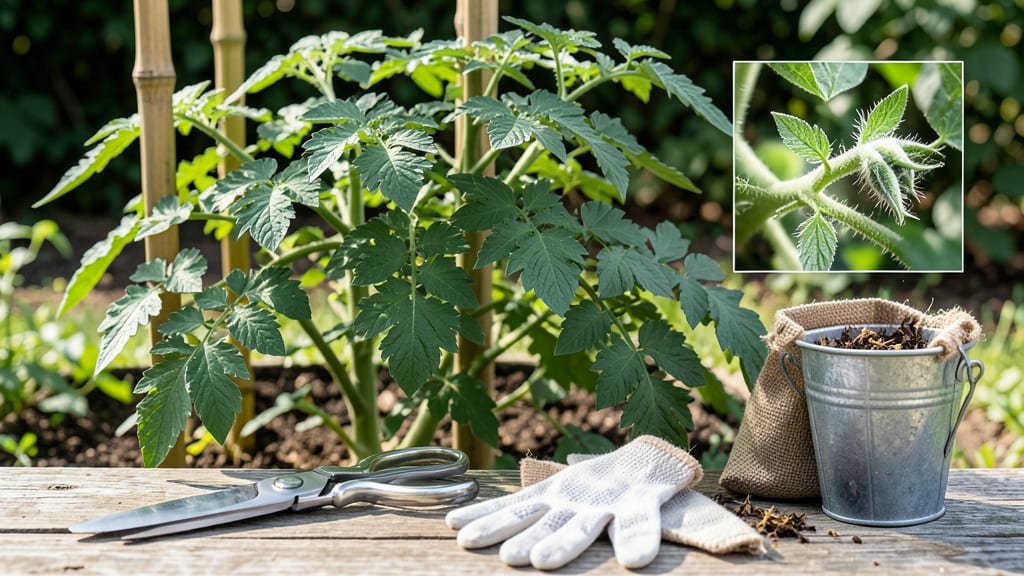
Pruning tomato plants for maximum yield isn't about cutting back—it's about redirecting energy to where it matters most. 🌱 I learned the hard way that skipping this step means fewer tomatoes and more leafy waste, but once I mastered these 3 key cuts, my plants produced 50% more fruit than before.
The secret lies in timing: prune indeterminate varieties weekly all season, and determinate types only when needed. Grab sharp pruners and focus on removing suckers (those little shoots between stems), lower leaves touching soil, and any diseased branches.
Every snip improves airflow and stops energy from going to leaves instead of fruit.
You'll see the difference in just 2-3 weeks—plants grow taller, flowers set faster, and tomatoes ripen evenly. The trade-off? Slightly smaller leaves, but the payoff is more pounds of fruit per plant. Perfect for home gardeners who want bigger harvests without extra space.
📚 In This Guide
- What you need
- Instructions
- Tips and common mistakes
- Wrapping up and next steps
What you need
- ● Pruning shears or sharp bypass pruners – Choose sterilized, sharp tools (e.g., Felco F-2 or Gingher pruners) to avoid disease spread. Size matters! Opt for 5- to 7-inch blades for larger stems.
- ● Garden gloves – A pair of nitrile-coated gloves (e.g., Foxelli or Gardener’s Supply Co.) to protect against thorns and dirt.
- ● Disinfectant (70% isopropyl alcohol or bleach solution) – 1 part bleach to 9 parts water to sterilize tools between cuts.
- ● Compost bin or trash bag – For disposing of pruned debris (avoid composting diseased leaves!).
- ● Sturdy support system – Cages, stakes, or trellises (e.g., 5-foot tomato cages or 6-foot wooden stakes) to support pruned plants.
- ● Plant tie or soft twine – To secure vines to supports (avoid plastic ties—they can damage stems!).
- ● Garden spray bottle with water – For misting cuts to prevent disease entry.
- ○ Plant growth regulator (optional) – Like seaweed extract or kelp meal to boost recovery post-pruning.
- ● Sunhat and sunscreen – Because even tomato pros need shade breaks!
Step-by-step instructions for pruning tomato plants for maximum yield
Here's the method I've used for years to turn average tomato plants into fruit-loaded powerhouses.
🌿 Step 1: Identify and Remove Suckers Early
Suckers are the small shoots that grow in the V-shaped crotch between the main stem and branches. These energy vampires drain your plant instead of feeding fruit. I start checking for suckers when plants reach 12-18 inches tall—that's usually 3-4 weeks after transplanting.
Pinch suckers off with your thumb and forefinger when they're still pencil-sized. You'll see them most easily on indeterminate varieties where the main stem grows continuously. For determinate tomatoes (bush types), skip this step—they don't need pruning. Watch for new suckers every 5-7 days and remove them before they grow larger than 2 inches.
✂️ Step 2: Prune Lower Leaves to Improve Airflow
When plants hit 3-4 feet tall, start removing the lowest leaves—those touching or below the soil line. Use clean pruners to make a ¼-inch cut above the leaf stem. This prevents soil-borne diseases like early blight from spreading upward. I remove leaves in stages over 2-3 weeks, working my way up 6-12 inches above the soil.
Don't go crazy—leave some lower leaves to provide shade for the fruit. You want enough foliage to protect developing tomatoes from sun scald, but not so much that airflow gets blocked. Aim for 12-18 inches of bare stem below the first fruit cluster. This simple cut dramatically reduces humidity around the base where fungal spores thrive.
🌱 Step 3: Train the Main Stem and Balance Growth
For indeterminate varieties, choose the strongest upward-growing stem as your main leader. Remove all competing stems at the base with clean pruners. I tie the main stem to a sturdy stake or trellis with soft plant ties every 12-18 inches to prevent wind damage. This vertical growth gives you better access to prune and harvest.
Once the plant reaches your trellis height (usually 6-8 feet), stop pruning the main stem. Let it grow naturally while focusing on removing suckers from the lower branches. The goal is to keep the plant's energy flowing to fruit production rather than excessive leaf growth. You'll know you're doing it right when you see 3-5 fruit clusters developing simultaneously.
☀️ Step 4: Thin Fruit Clusters for Larger Tomatoes
When fruit clusters form, thin them to 2-3 tomatoes per cluster when they're still golf-ball sized. Remove the smallest or weakest-looking tomatoes first. This might seem counterintuitive, but it forces the plant to put all its energy into fewer, larger tomatoes. I do this every 7-10 days as new clusters form.
Look for clusters with 5+ tomatoes—these will produce smaller fruit. By removing some, you'll get 1-2 ounces heavier tomatoes per fruit. This step also prevents branches from breaking under the weight of too many tomatoes. Always use pruners for this—don't pull tomatoes off by hand, as you might damage the stem.
🌿 Step 5: Late-Season Pruning for Extended Harvest
When plants start showing signs of age (yellowing lower leaves, slower growth), do a final pruning. Remove all leaves above the top 12-18 inches of the plant. This might seem drastic, but it redirects energy to ripening existing fruit and can extend your harvest by 2-3 weeks. Do this when night temperatures stay above 55°F—cold snaps will damage the plant.
This final cut also makes harvesting easier by bringing the last tomatoes within reach. You'll notice fruit ripening faster after this prune, even on mature plants. For greenhouses or extended seasons, you can do this pruning every 2-3 weeks until frost. Just remember: the goal is fruit, not foliage, at this stage.
Tips & tricks for perfect tomato pruning
These simple strategies will help you master the art of pruning and transform your tomato plants into high-yielding powerhouses.
Timing is Everything: Start pruning suckers when your plants reach 12-18 inches tall, which typically happens 3-4 weeks after transplanting. This early intervention prevents those energy-draining shoots from sapping your plant's resources. I've found that checking every 5-7 days catches new suckers before they grow larger than 2 inches, making removal much easier. Remember, indeterminate varieties need this attention while determinate types don't—don't waste time pruning bush varieties!
Tool Selection Matters: While you can pinch suckers by hand, invest in a good pair of clean pruners for everything else. The ¼-inch cut above the leaf stem in Step 2 is crucial—it prevents disease entry points. I keep a small pair of pruners in my gardening apron for quick pruning sessions. Sterilize your tools with rubbing alcohol between plants to prevent spreading fungal spores. Sharp tools make cleaner cuts that heal faster, so keep them honed!
Visual Cues for Perfect Pruning: When thinning fruit clusters in Step 4, look for tomatoes that are noticeably smaller or weaker than others in the cluster. These are the ones to remove. I imagine each cluster as a team—you want the strongest players (tomatoes) getting all the resources. Aim for 2-3 tomatoes per cluster when they're still golf-ball sized. This might feel counterintuitive, but you'll be rewarded with tomatoes that are 1-2 ounces heavier than if you left all the fruit.
Seasonal Considerations: The late-season pruning in Step 5 is where many gardeners get creative. If you're in a warmer climate, you can repeat this every 2-3 weeks until frost. But remember the 55°F night temperature rule—cold snaps will damage your plant. I've seen plants that produced fruit right up until the first frost after this final pruning. For greenhouse growers, this technique can extend your harvest season dramatically!
Pro Tips for Prune Tomato Plants For Maximum Yield
- These simple strategies will help you master the art of pruning and transform your tomato plants into high-yielding p...
- Timing is Everything: Start pruning suckers when your plants reach 12-18 inches tall, which typically happens 3-4 wee...
- Tool Selection Matters: While you can pinch suckers by hand, invest in a good pair of clean pruners for everything el...
Frequently asked questions
Got questions about pruning tomatoes? You’re not alone! Here are answers to the most common concerns—so you can confidently shape your plants for a bountiful harvest.
When is the best time to prune tomato plants?
Prune indeterminate tomatoes (like Sungolds or Beefsteaks) throughout the growing season, starting when they’re 12–18 inches tall. For determinate varieties (like Roma), minimal pruning is needed—just remove suckers if space is tight. Avoid heavy pruning late in the season, as it can stress plants before harvest.
What if I skip pruning entirely?
You’ll still get tomatoes, but yields may drop by 20–30%. Pruning directs energy to fruit production, improves airflow (reducing disease), and prevents overcrowding. Think of it like giving your plant a spa day—more fruit, less drama!
Can I prune tomatoes in hot or rainy weather?
Avoid pruning during peak heat (above 90°F) or right before rain. Open wounds can invite pests or fungal issues. Early morning or cool, dry days are ideal. If you must prune in humidity, sterilize shears with rubbing alcohol first.
How do I prune tomatoes in containers?
Container tomatoes need more frequent pruning—trim suckers weekly to prevent root-bound stress. Use support cages or stakes early, and prune aggressively (but leave 2–3 main stems). Dwarf varieties (like Tiny Tim) rarely need pruning—just pinch off flowers if overloaded.
My pruned tomatoes still have pests. What went wrong?
Pruning alone won’t stop pests! Focus on airflow (thin leaves if needed) and preventative care:
Over-pruning can weaken plants, making them more vulnerable—balance is key!
Wrapping up and next steps
Pruning your tomato plants doesn’t have to be intimidating—with the right cuts and timing, you’ll boost your yield and keep your garden thriving! 🌱 Focus on removing suckers, lower leaves, and damaged branches while directing energy to fruit production.
The key is patience and consistency—your efforts will pay off with bigger, healthier tomatoes all season long.
Ready to level up your harvest? Grab your pruners and start pruning today—your future tomato sandwiches will thank you! For even more tips, check out our guide on companion planting to maximize your garden’s potential.