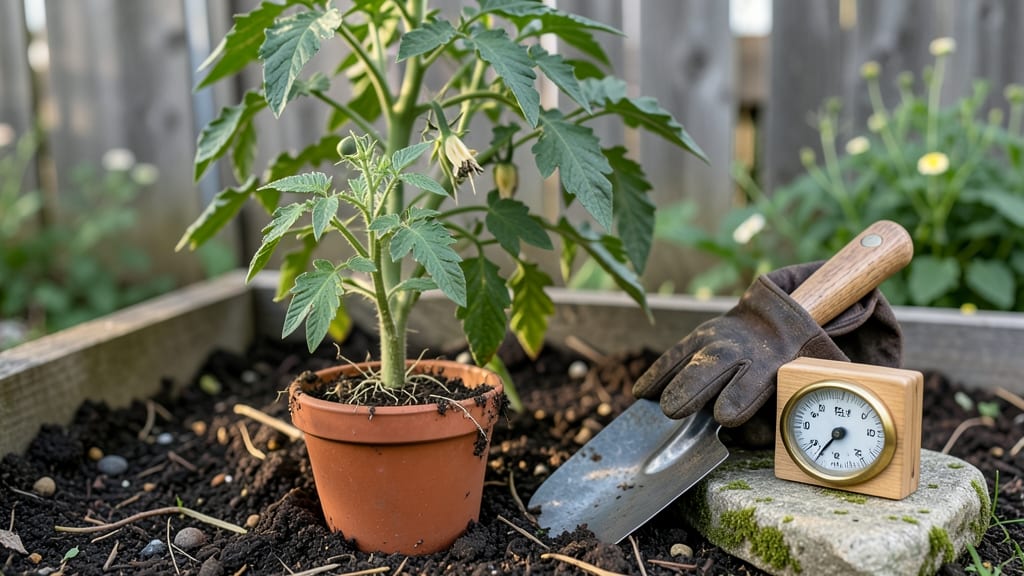
Planting tomato plants outdoors at the right time means the difference between a bountiful harvest and a season of disappointment—especially when frost is still lurking in the forecast.
Timing your tomato plants just right can mean the difference between a bumper crop and a sad, wilted disappointment—especially when frost is still lurking in the forecast. Whether you're in Zone 6a or a warmer region, getting the window wrong can leave your 🍅 plants struggling to survive.
But here’s the good news: with the right approach, you can pinpoint the perfect moment to plant for your exact location.
Most gardeners wait until after the last frost date, but that’s only part of the story. Soil temperature, local microclimates, and even heatwave risks play a role in setting your tomatoes up for success.
I’ll walk you through the science behind frost-free planting zones, how to adjust for your specific area, and the non-negotiable signs that your plants—and the ground—are truly ready.
By the end, you’ll know exactly when to plant, how to prepare your soil, and the three key mistakes that even experienced gardeners make. Let’s get those tomato plants in the ground the right way.
Jan
❄️
Feb
❄️
Mar
🌱
Apr
🌱
May
🍅
Jun
🍅
Jul
🌱
Aug
🌱
Sep
🍂
Oct
🍂
Nov
🍂
Dec
❄️
Frost-free deadlines for planting tomatoes by USDA hardiness zone
Timing your tomato plants just right can mean the difference between a bumper crop and a sad, wilted disappointment—especially when frost is still lurking in the forecast. Tomatoes are frost-sensitive and need warm soil to thrive, so planting too early or too late can ruin your harvest.
The USDA Hardiness Zone system helps, but local weather patterns and soil temperatures often require adjustments. Let’s break down the frost-free planting deadlines for each zone and how to extend your growing season.
Your last frost date is the critical benchmark, but it’s not the only factor. Tomatoes also need soil temperatures above 60°F (15°C) to grow properly. In colder zones, you may need to warm the soil with black plastic or row covers.
Meanwhile, in hotter zones, heatwaves can stress young plants, so timing matters just as much in Zone 10 as it does in Zone 3.
Below is a zone-by-zone comparison of when to plant tomatoes outdoors, including safe planting windows, soil temperature requirements, and heatwave risks. Use this as your starting point, then fine-tune with local weather data for the most accurate timeline.
| USDA Zone |
Last Frost Date (Avg.) |
Safe Planting Window |
Soil Temp Requirement |
Heatwave Risk |
Pro Tip |
| Zone 3 |
May 15 |
Late May to early June |
60°F+ (use black plastic to warm soil) |
Low |
Start seeds indoors in March; transplant after soil warms. |
| Zone 4 |
May 1 |
Mid-May to early June |
60°F+ (row covers help) |
Low |
Choose cold-hardy varieties like 'Stupice' or 'Glacier.' |
| Zone 5 |
April 20 |
Late April to mid-May |
60°F+ (wait for nighttime temps above 50°F) |
Moderate |
Hardening off seedlings for 10 days before transplanting. |
| Zone 6 |
April 15 |
Early to mid-May |
60°F+ (soil thermometer recommended) |
Moderate |
Plant early varieties like 'Early Girl' for faster harvests. |
| Zone 7 |
March 30 |
Mid-April to early May |
60°F+ (account for heatwave delays) |
High |
Use shade cloth if heatwaves hit before plants are 12" tall. |
| Zone 8 |
March 15 |
Late March to April |
60°F+ (plant early to avoid summer heat stress) |
Very High |
Consider succession planting for fall harvests. |
| Zone 9 |
February 1 |
January to February (or September for fall) |
60°F+ (year-round planting possible) |
Extreme |
Use drip irrigation and mulch to retain moisture. |
| Zone 10 |
None (year-round growing) |
Year-round (avoid peak summer heat) |
60°F+ (plant in fall/winter for best results) |
Extreme |
Choose heat-tolerant varieties like 'Solar Fire' or 'Heatmaster.' |
Zone 11
How to adjust planting dates using local weather data (not just zones)
USDA hardiness zones give you a starting point, but your actual planting window depends on local weather patterns—not just averages. For example, my neighbor in Zone 6a planted tomatoes two weeks earlier than me last year, and her plants thrived while mine struggled.
The difference? She used 10-year frost records instead of relying on the zone’s average last frost date.
Local weather data—like microclimates, elevation shifts, and NOAA alerts—can adjust your planting timeline by 2-4 weeks. Urban areas often experience heat islands that warm soil faster, while higher elevations may need a later start.
Ignoring these factors risks frost damage or stunted growth from cold soil. Let’s refine your timeline with actionable steps.
1
Check Your Actual Last Frost Date
Use NOAA’s Local Climate Data or your city’s 10-year frost records (not the zone average). For instance, if your city’s last frost was May 5 in 7 of the last 10 years, plan accordingly—even if the zone says April 15.
2
Calculate Soil Warming Time
Tomatoes need 60°F+ soil to thrive. If your average last frost is April 15 but soil hits 60°F on May 1, add 2-3 weeks to your planting window. Use a soil thermometer to confirm.
3
Adjust for Heatwave Risks
In Zones 7-11, early heatwaves can cause bolting (premature flowering). Subtract 7-14 days from your planting date if NOAA forecasts 90°F+ temps before your seedlings are 12” tall.
4
Monitor NOAA Alerts
Sign up for NOAA’s Frost/Freeze Forecast or local weather alerts. If a late frost is predicted 3-5 days before your planned planting, delay by 1-2 weeks or use row covers for protection.
Let’s say you’re in Zone 5b with an average last frost of May 1. But your local data shows the last frost occurred on May 15 in 6 of the last 10 years.
Add 2 weeks for soil warming, and your safe planting window shifts from May 15 to May 30. This tweak could save your plants from a surprise frost.
Microclimates also play a huge role. A south-facing slope warms up 1-2 weeks earlier than a shaded valley. If your garden sits in a heat island (like near pavement or buildings), soil may warm 3-5 days faster than the zone average. Use these adjustments to fine-tune your schedule.
Pro tip: Bookmark NOAA’s Climate Data page for your city and check it every 2 years. Weather patterns shift with climate change, and your planting dates should too.
For example, my Zone 7a garden’s last frost date has crept 5 days earlier over the past decade—adjusting my timeline by a week has kept my tomatoes thriving.
By combining local frost records, soil temperature data, and real-time alerts, you’ll outpace the average gardener and enjoy a longer, healthier harvest. Start with these steps, and watch your tomato plants grow stronger and faster than ever.
★★★★★4.6(8 reviews)
|