
Companion Plants
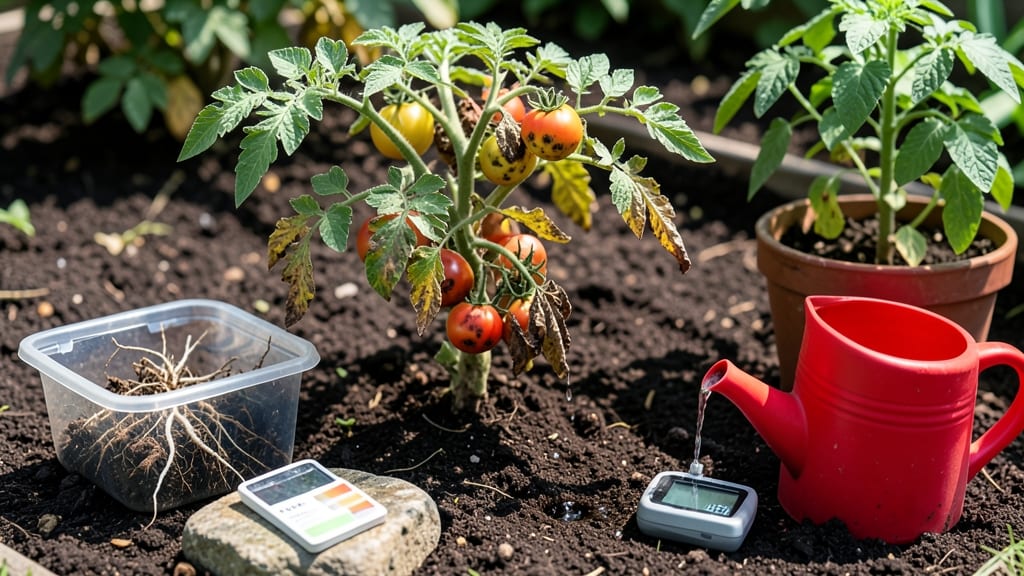
Why are my tomato plants wilting even after watering? The real problem likely hides in the soil, roots, or even the air around them—not just the water you're giving. 🌱 I've seen this happen when the roots can't breathe, pests are silently draining the plant, or the heat is too much for the leaves to handle. The good news? Each issue has a specific fix, and we'll walk through them step by step.
First, check the soil—it might be too wet or too dry at the roots. Stick your finger an inch deep; if it's soggy, you're overwatering (yes, it happens!). If it's bone-dry, water deeply until it drains from the bottom.
Then inspect the leaves for pests like aphids or spider mites, which suck moisture faster than you can water. Finally, look for signs of disease like brown spots or mold, which can clog roots and block water uptake.
Once you identify the issue, the fix is straightforward: adjust watering, treat pests with neem oil or insecticidal soap, or prune diseased leaves. After that, your plants should perk up within 24-48 hours.
The key is catching it early—wilting is a cry for help, and your tomatoes are telling you exactly what they need.
To keep this from happening again, mulch around your plants to retain moisture, water in the morning to reduce evaporation, and rotate crops next season. Prevention is easier than troubleshooting, and your future harvests will thank you for it.
Hidden Causes Behind Wilting Tomatoes
Even when your watering can is full, your tomato plants might still be sending out distress signals—drooping leaves, limp stems, or yellowing foliage. 🌱💦 The issue isn’t always what you’re doing but how you’re doing it.
Let’s dig into the science behind why your tomatoes might be wilting despite your best efforts.
Tomatoes need water, but too much of a good thing can drown their roots. When soil stays soggy for days, oxygen levels plummet, suffocating the roots and preventing them from absorbing nutrients or water efficiently.
This leads to anaerobic conditions, where harmful bacteria and fungi thrive, rotting roots and cutting off the plant’s lifeline.
🔍 How to spot it: Check the soil 2–3 inches down—if it’s muddy or smells like rot, you’re overwatering. Wilting often happens in the afternoon because the roots can’t keep up with the plant’s demand.
💡 Fix it:
- Let the top 1–2 inches of soil dry out between waterings.
- Improve drainage by mixing compost or perlite into heavy clay soil.
- Water deeply but infrequently—aim for 1–1.5 inches per week (adjust for rain).
Uneven watering—like hosing down leaves instead of the soil—can disrupt root growth and create weak, shallow roots. Even worse, physical root damage from digging, transplant shock, or aggressive weeding can sever critical root hairs, leaving the plant unable to uptake moisture efficiently.
🔍 How to spot it: Roots may look brown, mushy, or pruned when inspected. Wilting starts at the edges of the plant and spreads inward.
💡 Fix it:
- Water at the base of the plant, avoiding leaves to prevent disease.
- If transplanting, harden off seedlings for 7–10 days before planting.
- Use mulch (straw or grass clippings) to protect roots from temperature swings and erosion.
Heavy, compacted soil acts like a cement barrier, blocking water and oxygen from reaching roots. This is especially common in clay-heavy soils or areas with frequent foot traffic. Roots in compacted soil can’t expand, limiting their ability to absorb water even when it’s present.
🔍 How to spot it: Soil feels hard when pressed, and roots may be stunted or tangled rather than spreading outward.
💡 Fix it:
- Loosen soil with a broadfork or garden fork to a depth of 12 inches before planting.
- Amend soil with organic matter like compost or aged manure (20–30% of the soil mix).
- Plant tomatoes in raised beds or containers if native soil is too dense.
Underground pests like root-knot nematodes, cutworms, or fungal pathogens (e.g., Phytophthora) can silently devour roots, leaving your plant thirsty even with wet soil. These invaders disrupt the plant’s vascular system, causing wilting that worsens over time.
🔍 How to spot it:
- Wilting progresses rapidly despite consistent watering.
- Roots may have galls (lumpy growths), holes, or black lesions.
- Soil near roots smells sour or foul.
💡 Fix it:
- Test soil for nematodes (send a sample to a local extension office).
- Rotate crops—avoid planting tomatoes in the same spot for 3+ years.
- Apply neem oil or beneficial nematodes (like Steinernema) for pests.
- Use resistant varieties (e.g., ‘Mountain Merit’ for nematodes).
Tomatoes lose water faster than they can absorb it on hot, windy days—a phenomenon called transpiration overload. Even well-watered plants can wilt temporarily when they lose moisture faster than roots can replenish it. This is not a permanent issue but can signal underlying stress.
🔍 How to spot it: Wilting happens daily in the afternoon but recovers by morning. Leaves may feel dry or papery to the touch.
💡 Fix it:
- Water deeply in the early morning (before 10 AM) to reduce evaporation.
- Use shade cloth (30–50% coverage) during peak heat (12–4 PM).
- Mulch heavily to retain soil moisture and cool roots.
- Avoid fertilizing during heatwaves—focus on water first.
🌱 Pro Tip: If wilting persists after addressing these causes, dig up a small section of root to check for health. White, fibrous roots = good. Brown, mushy, or missing roots = time to troubleshoot deeper.
Quick Fixes for Reviving Your Tomato Plants
Wilting tomato plants can be frustrating, but the good news is that most issues have straightforward solutions—once you pinpoint the root cause. Below, we’ll map each potential problem to a practical, step-by-step fix, plus prevention tips to keep your plants thriving.
Let’s get your tomatoes back to their perky, productive selves!
Signs: Yellowing leaves, soggy soil, mushrooms or mold near the base, or plants that wilt even when watered.
How to Fix It:
- 🚰 Stop Watering Immediately
- Let the top 1–2 inches of soil dry out completely before watering again. Overwatering suffocates roots, leading to rot.
- 🪴 Check Your Containers or Soil - Potted plants? Ensure pots have drainage holes. If not, repot into containers with holes or add a layer of pebbles at the bottom. - Garden beds? Amend heavy clay soil with compost or perlite to improve drainage.
A simple soil test (or the "squeeze test"—if soil clumps tightly, it’s too dense).
- 🌱 Prune Damaged Roots (If Severe)
- Gently remove the plant from its pot and trim any black, mushy roots with sterilized scissors. Replant in fresh, well-draining soil.
💡 Prevention Tips:
- Water deeply but infrequently—aim for 1–1.5 inches per week (adjust for heat/drought).
- Use drip irrigation or soaker hoses to deliver water directly to roots, reducing surface evaporation.
- Avoid watering in the evening; morning watering gives foliage time to dry.
Signs: Wilting during peak sun (especially in hot afternoons), crispy or bleached leaf edges, or plants drooping only in direct sunlight.
How to Fix It:
- 🌿 Provide Temporary Shade
- Use shade cloth (30–50%) or a lightweight row cover to block intense afternoon sun (1–4 PM). Secure it loosely to allow airflow.
- 💦 Increase Water Frequency (But Smartly)
- Water early in the morning to reduce evaporation. Mulch with straw or wood chips to retain moisture and cool roots.
- 🍅 Adjust Plant Placement
- If growing in containers, move pots to a slightly shadier spot (e.g., under a trellis or near a north-facing wall).
- For garden beds, plant heat-tolerant varieties like ‘Solar Fire’ or ‘Heatmaster’ tomatoes next time.
💡 Prevention Tips:
- Hardening off seedlings gradually before transplanting to avoid sun shock.
- Reflective mulch (like white plastic) can deflect heat away from roots.
- Prune lower leaves to improve airflow and reduce heat stress on the plant.
Signs: Wilting paired with holes in leaves, sticky residue, wilting only in certain areas, or fungal spots (white, brown, or yellow).
How to Fix It:
| Pest/Disease | 🔍 How to Spot It | 🛠️ Fix It |
|---|---|---|
| Aphids/Spider Mites | Tiny bugs, webbing, curled leaves | Spray with neem oil or soapy water (1 tsp mild soap + 1L water). Repeat every 3–4 days. |
| Fungal Wilts | Yellowing, wilting before leaves drop; mold on stems | Remove infected plants immediately. Treat soil with baking soda spray (1 tsp baking soda + 1 quart water + a drop of soap). |
| Root-Knot Nematodes | Stunted growth, gnarled roots | Solarize soil (cover with clear plastic for 4–6 weeks) or plant marigolds as a trap crop. |
| Blossom End Rot | Black, sunken spots on fruit | Add crushed eggshells or calcium to soil. Keep soil consistently moist (not soggy). |
💡 Prevention Tips:
- Rotate crops annually to prevent soil-borne diseases.
- Inspect plants weekly for early signs of pests.
- Encourage beneficial insects like ladybugs or lacewings with dill or marigold companion plants.
Signs: Wilting after watering, yellowing between leaf veins (chlorosis), or stunted growth despite regular watering.
How to Fix It:
- 🍽️ Test Your Soil
- Grab a DIY soil test kit (or send a sample to a local extension office). Tomatoes thrive in pH 6.0–6.8.
- 💊 Boost Key Nutrients
- Nitrogen (N): For leafy growth, use compost tea or a balanced fertilizer (10-10-10).
- Potassium (K): Prevents wilting; try banana peel tea or wood ash (sprinkle lightly around the base).
- Calcium (Ca): Crushed eggshells or lime (follow package instructions).
- 🌿 Use a Slow-Release Fertilizer
- Switch to organic tomato fertilizer (like fish emulsion or worm castings) every 4–6 weeks.
💡 Prevention Tips:
- Side-dress plants with compost mid-season for a nutrient boost.
- Avoid over-fertilizing—too much salt can burn roots. Follow package rates!
- Mulch heavily to retain nutrients and moisture.
Signs: Wilting only on windy days, leaves torn or bruised, or plants leaning dramatically.
How to Fix It:
- 🏗️ Install Windbreaks
- Use bamboo stakes, trellises, or even a temporary fence to shield plants from harsh winds.
- Stake or cage tomato plants early to prevent flopping.
- 🌿 Prune Strategically
- Remove suckers (side shoots) to reduce wind resistance.
- Trim lower leaves to improve airflow and reduce stress.
- 💧 Water Deeply Before Storms
- Well-hydrated plants handle wind better. Water 1–2 days before a storm to plump up leaves.
💡 Prevention Tips:
- Plant tomatoes near tall crops (like corn or sunflowers) to act as natural windbreaks.
- Choose dwarf or bush varieties if your garden is exposed to strong winds.
Final Pro Tip: 🎯 Act fast! Wilting is often a cry for help—check soil moisture, inspect leaves for pests, and adjust care within 24–48 hours to give your tomatoes the best shot at recovery.
With these fixes, your plants should perk up in 3–7 days (or less for mild cases). Happy growing! 🍅🌿
Frequently asked questions
Why do my tomato plants wilt only in the afternoon but recover at night?
This is classic transpiration overload—your plants lose water faster than roots can absorb it during peak heat. Water deeply in the early morning (before 10 AM) and use mulch to retain moisture. Shade cloth (30-50%) during 12-4 PM can also help without stunting growth.
How do I tell if my wilting is from overwatering vs. underwatering?
Check the soil 2-3 inches down: if it's soggy and smells like rot, you're overwatering. If it's bone-dry, you're underwatering. For overwatering, let the top 1-2 inches dry out between waterings. For underwatering, water until it drains from the bottom of pots or 1 inch per week for garden beds.
Can I save a tomato plant with root rot?
Maybe! First, stop watering immediately. Gently remove the plant and trim all black, mushy roots with clean scissors. Replant in fresh, well-draining soil with perlite or compost mixed in. If roots are mostly gone, it's likely too late—but try it anyway! Prevention is key: water only when the top 1 inch feels dry.
Why are my tomato leaves curling and wilting, but the soil feels moist?
This could signal pests (aphids, spider mites) or nutrient deficiencies. Check undersides of leaves for tiny bugs or webbing. Try neem oil spray if pests are present. For nutrients, test your soil pH (6.0-6.8 is ideal) and add compost or a balanced fertilizer. Yellowing between veins suggests nitrogen deficiency.
Will pruning help my wilting tomato plants recover?
Yes, but strategically! Remove yellow or diseased leaves first to reduce stress. Trim lower leaves to improve airflow and prevent soil-borne diseases. Avoid heavy pruning during heatwaves—focus on water and shade first. Prune in the morning so wounds can dry quickly and prevent fungal infections.