
Neem Oil
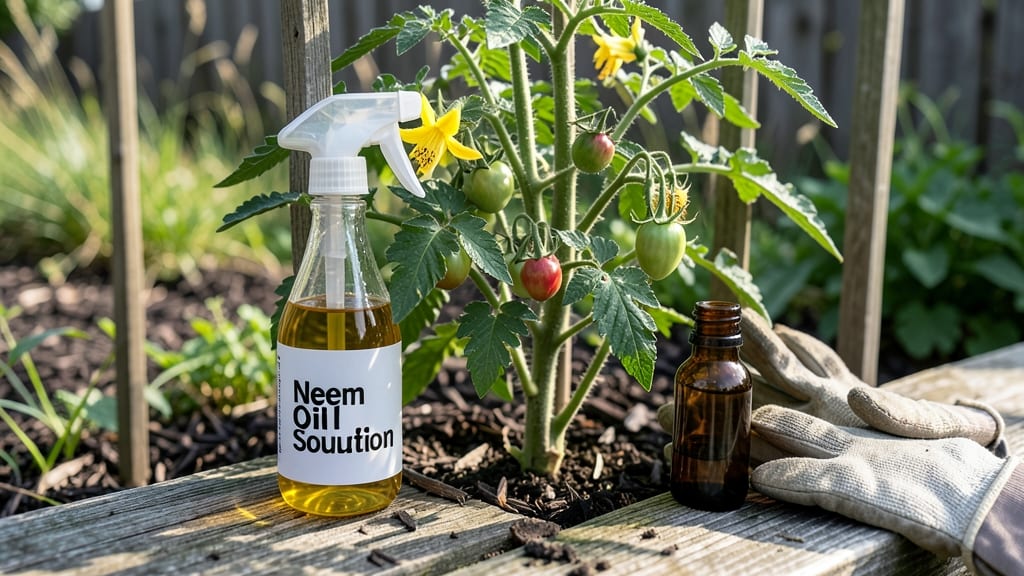
Yes, you can spray neem oil on tomato plants to control pests like aphids, whiteflies, and spider mites, but avoid spraying during flowering or fruiting to prevent harming pollinators and reducing yields. Always dilute properly and apply in the evening for best results.
Neem oil acts as a natural insecticide by disrupting pests' feeding and reproductive cycles, thanks to its active compound azadirachtin. 🌿 When applied correctly, it targets soft-bodied insects without damaging tomato plants, though it's crucial to use it at the right growth stage.
The key is timing—spraying in the evening helps prevent sunburn on leaves while maximizing effectiveness against pests like aphids that thrive in warm conditions.
For best results, mix 1 teaspoon of neem oil per quart of water with a drop of dish soap as an emulsifier. Always test on a small leaf area first, and reapply every 7-14 days during outbreaks. This approach keeps your tomato plants healthy while minimizing environmental impact.
💡 In This Article
- How Neem Oil Works on Tomato Plant Pests
- Safe Neem Oil Application Guide for Tomato Gardens
How neem oil works on tomato plant pests
Neem oil's pest-control magic comes from a single compound called azadirachtin, which acts like a biological disruptor for insects. This natural chemical interferes with pests' feeding habits by altering their hormones, particularly ecdysteroids that regulate growth and molting.
When aphids or whiteflies ingest neem-treated leaves, their normal development gets thrown off balance - larvae fail to mature properly and adults lose their appetite, effectively starving the population over time. 🌿 The compound also creates an unpleasant taste that deters new pests from settling on treated plants.
What makes neem oil particularly effective against tomato plant pests is its broad-spectrum action combined with plant safety. Unlike synthetic pesticides that kill indiscriminately, azadirachtin targets soft-bodied insects specifically while being non-toxic to plants when used at proper concentrations.
For example, a 1% dilution (1 teaspoon per quart of water) creates a concentration that's lethal to aphids but harmless to tomato foliage. The oil also has mild fungicidal properties, helping prevent early blight and powdery mildew that commonly afflict tomato plants.
The timing of application matters because neem oil works by contact rather than systemic absorption. Pests must physically come into contact with the treated surfaces to be affected.
This is why you'll see best results when spraying during peak pest activity periods - typically early morning or late evening when temperatures are cooler (below 85°F) and humidity is higher.
The oil needs to remain on leaf surfaces for several hours to be effective, which is why evening applications prevent rapid evaporation from daytime sun.
One fascinating aspect of neem oil's mechanism is its repellent properties. Studies show that plants treated with neem oil emit subtle chemical signals that deter new pests from landing.
This "warning scent" effect creates a protective barrier that lasts about 7-14 days after application, explaining why regular reapplication is necessary during active pest seasons. The oil also helps prevent pest resistance from developing, unlike many chemical pesticides that lose effectiveness over time.
For tomato growers, this means neem oil provides both immediate control and long-term prevention when used consistently. The active compounds don't build up in plant tissues, making it safe for harvest once the recommended waiting period (24 hours after application) has passed.
This safety profile is particularly valuable for organic gardeners who want to maintain healthy, productive tomato plants without chemical residues.
What most gardeners don't realize is that neem oil's effectiveness varies with pest species. While it's excellent against aphids, whiteflies, and spider mites, it's less effective against harder-bodied insects like beetles or caterpillars.
This is because the oil can't penetrate their protective exoskeletons. Understanding these limitations helps you pair neem oil with other organic controls for comprehensive pest management. 🌱