
Watering
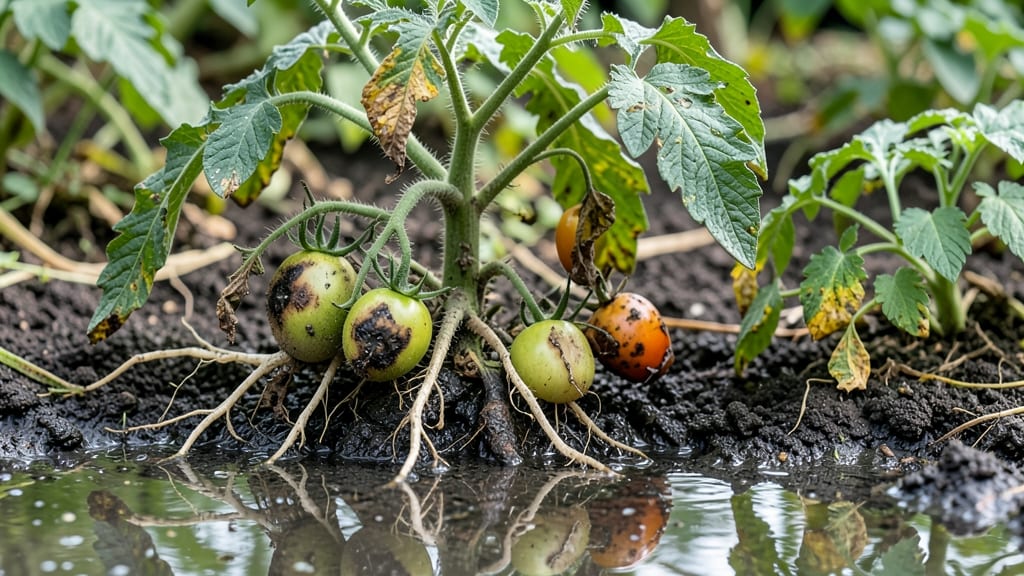
Your tomato plants are begging for help—yellowing leaves, mushy stems, and that sour smell are the dead giveaways of overwatering. 🌱 I’ve drowned more tomatoes than I’d like to admit, but these 7 signs will help you catch the problem before it’s too late.
The key is recognizing the difference between thirsty plants and ones drowning in their own roots.
First, check the soil: it should feel like a damp sponge, not a soggy mess. Wilting leaves that stay soft (not crisp) and dark, mushy spots at the stem base are classic overwatering red flags.
Fungal growth like powdery mildew or black mold on leaves? That’s your plant’s SOS signal—too much moisture creates the perfect breeding ground for disease.
Here’s the good news: you can turn this around. Stop watering immediately and let the top 2-3 inches of soil dry out before watering again. Improve drainage by adding compost or perlite to heavy soil, and prune any severely damaged leaves to help the plant focus its energy on recovery.
Prevention is simpler than rescue—water deeply but only when the top inch of soil is dry, and always water at the base, not overhead. With these adjustments, your tomatoes will bounce back stronger, and you’ll avoid the heartbreak of blighted harvests next season.
Root of the Problem
Overwatering tomato plants is often an unintentional mistake, but understanding the science behind it can help you avoid drowning your plants instead of nourishing them. Let’s dig into the key reasons why this happens—and how to steer clear of them.
Tomatoes thrive in well-draining soil, but when water pools around roots, it suffocates them by cutting off oxygen. This is especially true in:
- Containers: Pots without drainage holes trap excess water, creating a swampy environment.
Even "self-watering" pots can over-saturate soil if not monitored. - Heavy or compacted soil: Clay or loamy soils hold moisture for days, while sandy soils drain too quickly but can still retain excess water if watered on a rigid schedule. - Improper mulching: Too much organic mulch (like thick straw or wood chips) can block evaporation and trap moisture near the soil surface.
Actionable fix: Amend soil with perlite, vermiculite, or coconut coir to improve aeration. For containers, ensure they have at least one drainage hole and elevate them slightly off the ground.
Tomatoes need consistent moisture—not sporadic drenching.
Common pitfalls include: - Watering on a schedule (e.g., every morning) without checking soil moisture. - Overcompensating after drought: After a dry spell, gardeners often water heavily, leading to sudden root stress. - Ignoring weather changes: Rainy days can leave soil soggy for days, while hot winds dry it out faster than usual.
Actionable fix: Use the finger test—stick your index finger 1–2 inches into the soil. Water only if it’s dry. For containers, lift them: a soggy pot means hold off on watering.
Cold or humid conditions slow evaporation, making soil stay wet longer.
Key triggers: - Cool nights (below 60°F/15°C): Plants transpire less, so excess water lingers. - High humidity: Reduces evaporation, keeping roots in a damp state. - Shade or poor airflow: Stagnant air traps moisture near foliage, increasing fungal risks like blight.
Actionable fix: Water in the early morning to allow foliage to dry before evening. Use row covers or fans in humid climates to improve airflow.
Too much nitrogen or soluble fertilizers can burn roots and disrupt their ability to absorb water efficiently. Symptoms often mimic overwatering:
- Yellowing leaves (from excess salts).
- Stunted growth (roots struggle to function).
- Fungal infections (weakened plants can’t fight pathogens).
Actionable fix: Use a balanced fertilizer (like 5-5-5) and flush soil occasionally with plain water. Avoid fertilizing when soil is already wet.
Automatic systems (drip lines, sprinklers) can deliver too much water if:
- Emitters are misaligned (spraying directly on leaves instead of soil).
- Run times are too long (e.g., 30+ minutes for small pots).
- Pressure is too high (causing runoff and pooling).
Actionable fix: Calibrate your system—measure output with a rain gauge or tuna can. Adjust emitters to water soil only, not foliage.
Rain can be a tomato plant’s best friend—or its worst enemy—if you don’t account for it.
Common mistakes: - Watering after rain without checking soil moisture. - Assuming "light rain" is harmless (1 inch of rain = ~1 hour of irrigation). - Planting in low-lying areas where water pools after storms.
Actionable fix: Keep a garden journal to track rainfall. If you’ve had 0.5 inches of rain in 24 hours, skip watering unless the soil feels dry. Use raised beds in problem areas.
Sometimes, overwatering is a symptom, not the cause.
Check for: - Root-bound plants: Crowded roots in small containers can’t absorb water efficiently, leading to waterlogging. - Disease or pests: Fungal infections (like early blight) can clog stomata, making plants retain excess moisture. - Transplant shock: Freshly planted tomatoes struggle to establish roots, making them vulnerable to water stress.
Actionable fix: Repot root-bound plants into larger containers. Treat fungal issues with neem oil or copper fungicide. Give newly transplanted tomatoes a light watering for the first week to reduce shock.
How to Fix Overwatered Tomato Plants
If your tomato plants are showing signs of too much water, don’t panic—most issues can be reversed with the right steps. The key is to act quickly, adjust your watering habits, and give your plants the care they need to bounce back.
Below, we’ll break down solutions based on the most common symptoms, along with prevention tips to keep your tomatoes thriving. Let’s get those plants back on track! 🌱💦
If your tomato leaves are turning yellow (especially the lower ones), your plants are likely suffering from root suffocation due to soggy soil.
🔥 Step 1: Stop Watering Immediately
- Pause all watering for 2–3 days to let the soil dry out slightly. This prevents further root damage.
- Avoid wet foliage—water only at the base of the plant to reduce fungal risks like blight.
🍳 Step 2: Improve Soil Drainage
- Amend the soil with organic matter like compost, coconut coir, or perlite to loosen heavy clay or compacted soil.
- Raise plant beds slightly (if in containers) or create small mounds around the base to encourage better drainage.
👨🍳 Step 3: Repot if Necessary
- If your tomatoes are in containers, check for root rot by gently removing the plant and inspecting the roots. Healthy roots are firm and white; mushy or black roots need trimming.
- Repot in fresh, well-draining soil if roots are severely damaged.
⏰ Prevention Tips
- Water deeply but less frequently—aim for 1–1.5 inches per week, adjusting for rain.
- Use a moisture meter or stick your finger 2 inches into the soil before watering. If it’s damp, wait.
- Choose containers with drainage holes and avoid saucers that trap excess water.
Wilting or limp stems can mean roots aren’t getting enough oxygen, or the plant is struggling to absorb water due to compacted soil.
🔥 Step 1: Flush the Soil
- Water thoroughly to push out excess salts or chemicals that may be blocking water uptake.
- Add a balanced fertilizer (like 10-10-10) diluted to half-strength to help recovery.
🍳 Step 2: Prune Damaged Foliage
- Trim yellow or mushy leaves to redirect energy to healthy growth.
- Remove suckers (side shoots) to reduce stress on the plant.
👨🍳 Step 3: Provide Structural Support
- Stake or cage wilting plants immediately to prevent stems from snapping under weight.
- Use a fan on low for a few hours daily to improve air circulation and speed up evaporation.
⏰ Prevention Tips
- Mulch around the base (with straw or wood chips) to regulate soil moisture and temperature.
- Avoid overhead watering—use drip irrigation or soaker hoses to keep leaves dry.
- Check for pests like aphids, which can weaken plants and mimic overwatering symptoms.
If your tomatoes develop dark, sunken spots at the blossom end, overwatering (or uneven moisture) is often to blame—especially when combined with calcium deficiency.
🔥 Step 1: Adjust Watering Consistency
- Water evenly—never let the soil dry out completely between waterings, but avoid soggy conditions.
- Use a moisture sensor to monitor soil dampness in real time.
🍳 Step 2: Boost Calcium Levels
- Apply crushed eggshells or calcium-rich compost around the base.
- Use a calcium supplement (like calcium nitrate) every 2–3 weeks during fruiting.
👨🍳 Step 3: Mulch to Stabilize Moisture
- Spread 2–3 inches of mulch to prevent rapid moisture loss and temperature swings.
⏰ Prevention Tips
- Water in the morning to allow foliage to dry before evening.
- Avoid heavy fertilizers high in nitrogen—they can worsen calcium uptake issues.
- Harvest tomatoes promptly—stressed plants are more prone to rot.
Overwatered plants are prime targets for fungal diseases like early blight or powdery mildew, which thrive in damp conditions.
🔥 Step 1: Remove Affected Leaves
- Prune and dispose of infected foliage (don’t compost it!) to prevent spread.
- Sterilize pruners with rubbing alcohol between cuts.
🍳 Step 2: Improve Airflow
- Space plants 18–24 inches apart and prune for better circulation.
- Use a small fan near plants to dry leaves faster.
👨🍳 Step 3: Apply Fungicide
- Spray with neem oil or copper fungicide (follow label instructions) to stop fungal growth.
- Avoid watering leaves—direct soil watering reduces fungal risks.
⏰ Prevention Tips
- Water at the base only, avoiding wetting leaves.
- Rotate crops—don’t plant tomatoes in the same spot year after year.
- Choose disease-resistant varieties like ‘Celebrity’ or ‘Mountain Merit’.
No matter the symptom, these universal steps will help your tomatoes recover faster:
- ✅ Morning watering is best—it gives leaves time to dry and reduces disease risk.
- ✅ Test your soil’s pH (ideal for tomatoes: 6.0–6.8). Adjust with lime (to raise pH) or sulfur (to lower it) if needed.
- ✅ Monitor humidity—aim for 40–60% with a hygrometer or dehumidifier in greenhouses.
- ✅ Harvest promptly—ripe tomatoes are less likely to develop issues from stress.
With these fixes, your tomato plants should perk up within 1–2 weeks. Keep an eye on them, adjust as needed, and soon you’ll be enjoying juicy, homegrown tomatoes instead of soggy sad leaves! 🍅🌿
Frequently asked questions
Why do my tomato leaves turn yellow first when overwatered?
Yellowing leaves (especially lower ones) signal root suffocation from soggy soil. Overwatering cuts off oxygen to roots, causing them to stop absorbing nutrients efficiently. The plant prioritizes keeping essential organs alive, so leaves—especially older ones—sacrifice chlorophyll first.
Can I save my tomato plant if the stem feels mushy?
Mushy stems indicate advanced root rot, but act fast! Prune away infected areas with sterilized shears, repot in fresh, well-draining soil, and stop watering for 3-4 days. If the core is still firm, the plant may recover with proper care—otherwise, it’s likely beyond saving.
How often should I water tomatoes to avoid overwatering?
Tomatoes need 1-1.5 inches of water weekly, but check soil first! Stick your finger 2 inches deep—water only if dry. Morning watering prevents evening moisture buildup. Containers dry faster than in-ground plants, so check daily in hot weather.
Will overwatering kill my tomato plant immediately?
Not immediately, but chronic overwatering leads to root rot within 1-2 weeks. The plant may wilt, develop fungal spots, or drop blossoms before dying. The key difference? Underwatered plants wilt but perk up when watered; overwatered ones stay limp even with moisture.
Can I use hydrogen peroxide to fix overwatered tomato plants?
Yes! Mix 1 tablespoon of 3% hydrogen peroxide per gallon of water to flush soil and oxygenate roots. Water the soil (not leaves) every 3-4 days for a week. This helps prevent fungal growth while improving root health—just avoid using it more than twice weekly.