
Plants
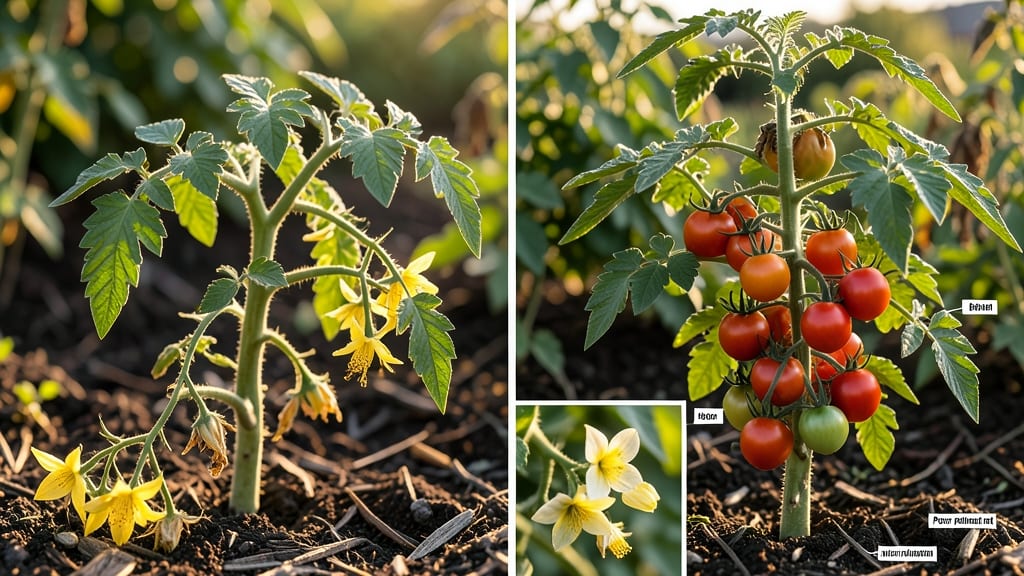
Your tomato plant is not producing fruit—that’s frustrating after all the work you’ve put in. The good news? Most fruiting issues come down to just two things: light and pollination. After years of troubleshooting my own blank tomato seasons, I’ve narrowed it down to simple fixes that actually work.
First, check your light. Tomatoes need 6-8 hours of direct sun daily—any less and they’ll drop flowers before they set fruit. Then there’s pollination: wind or bees usually handle it, but in containers or greenhouses, you might need to give flowers a little shake in the morning.
Over-fertilizing with nitrogen (the first number on fertilizer bags) can also send plants into leafy overdrive instead of fruit production.
Once you adjust these, you’ll see the difference fast. Within 1-2 weeks, flowers will start swelling into tiny tomatoes, and your plant will shift from blooms to bounty. The best part? These fixes work for both backyard gardens and container setups—no fancy equipment needed.
Here’s the kicker: once you get it right, your plants will fruit like crazy. I went from zero tomatoes to over 20 pounds in a single season after making just these two changes. Let’s get those plants producing!
Root Causes Behind Barren Tomatoes
Tomatoes are the stars of the summer garden—until they refuse to produce fruit! If your plants are lush but fruitless, the issue likely stems from one (or more) of these common biological or environmental triggers.
Understanding the why behind the problem is the first step toward a bountiful harvest. Let’s break down the science behind why your tomato plant might be playing hard to get with the fruit.
Tomatoes are tropical plants at heart, and they hate being pushed outside their ideal temperature range. The sweet spot for fruit set is 55–85°F (13–29°C)—anything hotter or colder throws a wrench in their reproductive process.
- Too Hot (Above 90°F / 32°C): High temperatures disrupt pollen viability and flower development. Pollen grains become weak or fail to form entirely, making fertilization impossible.
Even if flowers bloom, they may drop off before setting fruit—a condition called "flower drop" or "heat stress." - Actionable Fix: Provide afternoon shade (especially in zones 8+), mulch heavily to cool roots, and choose heat-tolerant varieties like ‘Solar Fire’ or ‘Heatmaster.’
- Too Cold (Below 55°F / 13°C): Chilly nights or early spring planting can cause "blossom end rot" (a calcium deficiency symptom) or stunted growth, preventing flowers from opening or pollinating properly.
- Actionable Fix: Wait until soil temps are consistently warm (use a soil thermometer to check) or grow in containers for easier temperature control.
Tomatoes are light hogs—they need 6–8+ hours of direct sunlight daily to produce energy for flowers and fruit. Without enough light, plants focus on leafy growth instead of reproduction.
- Signs of Light Deficiency:
- Long, leggy stems with small, pale leaves.
- Flowers that form but fail to open or drop immediately.
- Fruit that starts but aborts early (common in indoor or shaded gardens).
- Scientific Why: Low light reduces photosynthesis, limiting the plant’s ability to produce sugars and hormones (like ethylene and gibberellins) needed for fruit development.
- Actionable Fix: Move plants to a sunnier spot, supplement with grow lights (12–16 hours/day), or prune nearby shade-casting plants.
Tomatoes are self-pollinating, but they still rely on vibration or wind to shake pollen loose from the anthers (male parts) onto the stigma (female parts). Without proper pollination, flowers wilt and drop without forming fruit.
- Common Pollination Roadblocks:
- No Bees or Wind: Indoor plants, greenhouses, or areas with low insect activity suffer.
- Poor Flower Structure: Some varieties (like cherry tomatoes) have closed flowers that need a gentle hand to release pollen.
- Pollen Sterility: Heat, pests, or chemical stress can kill pollen before it’s viable.
- Actionable Fix:
- Hand-pollinate by gently shaking plants or using a small brush to transfer pollen.
- Attract pollinators with bee-friendly flowers (basil, marigolds, alyssum) nearby.
- Avoid over-fertilizing with nitrogen (which boosts leaves but stunts flowers).
Tomatoes are sensitive to moisture fluctuations, and inconsistent watering throws off their entire reproductive system.
- Underwatering:
- Causes flower drop and small, deformed fruit due to hormonal imbalances (like ethylene suppression).
- Leads to blossom end rot (from calcium uptake issues).
- Overwatering:
- Drowns roots, preventing nutrient absorption (especially calcium and boron, critical for fruit development).
- Creates anaerobic soil, which weakens pollen and stunts flower growth.
- Actionable Fix:
- Water deeply 1–2 times per week (check soil moisture 2" down—it should be dry but not bone-dry).
- Use drip irrigation to keep leaves dry (prevents fungal diseases that stress plants).
- Mulch with straw or wood chips to retain moisture and regulate soil temp.
Tomatoes need a balanced diet of macronutrients (N-P-K) and micronutrients to set and hold fruit. Too much of one nutrient (like nitrogen) or a deficiency in another (like calcium or phosphorus) can halt fruit production.
| Nutrient Issue | Symptoms | Why It Happens | Fix It With |
|---|---|---|---|
| High Nitrogen | All leaves, no flowers | Plant focuses on leafy growth over reproduction. | Side-dress with phosphorus-rich fertilizer (5-10-10) or compost tea. |
| Low Phosphorus | Purple stems, weak flowers | Phosphorus is key for flower and fruit development. | Bone meal or rock phosphate at planting. |
| Calcium Deficiency | Blossom end rot, stunted fruit | Calcium helps cell wall formation in fruit. | Crushed eggshells, lime, or calcium nitrate. |
| Potassium Deficiency | Yellow edges on leaves, weak stems | Potassium regulates enzyme activity in fruit formation. | Banana peel tea or potassium sulfate. |
- Pro Tip: Avoid synthetic fertilizers—they can burn roots and stress plants. Instead, use organic amendments like fish emulsion, worm castings, or compost.
Pests and pathogens steal nutrients, damage flowers, or block sunlight, all of which prevent fruit set.
- Common Culprits:
- Aphids & Whiteflies: Suck sap from flowers, weakening them before pollination.
- Hornworms: Devour flowers and buds overnight.
- Early Blight/Fungal Spots: Discolor leaves, reducing photosynthesis for fruit growth.
- Tomato Hornworm or Spider Mites: Stress plants, causing premature flower drop.
- Actionable Fix:
- Handpick pests (especially hornworms—they’re huge and easy to spot!).
- Spray neem oil (prevents aphids and fungal growth).
- Rotate crops to prevent soil-borne diseases.
Tomatoes compete with their own leaves for energy. If you’ve gone overboard with pruning or planted too closely, the plant prioritizes survival over fruit.
- Over-Pruned Plants:
- Removing too many suckers (side shoots) can reduce flower production (each sucker has potential flower clusters).
- Solution: Prune selectively—keep 3–4 main stems and remove only aggressive suckers (those growing between the main stem and a branch).
- Overcrowded Plants:
- Shading each other reduces light penetration, leading to weak flowers.
- Solution: Space plants 18–24" apart (or 24–36" for indeterminate varieties).
Not all tomatoes are created equal—some varieties are more finicky about conditions than others.
- Determinate vs. Indeterminate: - Determinate (bush) tomatoes produce fruit in one big flush, then stop.
If stressed during that window, no second chance. - Indeterminate (vining) tomatoes produce continuously but need consistent care to keep up. - Heat-Sensitive Varieties: - Some heirlooms (like ‘Brandywine’) struggle in high heat and may drop flowers. - Solution: Choose heat-tolerant hybrids (‘Celebrity,’ ‘Better Boy’) if you live in a hot climate.
Tomato fruit production is a delicate balance of light, temperature, water, nutrients, and pollination. Often,
How to Fix Your Fruitless Tomatoes
Got tomatoes that refuse to bear fruit? Don’t panic—most issues have simple fixes! Below, we’ve mapped out practical solutions for the most common causes, along with prevention tips to keep your plants productive. Let’s get those tomatoes growing!
Problem: Weak or inconsistent sunlight stunts flower and fruit development. Solution:
- Move your plants to a sunnier spot (at least 6–8 hours of direct sunlight daily).
- Use grow lights (LED or fluorescent) if outdoor space is limited—position them 6–12 inches above the plants for 12–16 hours/day.
- Prune nearby obstructions (trees, fences, or tall plants) blocking light.
💡 Pro Tip: If your tomatoes are indoors, rotate them weekly to ensure even light exposure.
Problem: Lack of pollinators (bees, wind, or manual help) leads to dropped flowers. Solution:
- Hand-pollinate by gently shaking plants early in the morning (when flowers are open).
- Use a small brush to transfer pollen between flowers.
- Attract pollinators by planting bee-friendly flowers (like marigolds or basil) nearby.
✨ Bonus: Avoid over-fertilizing with high-nitrogen (like lawn fertilizer)—it promotes leafy growth but fewer flowers.
Problem: Too much or too little water stresses plants and drops fruit. Solution:
- Water deeply but infrequently (1–2 inches per week, at the base).
- Avoid wetting leaves to prevent fungal diseases (like blight).
- Use mulch (straw or shredded leaves) to retain moisture and regulate soil temperature.
🔥 Warning: Overwatering causes blossom end rot—check soil moisture with your finger before watering.
Problem: Extreme heat, cold snaps, or transplant shock kill flowers. Solution:
- Protect from frost with row covers or move potted plants indoors at night.
- Shade young plants during heatwaves (use shade cloth if temps exceed 90°F/32°C).
- Avoid transplant shock—harden off seedlings gradually before planting.
🎯 Prevention: Choose heat-tolerant varieties (like ‘Solar Fire’ or ‘Heatmaster’) for hot climates.
Problem: Too much nitrogen = lush leaves, no fruit. Too little = weak growth. Solution:
- Switch to a balanced fertilizer (like 5-10-10 or 10-10-10) when flowers appear.
- Add phosphorus-rich compost (bone meal or fish emulsion) to encourage blooming.
- Avoid over-fertilizing—follow package instructions to prevent burning roots.
💪 Nutrient Boost: A foliar spray of calcium (like crushed eggshells) can prevent blossom end rot.
Problem: Bugs (aphids, hornworms) or diseases (early blight) destroy flowers/fruit. Solution:
- Inspect leaves daily—remove pests by hand or spray with neem oil.
- Prune infected leaves (black spots, yellowing) and dispose of them (don’t compost!).
- Rotate crops yearly to prevent soil-borne diseases.
🔪 Quick Fix: Diatomaceous earth (food-grade) kills soft-bodied pests like aphids.
Problem: Over-pruning or late harvesting reduces fruit production. Solution:
- Prune suckers (shoots between stems) early in the season to redirect energy to fruit.
- Stop heavy pruning once flowers appear—let the plant focus on fruit development.
- Harvest regularly—ripe tomatoes signal the plant to produce more!
⏰ Best Time to Prune: Morning (when plants are dry) to prevent disease entry.
Final Thought: Most tomato troubles are easily fixable with the right adjustments. Try one solution at a time, monitor progress, and soon you’ll be swimming in juicy, homegrown tomatoes! 🍅🌿
Frequently asked questions about tomato plants not producing fruit
Why are my tomato flowers dropping before they turn into fruit?
Flower drop usually happens due to heat stress (above 90°F/32°C), poor pollination, or inconsistent watering. Check for pollen on your flowers—if it’s weak or missing, hand-pollinate by gently shaking plants in the morning. Also ensure soil stays evenly moist (not soggy) and provide afternoon shade during heatwaves.
Can I fix a tomato plant that’s only growing leaves and no flowers?
Yes! The issue is likely too much nitrogen or insufficient light. Switch to a balanced fertilizer (5-10-10) and move the plant to a sunnier spot (6+ hours of direct sun daily). Prune any leggy growth to redirect energy to flowering. Within 2-3 weeks, you should see new blossoms.
What’s the best way to hand-pollinate tomatoes indoors?
Use a small paintbrush or cotton swab to gently transfer pollen from the male anthers (yellow dust) to the female stigma (green center) of each flower. Do this early in the morning when flowers are fully open. For extra help, place your container near a window with good airflow or use a small fan to mimic wind pollination.
Are my tomato plants getting enough light if they’re in a south-facing window?
A south-facing window provides 6-8 hours of light, but tomatoes need intense sunlight—not just duration. If leaves look pale or stems stretch toward the light, they’re not getting enough. Supplement with a grow light (12-16 hours/day) positioned 6-12 inches above the plants. Rotate them weekly for even growth.
Why do my cherry tomatoes keep falling off before ripening?
This is often caused by calcium deficiency (blossom end rot) or overwatering. Add crushed eggshells or calcium nitrate to the soil and water deeply but less frequently (1-2 inches per week). Also check for pests like aphids, which stress plants and cause premature fruit drop.