
Pests and Diseases
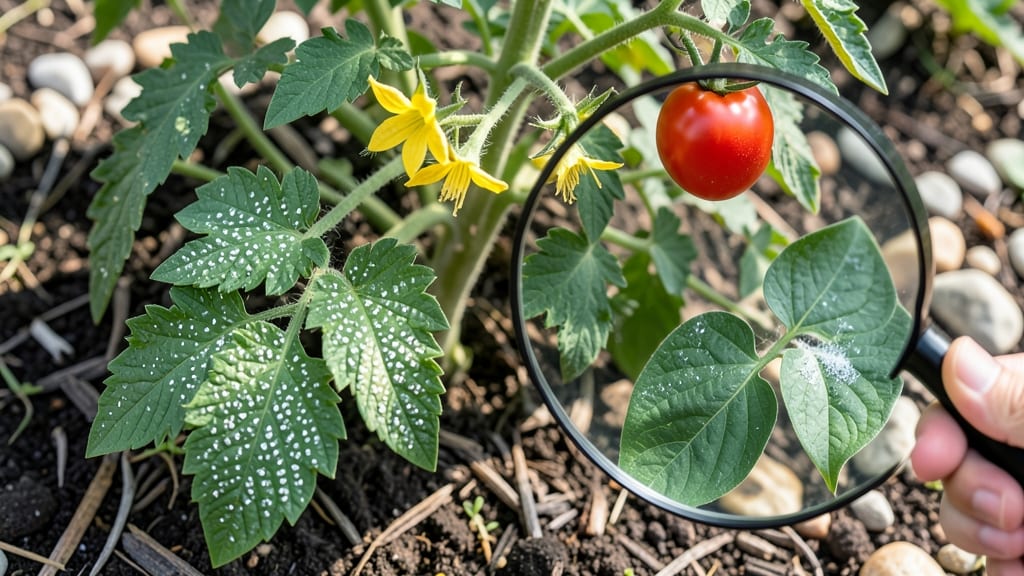
White dots on tomato leaves aren’t just ugly—they’re a red flag your plants are under siege. 🌱 I’ve seen aphids, powdery mildew, and even environmental stress cause those telltale specks, and the fix depends on what’s really going on.
The good news? Most cases respond to quick action, and I’ll walk you through how to diagnose and stop it fast.
First, check the texture: aphids leave sticky residue, powdery mildew feels chalky, and environmental stress often shows up as tiny white specks on both leaf surfaces. I’ve found that neem oil works for aphids, while baking soda spray tackles mildew—both organic and effective.
The key is acting before the dots spread to stems or fruit, which can ruin your harvest.
You’ll have your tomato plants looking healthy and green again in just a few days with the right treatment. Regular pruning for airflow and avoiding overhead watering keeps these issues at bay.
And if the problem keeps coming back? That’s when it’s time to dig deeper—sometimes soil-borne issues need a different approach.
Whether you’re dealing with pests, fungus, or just stressed plants, this guide gives you the tools to save your tomatoes without harsh chemicals. Let’s get those leaves clean and your plants thriving again!
Understanding Leaf Blemishes
White dots on tomato leaves can be alarming, but they’re often a sign of environmental stress or pest activity. Let’s break down the most common causes—so you can diagnose and treat them effectively.
Powdery mildew is a fungal infection that thrives in warm, humid conditions. It appears as white, powdery patches on leaves, often starting between leaf veins. Unlike pests, it doesn’t move—it spreads via spores carried by wind or water.
Why it happens:
- High humidity (70%+) + poor airflow = fungal growth.
- Overhead watering keeps leaves wet, creating the perfect breeding ground.
- Stressed plants (from overcrowding, nutrient deficiencies, or drought) are more susceptible.
Key difference: Scrape a patch—if it leaves a white residue, it’s likely powdery mildew.
Tiny white dots could be aphid eggs, mites, or insect frass (waste). Aphids, spider mites, and whiteflies lay eggs in clusters, often on the undersides of leaves. Their waste also appears as sticky, white specks.
Why it happens:
- Aphids prefer new growth and cluster where sap is abundant.
- Spider mites thrive in dry, hot conditions (they’re less visible but leave webbing).
- Whiteflies are attracted to yellowing leaves (a sign of stress).
Quick check: Use a hand lens—if the dots are mobile or have legs, they’re pests.
Sometimes, white dots aren’t pests or disease—they’re sunburn, mineral deposits, or hail damage.
Why it happens:
- Sun scald (from direct, intense sunlight) causes bleached, white patches, especially on young leaves.
- Mineral buildup (from hard water irrigation) leaves crusty white deposits on leaf edges.
- Hail or wind damage can create irregular white scars.
How to tell: Check for raised, rough textures (mineral buildup) or no visible pests (sunburn).
Not all white dots are bad! Ladybug larvae, lacewing eggs, or parasitic wasps may lay eggs that look like tiny white specks. These are natural pest predators—leave them be!
Why it happens:
- Ladybugs lay eggs near aphid colonies (a good sign!).
- Lacewings deposit eggs on leaf undersides (they look like tiny white pearls).
Pro tip: 💡 If you see no damage and the dots are isolated, they’re likely beneficial insects.
If you’ve recently applied fungicides, insecticides, or fertilizers, white dots could be chemical residue or burn marks.
Why it happens:
- Overapplication of copper-based sprays leaves white deposits.
- High pH water + sensitive plants = leaf tip burn (white, crispy edges).
Fix: Rinse leaves with water or switch to organic sprays (neem oil, soap spray).
Rarely, white dots can signal viral mosaic disease (from aphids) or bacterial leaf spot. These often come with yellowing, stunted growth, or vein patterns.
Why it happens:
- Aphids spreading viruses (e.g., Tomato Mosaic Virus).
- Bacterial infections thrive in wet conditions (e.g., Xanthomonas).
Red flag: If leaves also show mottling or necrosis, isolate the plant immediately.
Too much calcium, magnesium, or salt can cause white crusting on leaves.
Why it happens:
- Over-fertilizing with lime or Epsom salt leads to mineral buildup.
- Poor drainage causes salt accumulation in soil.
Solution: Flush soil with water and adjust fertilizer ratios.
| Cause | Action Needed? | How to Confirm |
|---|---|---|
| Powdery mildew | ✅ Treat | Scrape leaves—powdery residue |
| Aphid eggs/frass | ✅ Treat | Check for movement or webbing |
| Sunburn/hail | ❌ No treatment | No pests, rough texture |
| Beneficial insects | ❌ Leave alone | No damage, isolated dots |
| Chemical burn | ✅ Rinse leaves | Recent spray use + white crust |
Next steps? Identify your issue, then jump to the treatment section to fix it fast! 🚀
Quick fixes for tomato leaf spots
Got those pesky white dots ruining your tomato plant’s vibe? Don’t panic—these fixes tackle the root cause (literally!) so your plants bounce back fast. Below, we map each likely culprit to a simple, effective solution, plus pro tips to keep your tomatoes thriving.
Let’s get those leaves looking fresh again!
Fix: These sap-sucking pests leave white, sticky residue (and attract ants!). Here’s how to evict them fast:
- 🔥 Blast Them Off
- Method: Spray plants with a strong stream of water (early morning works best). Aphids hate being displaced!
- Tool: Use a hose nozzle or spray bottle for delicate leaves.
- Pro Tip: 💡 Repeat every 2–3 days until they’re gone—aphids multiply fast.
- 🍳 Homemade Soap Spray - Recipe: Mix 1 tbsp mild dish soap + 1 quart water in a spray bottle. Shake well! - How to Use: Spray directly on aphids (undersides of leaves are their favorite hideout).
Avoid overspraying flowers to protect pollinators. - Why It Works: Soap disrupts their waxy coating, dehydrating them.
- 👨🍳 Neem Oil Bomb
- Mix: 1 tsp neem oil + 1 tsp mild soap + 1 quart water. Stir gently (neem oil separates).
- Apply: Spray evenly on leaves (including stems). Reapply every 5–7 days for 2 weeks.
- Bonus: Neem oil also prevents future infestations.
Prevention:
- 🌡️ Heat Them Out: Aphids thrive in warm, humid conditions. Improve airflow around plants with pruning or spacers.
- 🎯 Ladybugs & Lacewings: Release beneficial insects (available at garden centers) to eat aphids naturally.
- 🌱 Resistant Varieties: Choose tomato types like ‘Defiant’ or ‘Mountain Merit’—they’re aphid-resistant!
Fix: If the white dots are powdery, chalky patches, it’s likely mildew—a fungal infection that spreads like wildfire.
- 🔪 Prune & Toss
- Action: Cut off heavily infected leaves (don’t compost them—dispose in a sealed bag).
- Why? Mildew spores spread via wind and water. Removing infected parts stops it in its tracks.
- 🥘 Baking Soda Spray - Recipe: 1 tbsp baking soda + 1 tsp oil (like vegetable or neem) + 1 gallon water.
Add a drop of soap as a sticker. - How to Use: Spray thoroughly (both sides of leaves) every 7–10 days until new growth is clean. - Science Behind It: Baking soda raises the leaf’s pH, making it inhospitable for fungi.
- ⏰ Adjust Watering Habits
- Water early in the day so leaves dry quickly.
- Don’t: Water leaves (aim for the soil base). Wet foliage = mildew party.
- Pro Tip: 🌱 Space plants 3–4 feet apart for better airflow—mildew hates dry conditions.
Prevention:
- ✨ Copper Fungicide: Apply preventatively if mildew is common in your area (follow package instructions).
- 🌿 Mulch: Use straw or grass clippings to keep soil moist (but not soggy) and reduce spore splashes.
Fix: If white dots are tiny, moving specks (or you see fine webbing), spider mites are the culprits. They suck juices, causing stippled leaves.
- 💦 Rinse Them Away
- Method: Hose down plants with cool water for 1–2 minutes. Repeat every 3–4 days.
- Why? Mites despise humidity—this buys time for other treatments.
- 🌿 Neem Oil or Horticultural Oil
- How to Use: Spray neem oil mix (as above) or horticultural oil (like JMS Stylet Oil) on both leaf sides.
- Timing: Apply in the evening to avoid harming bees. Reapply every 5–7 days for 2 weeks.
- 🕷️ Predatory Mites to the Rescue
- Solution: Release phytoseiulus persimilis (a spider mite’s natural enemy). Buy from garden stores.
- How: Sprinkle near infested areas—these guys will eat mites for you!
Prevention:
- 🌡️ Keep It Cool: Mites love hot, dry weather. Shade cloth (30–50%) helps.
- 🎯 Regular Scouting: Check undersides of leaves weekly. Early action = easier wins!
No matter the cause, these universal fixes help your tomatoes recover faster:
- 🌿 Trim & Toss: Remove all heavily spotted leaves (even if you’re not sure what’s wrong).
- 🌱 Rotate Plants: Move tomatoes to a new spot next season to break disease/pest cycles.
- 💪 Boost Plant Health: Feed with balanced fertilizer (like 10-10-10) to strengthen defenses.
Final Reminder: 🌱 Act fast—white dots can turn into full-blown disasters if ignored. Try one method at a time, monitor progress, and your tomato plants will be back to their lush, productive selves in no time! 🍅✨
Frequently asked questions
Are white dots on tomato leaves always harmful?
Not always! Some white dots are actually beneficial insects like ladybug larvae or lacewing eggs. These tiny white specks are natural pest predators—leave them alone unless they’re causing visible damage. Check for webbing or sticky residue to confirm if they’re harmful pests instead.
How do I tell if white dots are powdery mildew vs. aphids?
Powdery mildew feels chalky and leaves a white residue when scraped, while aphids create sticky, white specks (frass) or tiny clusters. Use a hand lens: if the dots are mobile or have legs, they’re aphids. Mildew won’t move and often appears on both leaf surfaces.
Can I still eat tomatoes with white dots on the leaves?
Yes, but only if the dots are isolated to leaves and not spreading to stems or fruit. If you see aphids, mildew, or mites on leaves, treat immediately to prevent contamination. Always wash tomatoes thoroughly before eating, regardless of leaf conditions.
Why do white dots keep coming back after treatment?
Persistent white dots often mean the root cause isn’t fully addressed. Check for poor airflow (prune plants), overhead watering (water at soil base), or underlying stress (fertilize or adjust soil pH). Some pests/diseases require multiple treatments—follow up every 5–7 days until clean.
Are there chemical-free ways to fix white dots?
Try neem oil (for aphids/mites), baking soda spray (for mildew), or soapy water (1 tbsp mild soap + 1 quart water). For severe cases, release beneficial insects like ladybugs or lacewings. Always test sprays on a small leaf area first.