
Planting
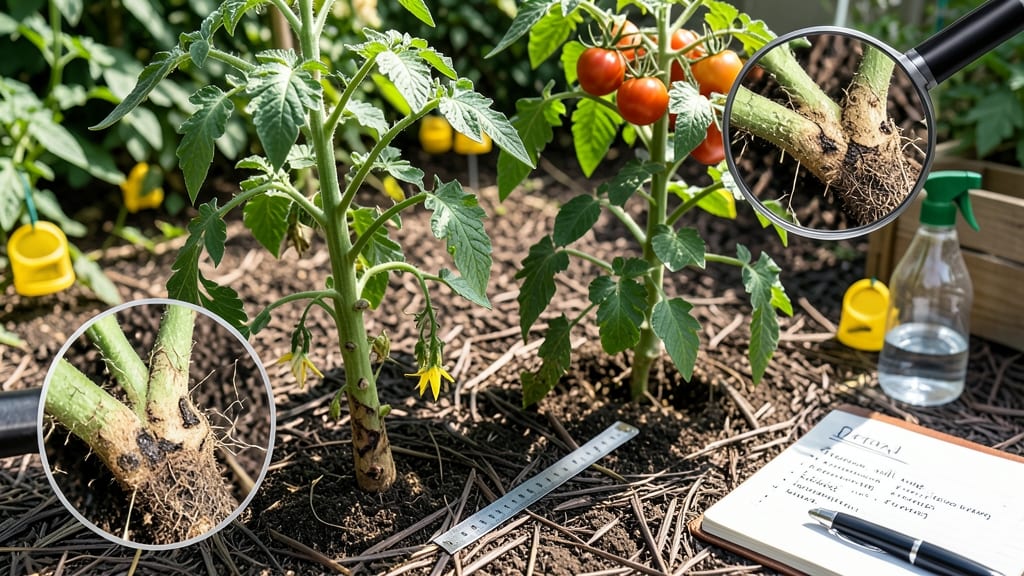
Your tomato plant’s stem is its lifeline—and when it cracks, wilts, or weakens, your harvest is at risk. 🌱 I’ve seen everything from sun-split stems to blight-ravaged stems, and the good news is most problems have fast fixes if you catch them early.
The key is identifying the issue before it spreads, whether it’s environmental stress, disease, or pests gnawing away at your plant’s strength.
Cracked stems usually mean rapid growth or uneven watering, while wilting often signals root rot or blight. Pest damage—like hornworms or aphids—leaves jagged holes or sticky residue. The fixes are straightforward: prune damaged areas, adjust watering habits, and treat diseases with copper fungicide or neem oil.
I’ve saved entire plants with these steps, and you can too.
Within days of proper care, stems regain strength, and plants bounce back with new growth. You’ll see firmer stems, healthier leaves, and—most importantly—more tomatoes on the vine. The best part? These solutions work for both container and in-ground plants, no matter your garden setup.
No need to panic when you spot trouble—most stem issues are fixable with the right approach. Let’s get your tomatoes back on track before the problem worsens. The sooner you act, the sooner you’ll be back to enjoying fresh-picked fruit from a thriving plant.
Root Causes Of Stem Issues
Understanding why tomato plant stems develop problems starts with recognizing the environmental, biological, and mechanical stressors that weaken or damage them. Here’s a breakdown of the most common culprits—each with a clear scientific explanation and actionable insights to help you diagnose the issue accurately.
Tomato plants thrive in moderate temperatures (70–85°F / 21–29°C), but sudden swings—especially cold snaps, heatwaves, or frost—can disrupt their cellular structure. Here’s how it happens:
- Cold Stress (Chilling Injury): When temperatures drop below 50°F (10°C), tomato stems produce abscisic acid, a stress hormone that triggers cell membrane damage.
This leads to: - Soft, mushy stems (due to disrupted water transport). - Blackened or brown patches (cell death from ice crystal formation). - Wilting (even with adequate soil moisture, because water uptake is blocked).
- Heat Stress (Sunscald): Above 90°F (32°C), stems overheat, causing:
- Cracking or splitting (rapid expansion/contraction of cells).
- Bleached or sunburned spots (chlorophyll breakdown from UV exposure).
- Weakened vascular tissue (reduced nutrient flow, leading to stunted growth).
💡 Pro Tip: Use row covers for cold protection and shade cloth (30–50%) during heatwaves. Mulch (straw or black plastic) helps stabilize soil temps by 5–10°F.
Pathogens thrive in moist, stagnant conditions, attacking stems through wounds or natural openings (like lenticels). Common culprits include:
| Pathogen | Symptoms | How It Spreads | Trigger Conditions |
|---|---|---|---|
| Fusarium Wilt | Yellowing leaves, vascular discoloration (brown streaks in stems), sudden wilting. | Soilborne spores enter via roots. | Overwatering, poor drainage, warm soil. |
| Verticillium Wilt | Stunted growth, yellowing between veins, stem collapse. | Fungal spores in contaminated soil. | Cool, wet springs; stressed plants. |
| Bacterial Wilt (Ralstonia) | Wilted leaves that don’t recover, oozing bacterial slime when cut. | Spread by infected tools, water, or insects. | High humidity, warm nights. |
| Phytophthora | Soft, rotting stems (especially at soil line), foul odor. | Water splashing from soil to foliage. | Overhead watering, compacted soil. |
⚠️ Warning: Once established, fungal wilts (Fusarium/Verticillium) are incurable—remove infected plants immediately to prevent spread.
Water is the lifeblood of tomato stems, but inconsistent moisture leads to structural weaknesses:
- Underwatering:
- Cell dehydration causes stems to shrink and crack (like dried clay).
- Xylem vessels collapse, restricting water flow → wilting even in moist soil.
- Blossom-end rot (a calcium deficiency symptom) often starts in stems due to stress-induced nutrient blockages.
- Overwatering:
- Oxygen deprivation in roots → anaerobic conditions that weaken stems.
- Root rot (Pythium/Phytophthora) spreads upward, causing soft, mushy stems that snap easily.
- Fungal spores thrive in soggy soil, accelerating infections.
🔥 Fix It Fast:
- Water deeply 1–2x/week (1–1.5 inches total) at soil level (avoid wetting leaves).
- Use drip irrigation to keep foliage dry and prevent fungal spread.
- Test soil moisture with a finger—top 1–2 inches should dry out between waterings.
Stems are brittle when young or overloaded, making them vulnerable to:
- Wind or Hail:
- Torn or split stems from sudden gusts (common in indeterminate varieties with long vines).
- Broken vascular bundles → leaky stems that ooze sap or wilt.
- Overpruning or Rough Handling:
- Cutting stems too close (within ¼ inch of the main stem) leaves no callus layer to heal, inviting rot.
- Bruising from tying to stakes can create entry points for bacteria.
- Overloaded Fruit:
- Heavy tomato clusters (especially in heirloom varieties) cause stems to bend or snap under weight.
- Cell walls stretch beyond limits, leading to cracks or splits.
👨🍳 DIY Solution:
- Stake or cage plants early (before they’re 12 inches tall) to support growth.
- Prune strategically: Remove suckers (side shoots) above the first leaf cluster to avoid weakening the main stem.
- Use soft ties (old T-shirts, rubber bands) to avoid stem abrasion.
Stems rely on a balanced diet—too much or too little of key nutrients can compromise their integrity:
- Calcium Deficiency:
- Blossom-end rot often starts in stems as weakened cell walls.
- Symptoms: Brown, leathery patches on stems near fruit clusters.
- Fix: Apply calcium-rich amendments (crushed eggshells, gypsum) or foliar spray (calcium nitrate).
- Potassium Deficiency:
- Weak, brittle stems that snap easily (potassium strengthens cell structure).
- Symptoms: Yellowing leaf edges, purpling of stems (in some varieties).
- Fix: Use potassium sulfate or banana peel tea (high in potassium).
- Nitrogen Toxicity:
- Over-fertilizing with nitrogen (e.g., blood meal) leads to soft, succulent stems that collapse under weight.
- Symptoms: Rapid leaf growth but weak stems, pale green or yellow foliage.
- Fix: Flush soil with water and switch to a balanced 10-10-10 fertilizer.
Pests drain nutrients and create wounds, making stems susceptible to secondary infections:
- Aphids & Whiteflies:
- Inject toxins that cause stunted, curled stems.
- Honeydew residue attracts sooty mold, blocking sunlight and weakening photosynthesis.
- Tomato Hornworms:
- Chewing damage severs vascular bundles, causing wilting or dead patches.
- Stem Borers (e.g., Tomato Fruitworm):
- Larvae burrow into stems, creating hollow tunnels that sever water flow.
- Symptoms: Wilting despite moist soil, frass (sawdust-like droppings) at the base.
🎯 Pest Control Plan:
- Handpick hornworms (they’re easy to spot—green with white stripes).
- Spray neem oil (disrupts aphid life cycles).
- Use row covers to block adult moths from laying eggs.
Quick Fixes for Weak Tomato Stems
Tomato stems are the backbone of your plant—when they weaken, crack, or wilt, your entire harvest suffers. The good news? Most issues have simple, effective fixes. Below, we’ll break down practical solutions for common stem problems, from structural support to disease treatment, plus prevention tips to keep your plants thriving.
Let’s get your tomatoes back on track!
Cause: Overloaded vines, poor pruning, or insufficient staking. Solution: Reinforce stems with proper support and adjust care habits.
- 🔥 Install Sturdy Stakes or Cages Use 5–6 foot bamboo stakes or tomato cages (5+ feet tall) to support tall varieties like ‘Sungold’ or ‘Beefsteak.’
Secure the main stem loosely with soft plant ties (avoid wire—it can cut stems). Pro Tip: 💡 Bury stakes early (at planting) so roots anchor them as the plant grows.
- 🍳 Prune for Balance Remove suckers (shoots between main stem and branches) to reduce weight. Prune lower leaves (up to 12 inches from the ground) to improve airflow and prevent disease. Warning: ⏰ Never prune more than 1/3 of the plant at once—this stresses the stem.
- 👨🍳 Boost Soil Nutrition Weak stems often signal nitrogen deficiency. Side-dress with compost or a balanced fertilizer (10-10-10) when flowers appear. Avoid over-fertilizing—too much nitrogen = soft, brittle stems.
Cause: Rapid growth, uneven watering, or genetic susceptibility (common in heirloom varieties). Solution: Prevent further damage and protect the plant from infection.
- 🥘 Apply Protective Barriers Gently wrap cracks with plastic wrap or tree wound dressing to seal them and prevent pests/disease entry. Avoid tight wraps—leave room for growth. Pro Tip: ✨ Mulch heavily (3–4 inches of straw or wood chips) to stabilize soil moisture and reduce stress.
- 🌡️ Adjust Watering Habits Cracks often form from dry-wet cycles. Water deeply 1–2 times per week (early morning) instead of daily shallow watering. Use drip irrigation to keep stems consistently moist. Warning: 🚫 Never let soil dry out completely—this causes sudden swelling and splitting.
- 🎯 Support the Plant If cracks are severe, prop up the stem with a soft sling (old T-shirt or burlap) tied to stakes. This redistributes weight and prevents further splits.
Cause: Verticillium wilt, Fusarium, or bacterial stem rot. Solution: Act fast—these diseases spread quickly and are often fatal.
- 🔥 Remove Infected Plant Parts Cut off diseased stems (6 inches below the wilted area) using sterilized pruners (wipe with rubbing alcohol). Dispose of clippings in the trash (not compost). Pro Tip: 💡 Prune in dry weather to reduce spore spread.
- 🍳 Apply Fungicide or Bacterial Spray Treat with copper fungicide (for bacterial wilt) or neem oil (for fungal issues). Spray every 7–10 days until new growth appears. DIY Option: Mix 1 tsp baking soda + 1 quart water + a drop of dish soap for a mild fungicide.
- 👨🍳 Improve Drainage & Airflow
- Raise beds if soil is compacted (add perlite or sand).
- Space plants 18–24 inches apart to reduce humidity.
- Avoid overhead watering—use drip lines or soaker hoses.
- 🌱 Replace Severely Infected Plants If the entire plant is wilted and yellowing, pull it up to prevent soil contamination. Rotate crops next season—never plant tomatoes, peppers, or eggplants in the same spot for 3 years.
- 🌱 Start with Healthy Seedlings
- Buy disease-resistant varieties (look for ‘V’ or ‘F’ prefixes, e.g., ‘Mountain Merit’).
- Hardening off seedlings gradually prevents shock.
- 💡 Plant at the Right Time
- Wait until night temps stay above 50°F (10°C)—cold stress weakens stems.
- Use black plastic mulch to warm soil and speed up growth.
- 🌡️ Monitor Moisture & Temperature
- Consistent watering is key—stems hate extremes.
- Avoid late-season watering (encourages disease before harvest).
- 🎯 Strengthen Stems Proactively
- Pinch off early suckers to encourage thicker main stems.
- Use cages for indeterminate varieties (they grow continuously).
Final Thought: 🍅 A little prevention + quick action can save your tomato plants from stem disasters. Most issues are fixable—don’t let a wobbly stem ruin your harvest! For persistent problems, diagnose early (check the Why It Happens section for clues) and adjust your approach. Happy gardening!
Frequently asked questions about tomato plant stem problems
Why does my tomato plant stem crack even when I water regularly?
Cracked stems usually happen from rapid growth combined with inconsistent moisture. When plants grow too quickly (especially in hot weather) or experience dry-wet cycles, the stem can't keep up and splits. Try mulching heavily and watering deeply 1-2 times per week instead of daily shallow watering to stabilize growth.
My tomato plant stem is wilting but the soil feels moist—what could be wrong?
This classic symptom often signals root rot or vascular diseases like Fusarium wilt. Check the stem for dark streaks (Fusarium) or soft, mushy areas (root rot). If you see these signs, stop watering immediately and treat with copper fungicide—but if the plant is already severely infected, removal may be necessary to prevent spread.
Can I save a tomato plant with a broken stem?
Yes, but act fast! If the break is clean and above ground, prop up the damaged stem with a soft sling (old T-shirt works great) tied to stakes. For severe breaks, you can graft the top onto a healthy lower stem if it's still attached. Remove any damaged leaves near the break to prevent infection and keep the plant well-watered but not soggy.
What's the best way to prevent stem problems in my tomato plants?
Start with proper support—use cages or stakes from planting day to prevent wind damage. Mulch heavily (3-4 inches) to stabilize soil moisture, and prune suckers early to encourage stronger main stems. Choose disease-resistant varieties (look for 'V' or 'F' in the name) and avoid overhead watering to keep foliage dry.
How do I know if my tomato plant's stem is infected with disease vs. just stressed?
Diseased stems show specific patterns—look for dark streaks (Fusarium/Verticillium wilt), oozing slime (bacterial wilt), or soft rot (Phytophthora). Stressed stems may wilt but feel firm when touched, while diseased stems often collapse completely even when supported. If in doubt, cut open a small section—healthy tissue should be crisp white, not brown or mushy.