
Light Requirements
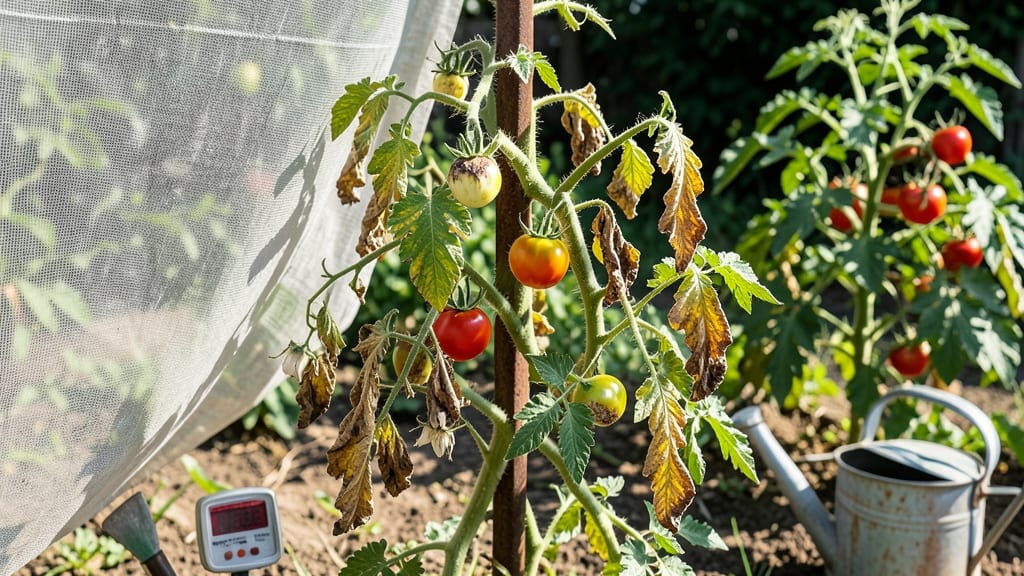
Your tomato plants screaming from too much sun? Those crispy, white blisters on leaves aren't just ugly—they're a cry for help. 🌿 I've seen firsthand how relentless afternoon rays turn lush vines into sunburn victims, and the fix is simpler than you'd think.
The damage happens when temperatures climb past 90°F, especially between 11 AM and 3 PM. Leaves lose moisture faster than roots can replace it, causing those telltale white or brown patches. Worse, the plant wastes energy repairing damage instead of producing fruit.
Even worse, blossoms drop before they can set fruit. Here's the game-changer: partial shade cloth (30-50% coverage) slung over trellises or stakes. Water deeply at sunrise when roots can absorb moisture before the heat hits. Mulch with straw to keep soil cool and retain moisture—this combo stops blisters dead.
For future seasons, plant tomatoes where they get morning sun and afternoon shade, or choose heat-tolerant varieties like 'Solar Fire' or 'Heatmaster'. The right placement means fewer repairs and more tomatoes in your basket.
Overdoing the Sunshine
Tomato plants thrive in sunlight—but too much of a good thing can turn your lush green leaves into crispy, blistered messes. When your plants get excessive direct sunlight, especially during scorching afternoons, their delicate balance of photosynthesis and heat tolerance gets thrown off.
Here’s why this happens, broken down by the real culprits behind the damage.
Tomatoes are tropical plants at heart, but they’re not built to handle intense, prolonged heat. When exposed to too much sun—especially in hot climates or during summer peaks—their leaves absorb more heat than they can dissipate. This triggers a chain reaction:
- Stomata Overwork: Tiny pores on leaves (stomata) open to release excess heat via transpiration. But in extreme sun, they can’t keep up, leading to water loss faster than roots can replenish it.
- Cell Membrane Damage: Heat causes plant cells to denature proteins, weakening their structure. This leads to blistering or scorch marks as cells rupture.
- Photosynthesis Shutdown: At temperatures above 95°F (35°C), the enzymes powering photosynthesis stop functioning, leaving leaves vulnerable to sunburn.
💡 Pro Tip: If your tomatoes are in a hot, dry climate, look for heat-tolerant varieties like ‘Solar Fire’ or ‘Heatmaster’—they’re bred to handle up to 100°F (38°C) without wilting.
Just like humans get sunburned, tomato leaves suffer from excessive UV exposure. While some UV light is essential for growth, direct, unfiltered sunlight (especially in clear, dry conditions) can:
- Break Down Chlorophyll: UV rays disrupt the pigments responsible for green color, leading to bleached or white patches on leaves.
- Trigger Oxidative Stress: Free radicals form in plant cells, damaging DNA and proteins. This causes brown, crispy spots (a classic sign of sunburn).
- Weaken Cell Walls: Over time, repeated UV exposure degrades cellulose, making leaves brittle and prone to tearing.
🔥 Actionable Fix: If your tomatoes are in a low-shade area (like a patio or balcony), use UV-protective shade cloth (30-50%) to filter harmful rays while still allowing light through.
Even well-watered tomatoes can suffer when evaporation outpaces absorption. Here’s how too much sun disrupts hydration:
| Problem | Why It Happens | Visible Signs |
|---|---|---|
| Shallow Root Systems | Young tomato plants have limited root depth, so they can’t access water deep enough to combat surface-level heat. | Wilting in late afternoon, even if soil feels moist. |
| Soil Drying Too Fast | Sun bakes the topsoil, creating a hard crust that blocks water penetration. Roots suffocate. | Dry, powdery soil at surface; leaves curling inward. |
| Osmotic Imbalance | Cells lose water faster than they can osmoregulate, causing plasmolysis (when cell membranes shrink away from walls). | Leaves feel leathery or papery; edges turn crispy. |
⏰ Watering Hack: Deep-water early morning (before 10 AM) to let roots absorb moisture before the sun peaks. Use drip irrigation to keep leaves dry and reduce evaporation.
Mature tomato plants can handle more sun, but seedlings or transplants are extremely sensitive to sudden exposure. When moved from shade (like a greenhouse) to full sun too quickly:
- Chloroplast Shock: Young leaves haven’t built up enough carotenoids and anthocyanins (sun-protective pigments), so they burn easily.
- Weak Vascular System: Delicate stems can’t transport water efficiently, leading to sudden wilting or leaf drop.
- Heat Accumulation: Small plants have less surface area to dissipate heat, so they overheat faster.
🌱 Gradual Hardening: If starting indoors, acclimate seedlings over 7–10 days by moving them to 50% shade → 30% shade → full sun in stages. Avoid placing them in south-facing windows or direct midday light.
Fixing Sunburned Tomato Plants
Now that you understand why your tomato plants are suffering from too much sun, let’s tackle the solutions—starting with immediate fixes and moving to long-term prevention. The good news? With a few simple adjustments, you can help your plants recover and thrive while avoiding future sun damage.
If your tomato plants are already showing signs of sunburn (blistered leaves, yellowing, or crispy edges), act fast to minimize further damage.
🔥 Provide Temporary Shade
Tomatoes need 6–8 hours of sunlight daily, but intense midday rays (especially in hot climates) can be brutal. Use these quick fixes to shield them: - Shade Cloth: Drape a 30–50% shade cloth over your plants during peak sun hours (10 AM–4 PM).
Secure it with stakes or clips to avoid crushing stems. - Row Covers: Lightweight floating row covers (like those used for frost protection) work well for young plants or seedlings. - DIY Shade: If you don’t have shade cloth, prop up white bedsheets or old towels on stakes above the plants.
Avoid dark colors—they absorb heat!
💦 Hydrate & Cool Down
Sunburn weakens plants, making them more susceptible to stress. Water deeply in the morning to:
- Cool the soil (mulch helps retain moisture).
- Encourage root growth (stronger roots = better heat tolerance).
- Prevent wilting, which worsens sun damage.
Avoid evening watering—wet leaves at night can lead to fungal issues like blight.
Once your plants recover, adjust their growing conditions to prevent future sunburn.
🏡 Choose the Right Location
- Morning Sun, Afternoon Shade: Plant tomatoes where they get bright morning light but afternoon shade (e.g., near a north-facing wall or under a tree with dappled shade).
- East vs. West Exposure: East-facing gardens offer gentle morning sun, while west-facing spots can scorch leaves.
If possible, opt for east or north exposure. - Container Growers: Move pots to a shadier spot during heatwaves or place them in a location where they receive filtered light.
🌡️ Mulch Like a Pro
A 2–4 inch layer of mulch (straw, wood chips, or grass clippings) helps by:
- Keeping soil cool (reduces heat stress on roots).
- Retaining moisture (so plants stay hydrated).
- Suppressing weeds (which compete for water).
Pro Tip: 💡 Avoid dark mulch (like black plastic) in hot climates—it absorbs heat and can cook the soil!
🌱 Select Sun-Tolerant Varieties Not all tomatoes handle full sun equally.
If you live in a hot, dry climate, try: - Heat-Tolerant Varieties: ‘Heatmaster,’ ‘Solar Fire,’ or ‘Arkansas Traveler’ thrive in high heat. - Cherry Tomatoes: Smaller leaves mean less surface area for sunburn (e.g., ‘Sungold’ or ‘Sweet Million’). - Indeterminate vs. Determinate: Indeterminate tomatoes (like ‘Brandywine’) grow continuously and may need pruning to avoid over-exposure.
Overgrown tomato plants with dense foliage trap heat and increase sunburn risk. Keep them healthy with these steps:
🍅 Prune for Better Airflow
- Remove lower leaves (up to the first flower cluster) to improve airflow and reduce heat buildup.
- Trim suckers (those little shoots in the leaf axils) to focus energy on fruit production.
- Avoid heavy pruning—just enough to keep the plant open and airy.
🌿 Use Reflective Mulch (For Extra Heat)
In extreme heat, try white or silver mulch (like reflective landscape fabric) to bounce sunlight away from the soil and plant base.
If your tomato plant is severely damaged (large patches of dead leaves, no new growth), consider:
- Harvesting ripe tomatoes before the plant declines.
- Replacing the plant if it’s past the salvage point (especially for determinate varieties, which produce all fruit at once).
To keep your tomatoes happy and sunburn-free: ✅ Monitor weather forecasts—plan for heatwaves in advance. ✅ Install permanent shade structures (e.g., trellises with shade cloth) if your garden gets intense sun. ✅ Test your soil—healthy soil with compost or organic matter helps plants handle heat better. ✅ Start seedlings indoors and transplant after the last frost to avoid early-season sun stress.
With these fixes, your tomato plants should bounce back—and next season, they’ll be stronger, happier, and ready to produce a bountiful harvest! 🍅✨
Frequently asked questions
How do I know if my tomato plant has too much sun?
Look for white or brown blistered patches on leaves, crispy edges, or yellowing between veins. If leaves feel leathery or papery and curl inward during peak heat, your plant is definitely getting too much direct sunlight. These signs appear most often on south or west-facing leaves.
Can I move my tomato plant to shade immediately?
No—sudden shade changes can cause more stress. Gradually move plants to partial shade (30-50%) over 3-5 days to let them adjust. For containers, relocate them to a morning sun location with afternoon shade. Avoid placing them in deep shade completely, as tomatoes still need 6-8 hours of light daily.
Will pruning help prevent sunburn?
Yes! Prune to improve airflow by removing lower leaves (up to the first flower cluster) and suckers (those little shoots in leaf axils). This reduces heat buildup in dense foliage. Just avoid heavy pruning—keep the plant open and airy while maintaining its structure. Prune in early morning to let wounds heal before evening humidity sets in.
Are some tomato varieties better for hot climates?
Heat-tolerant varieties like 'Heatmaster', 'Solar Fire', or 'Arkansas Traveler' handle 100°F+ temperatures better than standard types. For containers, try cherry tomatoes like 'Sungold'—their smaller leaves have less surface area to burn. Always check seed packets for heat tolerance ratings when selecting varieties.
How often should I water tomato plants in extreme heat?
Water deeply every morning (before 10 AM) to give roots time to absorb moisture. Aim for 1-1.5 inches of water per week, more during heatwaves. Use drip irrigation or soaker hoses to keep leaves dry and reduce evaporation. Check soil moisture by sticking your finger 1-2 inches deep—if it's dry, water again.