
Plants
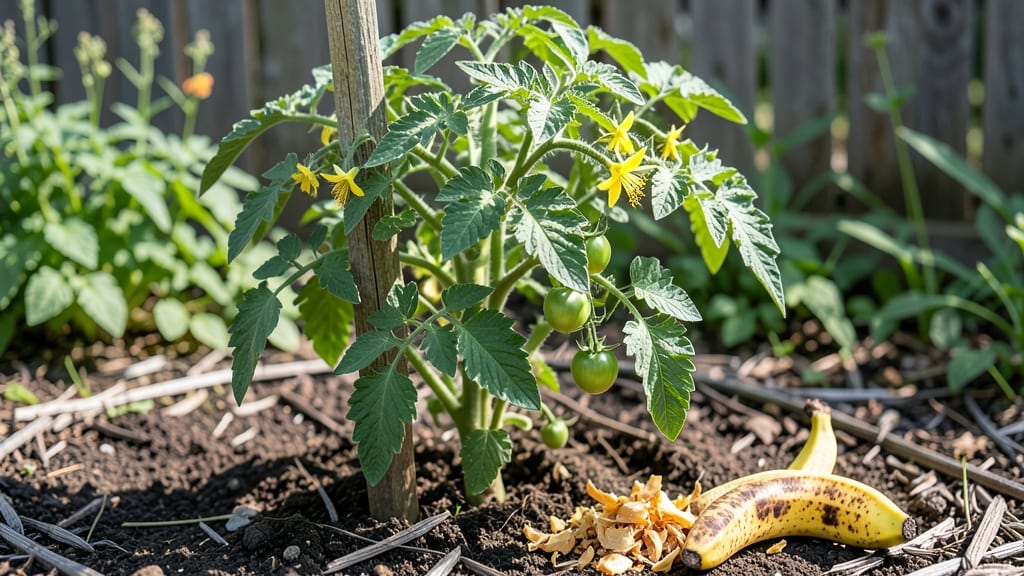
Bananas are good for tomato plants as a natural potassium source, promoting fruit production and disease resistance, but overuse can harm soil pH balance and attract pests like fruit flies. Use banana peels or diluted peel tea sparingly.
Bananas offer a natural way to boost tomato health, especially for gardeners looking to avoid synthetic fertilizers. 🌱 Their peels contain potassium, which helps tomatoes develop stronger roots and more vibrant fruit, while also enhancing resistance to common diseases like blight.
The key is balance—too much can disrupt soil chemistry, so I recommend using them as a supplement rather than a primary nutrient source.
For best results, I compost banana peels or brew them into a nutrient-rich tea. This method preserves the nutrients while preventing over-fertilization. 🌿 The tea can be applied every 2-3 weeks during the growing season, but always dilute it to avoid overwhelming your plants.
This approach gives you all the benefits without the risks of overuse.
💡 In This Article
- How Banana Peels Provide Key Nutrients for Tomatoes
- Safe Ways to Use Bananas for Tomato Gardens
How banana peels provide key nutrients for tomatoes
Banana peels are a powerhouse of nutrients that directly benefit tomato plants, particularly through their high potassium content. A single peel contains about 0.4 grams of potassium per 100 grams, which translates to roughly 10% of a tomato plant's daily potassium needs during fruiting.
This mineral plays a crucial role in regulating water movement within plant cells, helping tomatoes maintain turgor pressure for sturdy stems and vibrant foliage. 🌱
The nutrient profile extends beyond potassium—banana peels also provide phosphorus (0.03g/100g), which supports root development and energy transfer during photosynthesis, and magnesium (0.02g/100g), essential for chlorophyll production.
When compared to commercial fertilizers, banana peels offer a gentler release of these nutrients, avoiding the rapid chemical spikes that can burn plant roots. The organic matter also improves soil structure by enhancing microbial activity, creating a more balanced ecosystem for tomato roots.
What makes banana peels particularly effective for tomatoes is their role in the plant's reproductive phase. Potassium deficiency often manifests as weak stems or poor fruit set, while excess nitrogen (common in many fertilizers) can lead to lush foliage at the expense of fruit production.
Banana peels provide the perfect balance—supporting both vegetative growth and fruit development without the risk of overstimulating leafy growth. 🍅
The science behind this involves potassium's function in enzyme activation, particularly those involved in starch formation and protein synthesis during fruit development. Tomatoes with adequate potassium levels develop firmer flesh and better disease resistance, thanks to strengthened cell walls that repel fungal pathogens.
This is why organic gardeners often turn to banana peels as a natural alternative to synthetic potassium chloride fertilizers.
However, it's important to note that banana peels contain only trace amounts of nitrogen (0.1g/100g), which means they shouldn't be used as a complete fertilizer replacement. The real magic happens when combined with nitrogen-rich sources like coffee grounds or compost.
This creates a balanced nutrient profile that mimics what tomatoes need during different growth stages—early nitrogen for leaf development, followed by potassium for fruiting.
For visual comparison, imagine a tomato plant receiving commercial fertilizer versus banana peel nutrients: The synthetic approach delivers a quick potassium boost that may cause temporary growth spurts but risks salt buildup in the soil, while banana peels provide a slow-release, soil-enriching alternative that builds long-term fertility. 🌿